Tag: Joe Biden

  • US Rejoining Paris Agreement: Important Step Forward but Giant Leaps Still Needed

    US Rejoining Paris Agreement: Important Step Forward but Giant Leaps Still Needed

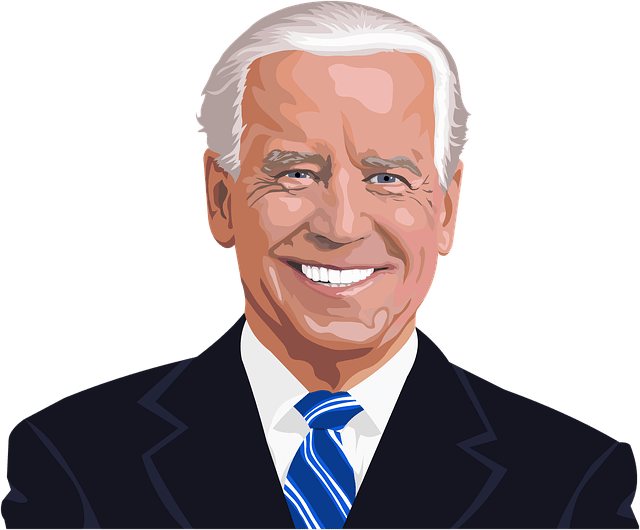
    Image by Gerd Altmann from Pixabay

    And just like we need a unified national response to COVID-19, we desperately need a unified national response to the climate crisis because there is a climate crisis.” – Remarks by President Joe Biden Before Signing Executive Actions on Tackling Climate Change, Creating Jobs, and Restoring Scientific Integrity

    Alicia Nicholls

    On February 19, 2021, the international community warmly hailed the United States’ (US) formal rejoining of the Paris Climate Agreement, some 107 days after its withdrawal under the previous administration. The Paris Agreement was concluded and adopted on December 12, 2015 by 196 Parties at the United Nations Framework Convention on Climate Change (UNFCCC) Twenty-first Conference of the Parties (COP 21) in Paris, France. It was the product of many years of efforts, but entered into force in record time on November 4, 2016.

    Under the Agreement, parties commit to taking actions to hold the global average temperature increase to “well below 2 degrees Celsius above pre-industrial levels”, while pursuing efforts to limit it to 1.5 degrees Celsius. To meet the Paris Agreement’s goals, countries are to submit nationally determined contributions (NDCs), outlining their post-2020 climate actions to reduce their national emissions and to adapt to climate change. NDCs are to become progressively more ambitious every five years. However, for developing countries, while financing is needed to achieve these efforts, the gap between mitigation and adaptation needs and available funding remains wide.

    This article discusses the significance of the US’ rejoining the Paris Climate Agreement. It argues that after taking several steps backward under the previous administration, the US’ recommitment to climate action is a welcomed step forward for increasing ambition in global mitigation efforts. It further posits, however, that nations must make giant leaps in their climate response ambitions to avert the worst case warming scenario. All developed nations should ramp up financing for developing countries’ climate action efforts, especially given the COVID-19 shock wrought on the economies of many of the world’s poorest and most vulnerable countries, including Small Island Developing States (SIDS).

    The steps backwards

    As a global challenge, climate change requires international cooperation for corrective action to be meaningful. Under the Barack Obama administration, the US was among the parties which negotiated and signed the Paris Agreement under the UNFCCC framework. Then Secretary of State, John Kerry, now President Biden’s Special Presidential Envoy on Climate Change, famously signed the Agreement on the US’ behalf with his granddaughter on his knee. Under the Obama Administration, the US committed under the Paris Agreement to reducing its emissions to 26-28% below 2005 levels by 2025.

    Even before assuming office officially, President Donald Trump quickly announced plans to pull the US out of the Paris Agreement, which he claimed was designed to kill American jobs. The Agreement’s withdrawal clause effectively bars any Party from withdrawing from the Agreement before a three year period from the Agreement’s entry into force for that party had elapsed, and such withdrawal would only take effect one year after.

    In the interim, President Trump rolled back or weakened over 100 Obama-era climate and environmental policies and regulations, covering anything from regulating vehicle to power plant emissions to endangered species. He also actively promoted the greater use of coal and other fossil fuels, and in his final days in office, he approved oil drilling in Alaska’s Arctic National Wildlife Refuge.

    On the five year anniversary of the Agreement’s signing, President Trump ‘honoured’ his campaign pledge and made the US the only country to date to pull out of the pact on November 4, 2020, just two days before the US presidential election. Although US action on climate change at the federal level ceased under the Trump administration, some States whose mayors, Governors and CEOs signed on to the “We’re still in movement” thankfully continued to implement clean energy and climate-friendly reforms.

    The steps forwards

    The world breathed a collective sigh of relief upon news of President Joe Biden’s election win which, among other things, brought the assurance that the US would once again follow the science that anthropogenic (man-made) climate change was real and urgent global action was needed to avert the looming climate crisis.

    On his first day of office, President Biden signed a letter of acceptance of the Paris Agreement. On January 27, 2021, the White House issued a comprehensive executive order drawing attention to the urgency of the climate crisis and making some key decisions, such as the establishment of a National Climate Task Force and a commitment to make climate change both a national and US foreign policy priority. Moreover, by twinning climate action with his economic recovery plan, Biden’s proposed $2 trillion dollar stimulus aims not only to ramp up US climate action to protect the planet, but to create jobs and promote US economic recovery in an environmentally sustainable manner.

    The giant leaps needed

    President Biden has called for bold climate action and given the four year lapse in federal action, he may have to propose targets which are more ambitious than the Obama-era targets. But he will need congressional support and action if his climate policies are to have any durability as executive actions can only go so far and can be easily overturned by a subsequent president.

    Other major polluting nations will also have to step up to the plate. According to the World Resources Institute (WRI) reporting, ten nations account for over 68% of global GHG emissions. China ranks as the world’s largest polluter emiting 26% of global GHGs, followed by the US at 13%, the EU at 7.8% and India at 6.7%. In a TedTalk held on the same day as the US’ rejoining of the Paris Agreement took effect, Special Envoy Kerry called the upcoming COP26 talks to be held in Scotland, UK later this year the “last, great hope”. He also accused other major polluters of not doing enough to reduce their greenhouse gas emissions, while noting that a global climate summit the administration will host on April 22 (Earth Day) will, inter alia, seek to increase ambition in advance of COP26.

    Although the COP26 was postponed from last year due to COVID-19, an ambition summit was held in December 2020 in which several parties pledged net zero targets. China’s President Xi in December 2020 restated China’s commitment to reach peak carbon levels by 2030 but upgraded China’s ambition level by pledging a carbon intensity reduction of over 65% on a 2005 baseline by 2030. Of note was that several SIDS were among those 75 countries which pledged new commitments at the Climate Ambition Summit. Barbados, Fiji, the Maldives and Nauru were among the countries which made net zero-related pledges, according to IISD reporting. The EU has committed to cutting net GHG emissions EU-wide by at least 55% by 2030 with the goal of achieving carbon neutrality by 2050, while the UK pledged to reduce its GHG emissions at least 68% below 1990 levels by 2030.

    But are these efforts ambitious enough? The latest Emissions Gap Report (2020) called the current levels of ambition in countries’ NDCs “seriously inadequate” and would result in an at least 3 degrees Celsius rise in global temperatures above pre-industrial levels by 2100. It further cautioned that the 7% decline in CO2 emissions in 2020 caused by the COVID-19 pandemic will “make no significant difference to long-term climate change”. Moreover, a recent empirical study by Liu & Raftery (2021) found not only that the probability of major polluters meeting their NDCs was low, but that for temperature increases to be less than 2 degrees Celsius, the average rate of decline in emissions would need to increase from the 1% to 1.8% per year.

    According to the US’ National Oceanic and Atmospheric Administration (NOAA), 2020 was second only to 2016 as the world’s hottest year on record. Large chunks of the glaciers in Greenland and Antarctica continue to melt, threatening SIDS and coastal communities with increased sea level rise. While SIDS are most at threat from climate change’s adverse impacts, continental States can also be affected. In his speech on the signing of the Executive Order, President Biden referenced the record wildfires in the western US and more powerful hurricanes affecting the US gulf and east coasts. Over the past week, the US state of Texas experienced unbearably cold temperatures due to a severe winter storm, which caused both power and water outages and several deaths.

    There is also the other important issue of climate financing to assist developing countries, which often face capacity constraints and limited domestic finance options, in their mitigation and adaptation efforts. At COP15 developed countries committed to mobilise jointly USD 100 billion each year in climate finance by 2020, but financing has fallen short of the target. The US had pledged $3 billion to the fund under the Obama administration, but paid only $1 billion ($500 million in two batches) before he left office. President Trump ordered a stop to the remaining $2 billion pledged to the fund. John Kerry has, however, pledged that US will “make good” on its pledge to the Green Climate Fund.

    At the Climate Ambition Summit, several countries, including the UK, made additional climate finance pledges, but these are only useful once they are acted upon. Climate finance is especially important now that many fiscally constrained SIDS, such as those in the Caribbean, have seen dramatic revenue drops because of COVID-19’s impact on their tourism industry. This leaves these governments with limited funds to finance their mitigation and adaptation efforts. This is coupled with the ineligibility of some Caribbean countries, like the Bahamas, Barbados and Trinidad & Tobago, for concessional financing due to their classification as upper middle income or high income economies solely on an income per capita basis.

    Redoubling efforts at making climate financing available for developing countries will also be critical for their achievement of the 17 UN Sustainable Development Goals (SDGs) by the 2030 target. Although SDG 13 speaks specifically to climate action, countries’ achievement of many of the other SDGs, for example, no poverty (SDG 1) and access to clean water (SDG 6), can be jeopardised by insufficient financing for climate action.

    Important step forward, giant leaps still needed

    In closing, the US’ rejoining of the Paris Agreement is an important step forward for the global climate fight, after taking several steps back under the previous administration. However, as ambition levels in countries’ current NDCs remain woefully inadequate for achieving the Paris Agreement’s objectives and avoiding the worst effects of climate change, all countries must make a giant leap forward to reduce their emissions. Developed countries should also redouble efforts to step up climate financing for developing countries, many of which are now even less financially able to fund their climate action due to the COVID-19 shock.

    Alicia Nicholls, B.Sc., M.Sc., LL.B. is an international trade and development specialist. Follow her on Twitter at @Licylaw and read her commentaries on www.caribbeantradelaw.com.

  • Caribbean Community (CARICOM) congratulates US President-elect Biden and VP-elect Harris

    Caribbean Community (CARICOM) congratulates US President-elect Biden and VP-elect Harris

    The 15-Member Caribbean Community (CARICOM) has extended its congratulations to President-elect Joe Biden and Vice President-elect Kamala Harris. The congratulatory message was sent by the current chairman under the grouping’s rotating chairmanship system, Dr. The Hon. Ralph Gonsalves, Prime Minister of St. Vincent and the Grenadines.

    The full statement may be viewed below:

    Heads of Government of the Caribbean Community (CARICOM) congratulate the President-elect of the United States, Mr Joseph Biden, on his victory in the elections of 2 November.

    The historic nature of this victory is exemplified by the election of Vice-President-elect Kamala Harris, a person of Caribbean and South Asian descent, as the first woman to achieve that position.

    Mr Biden will assume office during one of the most challenging periods of recent history and his vast experience will be of great value to the global community at this time.

    The President-elect has been a friend to CARICOM and the Community looks forward to working with the new administration of the United States, in pursuing our common goal of advancing the wellbeing of our people. It is a country with which the Community is inextricably linked through geography, shared values, familial ties, and economic and security relations.

    The Community wishes President-elect Biden and Vice President-elect Harris every success in their tenure.

  • Biden/Harris Victory: What might it mean for US-Caribbean Relations?

    Biden/Harris Victory: What might it mean for US-Caribbean Relations?

    Photo credit: Image by heblo from Pixabay

    Alicia Nicholls

    Caribbean leaders have joined with those around the world to warmly congratulate US President-elect, Joe Biden, on winning the US presidential election of November 3, 2020. Of particular pride for the region is that his second-in-command, Senator Kamala Harris, who has both Jamaican and Indian parentage, is not just the first woman Vice President-elect, but first person of colour and first person of Caribbean descent to ascend to such high office in the US.

    As of the time of this article’s writing, incumbent Republican president, Donald Trump, who has now lost the popular vote twice, has not yet conceded defeat and has launched several legal challenges, calling the election ‘fraudulent’.

    Beyond the symbolism of the Biden/Harris win, and assuming a peaceful transfer of power come January 20, 2021 (the date set for Biden’s inauguration), what does the Biden/Harris victory portend for the future of US-Caribbean relations?

    Who are Joe Biden and Kamala Harris?

    Joe Biden, who is 77 and will be 78 when inaugurated, will be the oldest US president to assume office. This was Mr. Biden’s third run for the White House. However, he brings a wealth of experience and skills as a former long-standing Senator for the US state of Delaware where he was a member and eventually chair of the Senate Foreign Relations committee. He was also Vice President under the Obama Administration. This experience will be invaluable for the long slog ahead of him.

    His much younger Vice President, Senator Harris, is an accomplished attorney-at-law, who was the District Attorney of the City and County of San Francisco, the Attorney-General of California and currently serves as a US senator for California. Ms. Harris, who is the daughter of an Indian-born mother and Jamaican-born father, had also been a candidate for president in the Democratic primaries this election cycle.

    The long, hard task ahead

    As noted in his victory speech delivered last night in Wilmington, Delaware, President-elect Biden acknowledged the monumental task ahead of healing a politically divided nation, rescuing an economy on the brink and a country plagued by the COVID-19 pandemic and civil unrest.

    Biden’s consistent message of unity and racial equity should bring some comfort to persons of the Caribbean diaspora negatively impacted by the racially charged rhetoric and divisiveness that marked the past four years of the Trump administration. Biden has also repeatedly promised to repair and rebuild relationships with traditional American allies strained under President Trump, such as with the European Union (EU).

    Biden’s win will occasion a pivotal turning point in the US’ approach to the COVID-19 pandemic which the Trump administration epically mishandled. Trump, notably, suspended US funding to the World Health Organization (WHO) and consistently downplayed the seriousness of the virus, even after he himself and many of his White House staffers became infected. In contrast, one of Biden’s first acts will be to announce a 12-person COVID-19 taskforce evincing a more robust response to the virus which has so far infected over 9.5 million Americans and killed 234,000.

    The frequent saying “when America sneezes, the Caribbean catches a cold”, is not an exaggeration given that the US is the region’s largest trading partner, tourism source market and home to the Caribbean’s largest diaspora. Many Caribbean countries, dependent on US tourist arrivals, have had to classify the US as a ‘high risk’ country because of the Trump administration’s bungling of the pandemic.  A better coordinated federal approach to stem the US’ currently high coronavirus infection and death rate should benefit Caribbean countries whose tourism sectors have been particularly hard hit by the economic fall-out from the virus globally.

    On the issue of trade, it is likely that Biden will be less embracing of free trade than under the Obama/Biden administration. This is because there is growing sentiment in the US, especially in the so-called ‘Rustbelt’ states which were key to Biden’s win, that trade has not been a net positive for American workers. That being said,  a more multilateral approach and some semblance of stability and consistency should appear in US trade policy under the incoming Biden administration.

    Unlike his predecessor, Biden has expressed support for the World Trade Organization (WTO) whose relevance and operations have been undermined over the past four years.  One of the Trump administration’s latest acts has been to delay the selection of Nigeria’s Dr. Ngozi Okonjo-Iweala, the candidate deemed most likely to achieve consensus to be the next WTO Director-General. It remains to be seen whether the Biden administration will support her candidacy.  

    Biden’s victory also means that the Caribbean and the world have regained an ally in the fight against climate change, an ally which is in fact the second largest emitter of carbon dioxide (CO2) emissions. Biden has promised that the US will rejoin the Paris Climate Agreement, which the US negotiated and joined under the Obama/Biden administration and from which his predecessor withdrew just this week. Additionally, he will seek to implement his Plan for Climate Change and Environmental justice which will include measures to limit the US’ greenhouse gas (GHG) emissions.

    Biden has also indicated a more humane approach to immigration than the Trump administration which curtailed legal pathways to immigration, implemented the infamous Muslim ban and the equally inhumane family separation policy resulting in some 545 migrant children separated from their parents at the border still to be reunited with their parents.

    The Trump administration also saw US aid cuts to charities and NGOs world-wide, including in the Caribbean. This included a prohibition on aid to those which include abortion advice in the reproductive health services they provide to women. Biden is pro-choice and it is likely this policy will be reversed.

    The less certain…

    There are, of course, several unknowns. On the issue of Cuba, Biden has criticized Trump’s hard-lined approach. While we can assume Biden might take a more conciliatory approach and loosen restrictions similar to what was done under the Obama/Biden administration, it is unknown to what extent he is willing to go the extra step to finally end the US’ decades-old illegal embargo on that island nation.

    Less certain will be Biden’s approach to US-China relations which had always had its ebbs and flows, but escalated into an outright trade war under the Trump administration until the signing of the Phase 1 Trade Deal. Although not all Caribbean countries recognise the People’s Republic of China, that country’s growing economic presence in the Caribbean has been a source of some tension in US-Caribbean relations.

    Venezuela is another ally of the Caribbean which has had strained relations with the US. While it is unclear what would be Biden’s approach to the humanitarian crisis in Venezuela, he is likely to take a more multilateral and cooperative approach than the unilateral approach currently taken by the current administration.   

    Another unknown is where Biden stands on the issue of offshore international financial centres. The Obama/Biden administration had taken a particular harsh stance against Caribbean IFCs, branding them as ‘tax havens’. As I noted in a previous article, while it is hoped that VP Harris’ Caribbean ancestry might have a modulating influence on the administration’s engagement with the Caribbean, it is important for the region to remember first of all that she is an American first.

    Conclusion

    It should also be cautioned that the extent to which Biden will be successful in his legislative agenda will be dependent on whether the Democrats or Republicans control the Senate which is still undecided. That said, the Biden/Harris  presidency will mean a steadier hand at the US ship of state – a marked departure from the erraticism, unilateralism and volatility of the past four years. Like the rest of the world, the Caribbean could at the very least look forward to a more traditional US foreign policy, a more stable if more inward-looking trade policy, and a return to multilateral cooperation on some of the world’s greatest challenges, such as climate change and the COVID-19 pandemic.

    Alicia Nicholls, B.Sc., M.Sc., LL.B. is a trade and development consultant with a keen interest in sustainable development, international law and trade. All views herein expressed are her personal views and should not be attributed to any institution with which she may from time to time be affiliated. You can read more of her commentaries and follow her on Twitter @LicyLaw.

  • The US 2020 Presidential Elections: What’s at stake for the Caribbean?

    The US 2020 Presidential Elections: What’s at stake for the Caribbean?

    Photo source: Pixabay

    Alicia Nicholls

    On November 3, the American electorate, including Caribbean-Americans, will officially cast its vote for the next President of the United States (US). The choice is between the incumbent far right Republican president and businessman, Donald Trump, and the more centrist Democratic nominee and former Vice President (VP) in the Obama Administration, Joe Biden. Quoting data from the US Elections Project, a Reuters report of October 6, 2020 revealed that some four million Americans have already voted early, reportedly “more than 50 times the 75,000 at this time in 2016”.

    The Caribbean never features as a major foreign policy topic in US presidential campaigns, although the Venezuela crisis and China’s growing influence in the region have caused some disquiet in Washington in recent years. But while the Caribbean has ebbed and flowed in its geopolitical significance to US policymakers, we in the region are frequently glued to our television sets, or in this era, smart devices, whenever US presidential election season comes around. Quite simply, we have a vested interest in who determines US government policy making. This is because our northernly neighbour is not just a super power, the region’s largest trading partner, a provider of development assistance and our most important tourism source market. The US is also the home to the region’s largest diaspora and the main source of remittance flows to the region. Indeed, this time around, Caribbean people have another reason to be invested in this election cycle; Joe Biden’s VP nominee, current US Senator for California, Kamala Harris, is of Jamaican and Indian ancestry.

    Let me state upfront that this article is in no way intended to influence the voter choice of any reader and does not represent an official endorsement of any candidate. Instead, it aims to academically discuss some of the major issues on the ballot in this election which directly or indirectly affect Caribbean countries and the Caribbean diaspora living in the US. It seeks to do so by critically examining the policy positions of the two major party candidates, Trump and Biden, on these issues.

    The candidates’ positions vs Caribbean countries’ interests

    President Trump and former VP Joe Biden generally differ significantly in their stated approaches to issues such as foreign policy, trade, climate policy, immigration, race relations, economic policy and Cuba relations – issues of importance to the Caribbean. Both candidates’ positions can be discerned not just from their campaign promises but their records; Trump as the incumbent and Biden on his experience as President Obama’s VP and as a former long-time US Senator for Delaware.

    Foreign Policy and Trade Policy

    With respect to foreign and trade policy, President Trump has been dogged in his nativist, unilateral, neorealist and neomercantilist ‘America first’ outlook. His record includes escalating trade tensions with China, antagonizing traditional US allies, withdrawing from the Trans-Pacific Partnership (TPP), renegotiation of trade agreements like the North American Free Trade Agreement (now the US-Mexico-Canada Agreement) and the Korea-US FTA (KORUS). He also formally announced the US’ withdrawal from the World Health Organization (WHO) in the middle of a global pandemic, withdrew from the Iran Nuclear Deal, and repeatedly threatened to withdraw from the World Trade Organization (WTO) over its alleged lenient trade treatment of China. The Trump Administration’s blockage of (re)appointments of members (judges) to the WTO’s Appellate Body over longstanding US concerns with that body’s operation has led to the body’s paralysis after it no longer had a quorum needed to hear an appeal. This led some WTO Members to sign on to a temporary solution – the Multi-party Interim Appeal Arrangement (MPIA) to which the US has not committed.  

    It is, therefore, fortuitous for the region that the Trump Administration, which has insisted on reciprocity in its trade dealings with States, opted to successfully apply for another WTO waiver for the Caribbean Basin Initiative – the unilateral preferences scheme allowing duty free access to the US market for most Caribbean goods. The Caribbean Basin Trade Partnership Act (CBTPA), one of the CBI’s constituent Acts, appears on track for renewal after expiring on September 30, 2020. The Administration’s seeming support of this programme may be because the Caribbean has a large trade deficit with the US, posing no real threat to US jobs, and the programme is viewed as beneficial to US industry. Moreover, the Trump Administration has provided some technical and financial assistance to Caribbean governments in the fight against COVID-19, and the significant oil finds in Guyana have influenced deeper US government and private sector engagement with that country.

    Joe Biden, who represents a more traditional outward-looking US foreign policy orientation has extolled multilateralism, vowing that under his presidency the US would, inter alia, rejoin the Paris Agreement to which it had originally committed under his Obama/Biden administration. Biden’s views on trade, however, appear inward looking, appealing to the crucial voting bloc of blue collar workers who feel jilted by globalization. Political exigencies mean that there will likely not be the wide open-armed embrace of free trade under the Biden administration, evidenced by his pledge to prioritise nearshoring of supply chains and expansion of the ‘Buy America’ initiative. Without doubt, however, his trade policies will be more predictable and stable than his opponent’s, providing greater certainty for trading partners. Biden has also been more supportive of the WTO. This aligns with the interest of Caribbean countries which, despite its flaws, are major supporters of retaining the WTO’s two tiered dispute settlement system and of the rules-based multilateral trading system, more broadly.

    Climate Change

    This brings us to another fundamental issue for the Caribbean – the candidates’ views on climate change which presents an existential threat for our Caribbean small island developing States (SIDS). President Trump continues to deny the existence of anthropogenic (man-made) climate change despite, inter alia, a record-setting Atlantic Hurricane Season this year, and has rolled back many of the pro-environment policies enacted by his predecessors. Biden, by contrast, has a dedicated Biden Plan for Climate Change in which he pledges to ensure the US ‘achieves a 100% clean energy economy and reaches net-zero emissions no later than 2050’ and to address the disproportionate impact of climate change on vulnerable communities and investment in clean energy.

    Immigration Policy

    Another ‘big-ticket’ item for the region is the US’ immigration policy. In 2017, some 4.4 million Caribbean immigrants lived in the US, according to the Migrant Policy Institute. Although this point is almost never raised, US-Caribbean migration is not one-way, as there are American immigrants living in Caribbean countries as well. Americans also reportedly comprise the majority of applicants under Barbados’ digital nomad visa programme – the Barbados Welcome Stamp.

    Despite two of his three wives being immigrants themselves and his mother having been an immigrant from Scotland, President Trump has taken a virulent anti-immigrant stance exemplified by the infamous ‘Muslim ban’, the inhumane child separation policy at the US-Mexico border and making legal migration to the US more difficult.

    In contrast, Biden in his Immigration Plan has pledged a ‘fair and humane immigration system’ in which he promises to undo his predecessor’s harmful policies; modernize America’s immigration system; reassert America’s commitment to asylum-seekers and refugees; tackle the root causes of irregular migration and implement effective border screening. The proof, of course, will be in the implementation.

    Race Relations

    Additionally, as a region whose population is predominantly non-white, the deteriorating race relations, the rise in hate groups and institutionalized racism in the US will be of concern to the Caribbean. Widespread protests over longstanding police brutality and racial injustice came to a head this year when a video circulated showed a white police officer kneeling on the neck of an unarmed black man, George Floyd, for several minutes causing his death. This was preceded by the police killing of an innocent black woman, Breonna Taylor, in her apartment pursuant to a no-knock warrant issued for the wrong residence. Police violence is not foreign to the Caribbean community living in the US as Botham Jean, a St. Lucian expat working at international accounting firm PWC in Dallas, Texas was shot and killed in 2018 in his own apartment by an off-duty police officer who claimed to have walked into the wrong apartment and thought he was an intruder. Jean’s killer was found guilty of murder but was sentenced to only ten years’ imprisonment and is currently appealing her sentence. While President Trump has been lukewarm in his condemnation of these incidents and downplayed the existence of institutionalized racism, Joe Biden has released plans for promoting racial justice and other issues affecting the black, native American and other marginalized communities. 

    Economic Policy

    Due to the US’ economic and commercial importance in the region, the health of the US economy has direct implications for the Caribbean. President Trump campaigned on ‘bringing back American jobs’ and his first term economic plan has largely focused on tax cuts and less successfully, aggressive trade policies, raising tariffs and demanding that American multinational national enterprises (MNEs) reshore jobs from China and other countries back to the US. However, President Trump has seen slippage in his once strong public support on his handling of the economy, particularly in light of his questionable handling so far of the COVID-19 outbreak. The US Bureau of Economic Analysis (BEA) reported that the US’ real gross domestic product (GDP) decreased at an annual rate of 31.4 percent in the second quarter of 2020.

    Biden’s economic recovery plan, though not perfect, proposes expanding ‘Buy America’ campaigns, prioritizes support for small businesses, greater research and development, widening access to health care and education, improving America’s infrastructure, promoting clean energy and racial equity. Some of these proposals, which aim to create jobs and stimulate economic activity, will include spending increases adding to the US deficit and tax hikes for the wealthy, and are unlikely to be passed if Republicans control the Congress.  

    Handling of COVID-19

    The US government’s handling of the COVID-19 pandemic will be another area of concern for the region. As at October 9, 2020, the US had recorded some 214,000 COVID-19 fatalities and 7.5 million positive cases. Minority communities, which include some Caribbean diaspora communities, have been among the most affected by the outbreak. Moreover, Caribbean countries dependent on US tourist arrivals have had to play the delicate balance of encouraging US tourism while trying to protect their own citizens from the risk of COVID-19. President Trump has downplayed the virus and frequently derided mask-wearing, even after he and many of his White House staffers contracted the virus. His approach has instead focused on promoting unproven treatments.

    Biden, who has publicly supported mask-wearing, has proposed a seven-point COVID-19 plan focuses, inter alia, on testing and contact tracing, improving access to personal protective equipment (PPE), implementing national masks mandates and equitable distribution of equipment, treatments and vaccines.

    Cuba relations

    Caribbean countries have long criticized the US’ illegal and unjustified economic and trade embargo against that hispanophone nation. CARICOM has a Trade and Economic Cooperation Agreement with Cuba and the détente in US-Cuba relations under the Obama administration made trade between Cuba and the Caribbean logistically and politically easier. President Trump, however, has taken a hardline stance against Cuba, reinstituting many of the restrictions which had been rolled back during his predecessor’s second term in office.

    Biden has called for a ‘new Cuba policy’ and while he has not given specifics, probably in an effort not to alienate Cuba-American voters in Florida, he has criticized President Trump’s policy towards that country as ‘not working’. However, it is unlikely that even if he wanted, Biden would be able to end the embargo without a Democratic-controlled Congress. Three Republican Senators introduced a bill threatening Caribbean countries which accepted medical assistance from Cuba as part of their efforts to fight the COVID-19 outbreak.  

    Other issues

    Of caution, however, is that Caribbean countries should consider the harsh stance President Obama took against Caribbean international financial centers (IFCs), branding them repeatedly as ‘tax havens’. It is unclear whether Biden would continue such an approach. It was also under the Obama Administration that saw the implementation of the extraterritorial Foreign Account Tax Compliance Act (FATCA) entering into effect in 2014 which, simply put, coerced countries to sign agreements in which they committed their financial institutions to report on the assets held by US account holders in an effort to combat tax evasion by US taxpayers.

    President Obama’s initiatives in the region also focused primarily on security issues than economic development issues.  And while he signed the US-Caribbean Strategic Engagement Act of 2016 months into his final term, President Obama’s administration continued the US’ failure to amicably resolve the US-Antigua gambling dispute years after the twin-island State won its case against the US at the WTO. It remains to be seen what will be Biden’s approach to US-Caribbean relations.

    No normal election

    This is by no means a ‘normal’ US election. First, President Trump has constantly undermined confidence in the electoral process through unfounded allegations of ‘rampant’ voter fraud and a ‘rigged election’. Second, this election will be occurring in the middle of a pandemic and it is unlikely that the projected winner will be known on election night as has been traditionally the case. COVID-19 fears might also dampen voter turnout on Election Day. Third, although early voting turnout has been high, there have been reports of voter intimidation,  interference with the US Postal service, attempts to purge voter rolls in certain ‘red States’, all of which can negatively impact voter turn-out, especially among minorities. Fourth, similar to the ‘lock her up’ chants he encouraged during the 2016 campaign, President Trump has again called for his Attorney-General to indict and arrest his opponent, Joe Biden, as well as other prominent democrats. Fifth, President Trump has repeatedly refused to commit to a peaceful transfer of power if he loses the election, and coupled with his claims of voter fraud, may lead to heightened civil unrest. Therefore, while Biden has been leading in national polls for some time, his win cannot be taken as a foregone conclusion.

    In conclusion

    This article sought to show that the outcome of this high-stakes US presidential election will have non-negligible implications for US government policy making on issues consequential for Caribbean countries. While it is herein argued that the policy positions espoused by the democratic nominee appear generally better aligned with Caribbean interests, this is not to suggest, for reasons already stated, that a Biden win will automatically be a net positive for the Caribbean. Assuming a Biden victory and a peaceful transfer of power in January 2021, the extent to which Biden can advance his legislative agenda will be largely determined by whether Democrats retain their majority in the House of Representatives and can also flip the currently Republican-controlled Senate. A hostile Congress can thwart any President’s legislative agenda.  Moreover, while it is hoped that Senator Harris’ Caribbean ancestry will have a positive influence on a Biden Administration’s policy towards the Caribbean, the primary focus of the Administration will understandably be on rescuing the US economy and bringing the COVID-19 outbreak under control. Regional governments will likely still have to lobby the Administration and work with congressional allies on advancing the issues of concern to our countries. That said, a Biden Administration would, hopefully, signal the return to some semblance of stability and predictability to US policy after what could only be described as a chaotic and strange last four years.

    Alicia Nicholls, B.Sc., M.Sc., LL.B. is a trade and development consultant with a keen interest in sustainable development, international law and trade. All views herein expressed are her personal views and should not be attributed to any institution with which she may from time to time be affiliated. You can read more of her commentaries and follow her on Twitter @LicyLaw.