Tag: migration

  • Climate refugees: A new reality for Caribbean Small States?

    Climate refugees: A new reality for Caribbean Small States?

    Alicia Nicholls

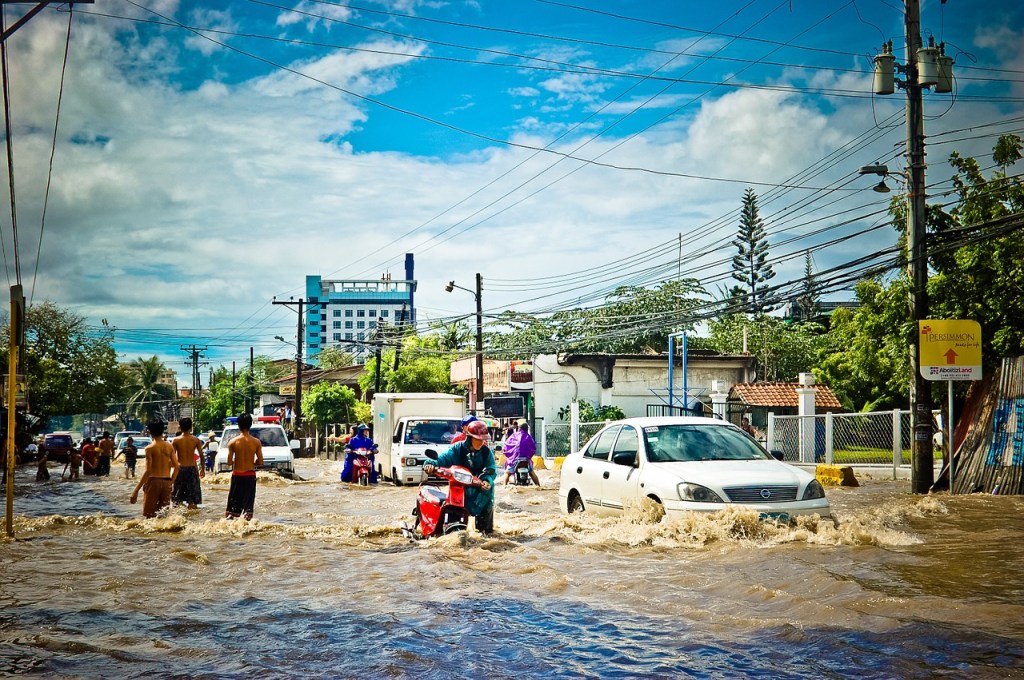
    For many people, the decision to leave one’s place of birth, family, friends and possessions for lands unknown is not one that is lightly taken. But this is a decision an increasing number of people will be forced to make. In 2018, a groundbreaking World Bank report entitled ‘Groundswell: Preparing for Internal Climate Migration estimated that in three regions of the world (Sub-Saharan Africa, South Asia and Latin America), just over 143 million people – or 2.8 percent of these regions’ population – could be internally displaced due to the effects of climate change by 2050. The year 2050 may seem like a long time away, but already in the Caribbean, we bear witness to the impact of displacement due to climate change.

    How climate change causes displacement

    Climate change is, without doubt, one of the biggest threats facing the planet and mankind. The Geneva-based Internal Displacement Monitoring Centre (IDMC) estimates that over the period 2008-2018, approximately 265.3 million people worldwide were internally displaced due to disasters. The IMDC further noted that Small Island Developing States (SIDS) were disproportionately affected by natural hazards. As climate change worsens, this number is increasing.

    Climate change causes displacement in several ways. Firstly, rising sea levels cause coastal erosion. Kiribati, an archipelagic nation in the Pacific comprising some thirty low-lying atolls, is on the frontlines of the climate crisis. Rising sea levels have already claimed some of its land area and it is estimated that the island nation will be uninhabitable within decades as whole islands could disappear.

    Secondly, hurricane damage can displace entire populations. The whole island of Barbuda (part of the island nation of Antigua & Barbuda) had to be temporarily evacuated following Hurricane Irma in 2017. A reported 130,000 Puerto Ricans (4% of the population) have left that US island territory in the aftermath of Hurricane Maria, according to the US Census Bureau.

    In September this year, the island of Abaco in the Bahamas was rendered virtually ‘uninhabitable’ due to category-five Hurricane Dorian which lingered above the island for hours unleashing torrential rain and storm surges. Thousands of Abaco residents had to be evacuated to Nassau, the capital of the Bahamas.

    Thirdly, changes in weather patterns can make some places uninhabitable due to drought, declining water supply and falling crop yields which force residents to move to more inhabitable and productive places. Sea level rise can also lead to saltwater infusion into natural aquifers, rendering the water undrinkable.

    Displacement due to climate change can affect any country. But the problem is exacerbated in SIDS like those in the Caribbean, the Asia-Pacific and the Indian Ocean, some of which are either low-lying and/or have small land areas. Even in some SIDS with larger land areas and/or more mountainous land topographies, the population and major infrastructure tend to be concentrated primarily along coastal areas putting them at risk to storm surges during storms and sea level rise.

    Whereas in a larger country like the US, for example, displaced populations can move to another State, inhabitants of small islands have no such luxury. For many SIDS, the threat of their homeland being rendered uninhabitable and eventually disappearing is a real one.

    What can be done?

    Firstly, it is important to tackle the root cause of climate-caused displacement – climate change. From individuals, to households, to businesses, to municipalities, to countries, we all have to make cutting our emissions and adopting environmentally friendly habits our imperative.

    We must pressure our leaders to honour the commitments they made upon signing the historic Paris Agreement in 2015. It is incumbent on SIDS to hold the international community to account, to not just aim for limiting global average temperature increases to no greater than 2 degrees Celsius above pre-industrial levels, but the more ambitious goal of 1.5 degrees. The previously mentioned World Bank Report noted that global action now could reduce the number of people forced to move due to climate change by as much as 80 percent.

    Secondly, while the term ‘climate refugee’ is used to describe natural persons who are displaced from their homelands by the adverse impacts of climate change, it is not a recognized term in international law. It also should be noted that while used interchangeably, ‘migrant’ and ‘refugee’ are two different concepts.

    The Convention Relating to the Status of Refugees of 1951 (Geneva Convention on Refugees), ratified by over 140 countries worldwide, only recognizes as a ‘refugee’ a person who is outside his or her country of nationality or habitual residence and who is unable or unwilling to return because of a wellfounded fear of being persecuted for reasons of race, religion, nationality, membership of a particular social group or political opinion”. Therefore, only persons falling under this definition are regarded under international law as ‘refugees’ and are entitled to the rights and protections under the Convention.

    Refugees have several rights and protections under the Geneva Convention on Refugees and other international conventions. These include the right of non-refoulement (not to be returned to the place where his/her life or freedom would be threatened due to any of the reasons listed in the Convention), right to education, employment, housing, freedom of movement, freedom of religion, inter alia.

    The UN Global Compact for Safe, Orderly and Regular Migration, signed by over 160 countries in 2018, was the international community’s first step towards recognising the concept of climate migrants for the first time. In light of growing numbers of displaced persons due to armed conflicts, political crises and natural disasters, this international agreement sought to create a global response for better managing migration. However, not only is the agreement non-binding, but several major countries have opted not to ratify it due to immigration concerns. The agreement is also limited to migrants, and does not explicitly recognise ‘climate refugees’.

    Countries’ asylum laws also do not currently recognize or protect ‘climate refugees’. It is, therefore, of interest to see one Democratic candidate, Julian Castro, in the current US Presidential election in 2020 commit to expanding US immigration law to provide recognition and protection for ‘climate refugees’.  In a report it was noted that “while the EU has so far not recognised climate refugees formally, it has expressed growing concern and has taken action to support and develop resilience in the countries potentially affected by climate-related stress”.

    The battle will not be easy. Climate-caused displacement is coinciding with a global migration crisis and a groundswell of nationalism, xenophobic sentiment and closing borders across the world, particularly in the US and western Europe. Just this week, in a sad but unsurprising move, the Trump Administration refused to grant temporary protection to Bahamians fleeing the post- Hurricane Dorian devastation in their homeland. However, as the countries most responsible for anthropogenic (manmade) climate change, the ‘Global North’ has a moral obligation to assist those poorer countries which are the most affected and least culpable for climate change, not only in terms of facilitating our mitigation and adaptation, but assisting our displaced people.

    The reality is that unless urgent action is taken to reduce global greenhouse gas emissions to limit climate change, we all may become climate refugees one day. Caribbean countries should join with other sympathetic nations to lobby for increased global action and lasting solutions to climate change, and the climate migration crisis. This includes calling for the explicit recognition of, and protections for, climate-displaced persons both in international law and the domestic law of countries.

    Alicia Nicholls, B.Sc., M.Sc., LL.B., is an international trade and development consultant with a keen interest in sustainable development, international law and trade. You can also read more of her commentaries and follow her on Twitter @LicyLaw.

    DISCLAIMER: All views expressed herein are her personal views and do not necessarily reflect the views of any institution or entity with which she may be affiliated from time to time.

  • Embracing ‘Mother India’: Some thoughts on prospects for enhanced India and Trinidad & Tobago trade

    Alicia Nicholls

    I was quite delighted when I read in the news last week that the Prime Minister of Trinidad & Tobago, the Hon Kamla Persad-Bissessar, is currently on a ten day official mission to India at the invitation of Indian Prime Minister, the Hon Manmohan Singh. Though I am not Trinibagonian or Indian for that matter, the news piqued my interest, particularly because I am a firm believer in south-south trade and development.  Two weeks ago, I wrote about the prospects of enhancing Brazil-CARICOM trade. This week, the state visit by Prime Minister Persad-Bissessar serves as a good backdrop against which to consider the prospects for enhanced Trinidad & Tobago-India trade.

    India-Trinidad & Tobago connection

    Trinidad & Tobago proudly calls itself the land of steelpan, calypso and chutney. Successive waves of European colonialism, indenture-ship and later waves of migration have made the twin island republic one of the most multicultural societies in the Commonwealth Caribbean.

    Trinidad & Tobago and India share more than just a deep passion for cricket. Though separated by many thousands of kilometers of land and sea, they are united by deep historic and cultural bonds rooted in the colonial experience. Indo-Trinibagonians are estimated to comprise 42% of that country’s population. Take a walk down the streets of Port of Spain on an average day and you can see restaurants and street vendors selling Indian-inspired local delicacies like roti and buss-up-shut. The uptempo rhythm of Chutney music shares the airwaves with soca and calypso and national holidays like Indian Arrival Day, Diwali and Eid-ul-Fitr are celebrated with reverence.

    Prime Minister Kamla Persad-Bissessar, whose ancestral village is in Bihar in India, is the first woman and the second person of Indian descent to ascend to the reins of Government in Trinidad & Tobago. She is also the first woman of the wider Indian diaspora to become a Head of Government.  Accompanied on the mission by a high-level ministerial and business delegation which also includes cricketing legend, Brian Lara, Prime Minister Persad-Bissessar is the chief guest at the 10th Pravasi Bhartiya Divas (PBD) ‘Global India-Inclusive Growth’ in Jaipur and will be conferred the coveted Pravasi Bharatiya Samman Award.  The PBD is a prestigious annual event which unites distinguished persons of Indian origin across the world. The event is part of India’s wider efforts to court and harness the potential of its vast diaspora for socio-economic development in the homeland and Trinidad & Tobago has seized the opportunity with open arms.

    Trinidad & Tobago-India Bilateral Trade

    Trinidad & Tobago and India have long shared strong diplomatic ties, which have been cemented through formal and informal cultural exchanges over the years, including the establishment of the Mahatma Gandhi Institute for Cultural Cooperation in Port of Spain and the provision of Indian Technical and Economic Cooperation (ITEC) programme scholarships to  Trinibagonian students each year.

    Trinidad & Tobago and India already do a fair and growing amount of bilateral trade.  According to a recent study published by the Export-Import Bank of India, Trinidad & Tobago is the leading country for Indian imports from the region, accounting for 79% in 2009-10 and is the second largest importer of Indian goods from the region (after the Bahamas).  The report reveals that manufactures of metals account for nearly half of Trinidad & Tobago’s imports from India followed by petroleum products, primary & semi-finished iron & steel, pharmaceutical products and plastic & linoleum products. Trinidad & Tobago is also the largest destination for Indian investment in the region, receiving 67.5% of these flows. The main sectors  for Indian investment in Trinidad & Tobago include finance, iron and steel and metal and food processing. Several major Indian multinational firms like Arcelor Mittal and the New India Assurance Co already have a presence in that country. India and Trinidad & Tobago also have a double taxation treaty.

    Embracing ‘Mother India’

    The move by Prime Minister Persad-Bissessar to capitalize on India’s overtures towards engaging its diaspora for homeland development is a smart and strategic one. Despite its current economic woes, India remains one of the most robust and dynamic economies in the world.  Currently the world’s tenth largest economy, India is predicted by the economic think tank the Centre for Economics and Business Research (CEBR) to become the world’s  fifth largest economy by 2020.   Besides the gains which Trinidad & Tobago-India trade present for south-south trade, Indian expertise and investment could help in Trinidad & Tobago’s export diversification, while greater trade links with India could help reduce the vulnerability associated with an over-reliance on too few export markets.

    Moreover, the move to embrace ‘Mother India’ is one which has global precedent. The Pacific island nation of Mauritius, which bears several similarities with Trinidad & Tobago including a large Indian diaspora, has strategically deepened its economic and cultural links with the sub-continent.  Mauritius is not only among the top direct investors in India, but the island is currently one of the preferred destinations for Indian outward FDI and serves a gateway for Indian investment in Africa.

    Though Indian investment in foreign countries has slowed, closer economic ties between India and Trinidad & Tobago could make it easier for Indian businesses to invest in and do business in Trinidad & Tobago and vice-versa.  The Export-Import Bank of India study cited several areas of potential sectors of Indian investment in Trinidad & Tobago, chiefly energy, fish processing, film and ICTs.  Besides its low energy costs, well-skilled workforce and favourable investment climate and incentives package, the twin island republic’s geographic location  has also been touted by its Prime Minister as the perfect base for Indian investment in the Latin America and Caribbean (LAC) region and for Ayurveda and wellness centres specialising in traditional Indian medicine and healing.

    In terms of Trinidad & Tobago-India services trade, there is much potential as well given the skills and know-how which Indian professionals could continue to bring to Trinidad & Tobago, particularly in the areas of engineering, traditional Indian medicine and information technology. This expertise sharing will not be one-way. As Prime Minister Persad- Bissessar  acknowledged, Trinidad & Tobago can provide to India over a hundred years of technical expertise in oil and natural gas production. Indeed, Trinidad & Tobago is already sharing this expertise with other developing countries, including Ghana.

    There is also much scope for expanded cultural industries trade and tourism given the strong cultural affinity many in the Indo-Trinibagonian community feel with ‘Mother India’ and the popularity of Bollywood music and films in Trinidad & Tobago. Trinidad & Tobago has also signaled an intention to promote steelpan music in India. Despite the long distance and prohibitive costs of air travel, Indo-Trinidadians seeking to trace their Indian roots and to learn about their ancestral home could be a good target market for Indian tourism officials. In regards to Indian tourism in Trinidad & Tobago, the Trinidad & Tobago government has already waived visa restrictions on Indians visiting that country for tourism and business purposes within a 90 year period.

    Indeed, the prospects for deepening Trinidad & Tobago and Indian trade are bright and exciting. According to the joint statement released by India and Trinidad & Tobago, bilateral agreements have already been signed on cooperation in the areas of air services, culture, technical education and traditional Indian medicine. Prime Minister Persad-Bissessar has also offered Trinidad & Tobago as a venue for hosting PBDs in the Caribbean. I think it would be useful for Trinidad & Tobago and India to encourage cooperation between their respective investment promotion agencies in order to better inform potential investors of investment opportunities in their respective countries and to facilitate the flow of investments between the two countries.  Just two more days are left in the official visit. I look forward to what other prospects they bring.

    Alicia Nicholls is a trade policy specialist and law student at the University of the West Indies. You can contact her here or follow her on Twitter at @LicyLaw.