Tag: Muslim ban

  • US Federal Appeals Court Upholds Suspension of Trump Travel Ban

    US Federal Appeals Court Upholds Suspension of Trump Travel Ban

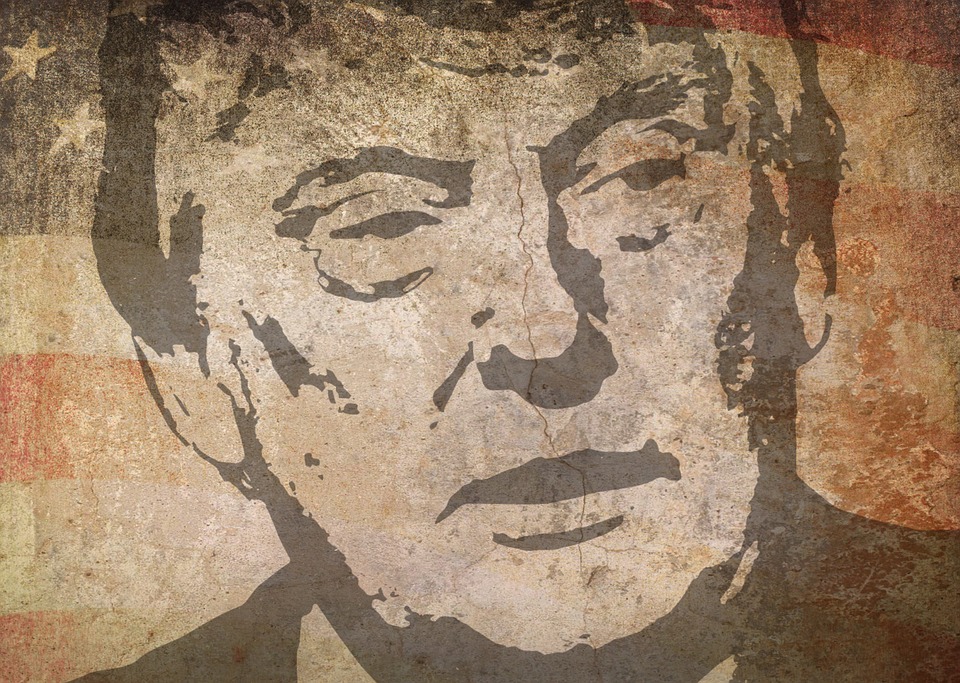
    Photo credit: Pixabay

    Alicia Nicholls

    Less than a month after taking office, the Trump Administration received another judicial blow yesterday to one of its major policy actions. The United States’  Court of Appeals for the Ninth Circuit in its decision in State of Washington v Trump dismissed the Government’s motion for a stay pending appeal of an order of the US District Court for the Western District of Washington which had temporarily suspended the travel ban nationwide.

    Background

    The genesis to the legal dispute was an executive order entitled “Protecting the Nation from Foreign Terrorist Entry into the United States” signed by President Trump on January 27, 2017. Inter alia, the order sought to ban for 90 days entry into the US of all nationals of seven predominantly Muslim countries, namely Iraq, Iran, Sudan, Yemen, Libya, Syria and Somalia, and indefinitely suspended entry of all Syrian refugees into the US. It also sought to suspend the US Refugee Admissions programme for 120 days, with further direction that on recommencement of the programme, the Secretary of State should prioritise refugees of a minority faith in their country (in this case it would be Christians) with claims of religious persecution.

    Upon its signature, the executive order’s impact was quick and brutal. Not only were thousands of visas cancelled but US greencard holders were among those who were either stranded at airports, separated from their families or being deported pursuant to the order. Protests erupted across the US and in several other countries. Several legal challenges were filed, including rulings by federal judges in New York and Massachusetts against the ban. Among the chaos, President Trump swiftly fired Acting Attorney General Sally Yates after she refused to defend the constitutionality of the order.

    The decisive blow to the travel ban came after the February 3rd ruling of Judge James Robart, federal judge in the United States District Court for the Western District of Washington. In State of Washington v Trump et. al , a challenge brought by the State of Washington, Judge Robart  held that certain actions of the executive order were ultra vires the constitution, enjoining the government from implementing those provisions and granting a temporary nation-wide restraining order. Thereupon, the Department of Homeland Security suspended implementation of the executive order, whilst the Government prepared its appeal.

    Issue 

    In the instant case, the Court was asked to consider the Government’s request for an emergency stay of the temporary nation-wide restraining order issued by Judge Robart. The Government requested the stay pending appeal of the order.

    Arguments

    The Government argued that the federal district court lacked authority to enjoin enforcement of the order because the President has “unreviewable authority to suspend the admission of any class of alien” and that his/her decisions on immigration policy and national security are unreviewable even where they contravene constitutionally-enshrined rights and protections. They further submitted that any challenge to such presidential authority by the judicial branch would be a violation of the principle of separation of powers.

    Counsel for the Government also argued that the States of Washington and Minnesota had no locus standi in this matter. However, the Court found that by showing the harm caused to their universities’ research and teaching because of the impact of the travel ban on those faculty members and students who are nationals of those countries, the states met the test for standing of “concrete and particularised injury” as was elaborated in Lujan v Defenders of Wildlife.

    In their arguments before the lower court, the states had argued that the executive order violated the procedural rights of aliens, including denying entry to greencard holders and non-immigrant visa holders without sufficient notice and without giving them an opportunity to respond. The states had also argued that the damage to their state economies and public universities were in violation of the First and Fifth Amendments to the US constitution and that they violated a wide range of Acts, including the Religious Freedom Restoration Act. Counsel for the states also reminded the court of President Trump’s words during the campaign as support for their argument that it was intended to be a “Muslim ban” and not an act to protect against terrorist attacks by foreign nationals.

    In the instant case before the federal appeals court, one of the things the Government had had  to show that it was likely to prevail against the due process claims made by the States.

    Judgment

    The learned judges, William C. Canby, Richard R. Clifton, and Michelle T. Friedland, considered four main questions in arriving at their decision: likelihood of the Government’s success on the merits of its appeal, whether the applicant would be irreparably injured absent a stay, whether issuance of the stay will substantially injure the other parties interested in the proceedings, and where the public interest lies.

    In an unanimous ruling (3-0), the Court denied the Government’s emergency motion for a stay, finding that the Government has neither shown a likelihood of success on the merits of its appeal nor has it shown that failure to enter a stay would cause irreparable injury.

    Moreover, in dismissing the Government’s central claim about the unreviewability of the president’s decisions on immigration policy, the court argued that there was no precedent to support this claim and that it is a claim which “runs contrary to the fundamental structure of our constitutional democracy”. The court rightly argued that it was merely exercising its role of interpreting the law. Relying on decided cases, the court held that while courts owe a deference to the executive branch in matters of immigration and national security, this does not mean that the courts lack authority to review compliance of executive branch actions with the constitution.

    So what next?

    True to form, President Trump used Twitter as his medium of choice to express his displeasure with the verdict. It is likely that the next step for the administration will be to appeal to the US Supreme Court.

    The full text of the Court’s judgment may be obtained here.

    Alicia Nicholls, B.Sc., M.Sc., LL.B., is a trade and development consultant with a keen interest in sustainable development, international law and trade. You can also read more of her commentaries and follow her on Twitter @LicyLaw.
  • A Week of Trumpism in ‘Action’

    A Week of Trumpism in ‘Action’

    Alicia Nicholls

    If President Trump’s cabinet picks were not enough to demonstrate that his campaign promises to shake up the status quo were not mere puffery, his first full week in the Oval Office provides glaring glimpses into Trumpism in ‘action’. During the past week, Mr. Trump has signed several executive actions aimed at effecting some of his most controversial campaign promises, including on trade, climate change and immigration. Many of these executive actions have implications not just for US domestic policy but the world.

    Trumpism

    The corpus of beliefs, of which Trumpism is comprised, remains embryonic and imprecise but at its core, Trumpism is undergirded by the nativist credos of “Make America Great Again” and “America First”. Trumpism is informed by President Trump’s core belief that America is losing its global economic and military hegemony, while at home the average American worker is being disadvantaged by the offshoring of manufacturing jobs due to “horrible trade deals”, “corruption in Washington” and the “uncontrolled” influx of migrants, particularly from Mexico. It also believes that immigration is a threat to US national security and public safety.

    Trumpism, therefore, sees four main constraints on America’s greatness: badly negotiated trade deals, over-regulation, a high tax burden and porous borders. In light of this, Mr. Trump’s anti-establishment campaign platform was particularly anti-trade and anti-immigration. The President’s campaign promises reflected policy proposals which were targeted not just at the not insignificant segment of the US population which shared his beliefs, but were aimed at making America “win” again.

    Withdrawal from TPP

    Although President Trump’s Trade Team nominees foreshadowed the seriousness of his mercantilist predilections, in week 1, we further saw the trade component of Trumpism at work, namely a disavowal of large trade deals in favour of bilateral deals.

    Mr. Trump signed a presidential memorandum instructing the United States Trade Representative (USTR) to “withdraw the United States as a signatory to the Trans-Pacific Partnership (TPP), to permanently withdraw the United States from TPP negotiations, and to begin pursuing, wherever possible, bilateral trade negotiations to promote American industry, protect American workers, and raise American wages.” It should be noted that the TPP had been signed but not been ratified by the US. Although TPP had been championed by former President Obama, US withdrawal from the TPP was also an issue on which there was rare bipartisan consensus.

    In the memorandum the President confirmed that “it is the intention of my Administration to deal directly with individual countries on a one-on-one (or bilateral) basis in negotiating future trade deals”. On the basis of this, it is likely that the Trans-Atlantic Trade and Investment Partnership (TTIP), which was under negotiation with the European Union (EU), may suffer a similar fate.

    Executive Action on Immigration

    Nativism is a central pillar of Trumpism and it is no surprise that immigration was one of the main issues he sought to cover with his executive actions this week. President Trump signed an executive order entitled “Border Security and Immigration Enforcement Improvements” to protect American national security and public safety.

    Among other things, the Order provides for the construction of a border wall along the 1954 mile border between Mexico and the US, it ends the catch and release policy, provides for increased deportation of criminal immigrants, seeks to add an additional 5,000 border patrol agents and pulls funding from Sanctuary Cities. In regards to the latter, the mayors of several Sanctuary Cities have vowed to defy Trump’s immigration order.

    In an ABC interview, the President reiterated that Mexico would be reimbursing the US for the proposed wall and that negotiations will be starting soon. Current Mexican President Enrique Pena Nieto and former Mexican president, Vicente Fox, have both forcefully denied that Mexico would be footing the bill for any such wall.

    Mr. Pena Nieto cancelled a meeting with Mr. Trump which had been scheduled for this week to discuss, inter alia, the renegotiation of the North American Free Trade Agreement (NAFTA). When challenged in the same interview on Mexico’s refusal to pay, Mr. Trump noted the US will be reimbursed even if in a “complicated” form. He has since proposed that it will be funded by a tax on Mexican imports, which any student of economics knows would not be a tax on Mexico but on American consumers!

    Visa and Refugee Restrictions

    Perhaps his most controversial executive action is the Protecting the Nation From Foreign Terrorist Entry Into the United States Order which puts a temporary entry ban on all refugees, as well as on nationals, immigrants and refugees from the following countries: Iraq, Syria, Iran, Sudan, Libya, Somalia, and Yemen. US Green card holders from these countries have also been affected. It also suspends the issuance of Visas and Other Immigration Benefits to nationals of those countries and also cancels the visa interview waiver.

    While the President has subsequently claimed it is not a “Muslim” ban, it is quite interesting that all of the countries on the list have majority Muslim populations. It also echoes the statement on preventing Muslim immigration which he had made during the campaign where he had called “a total and complete shutdown of Muslims entering the United States”.

    On Saturday, the detention of 12 refugees at John F. Kennedy Airport in New York, some of whom had provided assistance to the US government, sparked protests at major airports across the US and outrage around the world. Hameed Darwesh and Haider Al shalwi filed an Emergency Motion for Stay of Removal on behalf of themselves and others similarly situated.

    In the ruling on Darweesh v Trump, United States District Judge Ann Donnelly blocked (a) the removal of individuals with refugee applications approved by the U.S. Citizenship and Immigration Services as part of the U.S. Refugee Admissions Program, (b) holders of valid immigrant and non-immigrant visas, and (c) other individuals from the countries mentioned in the Ban which are legally authorized to enter the United States. However, it should be noted that it was not a ruling on the constitutionality of the Ban.

    The Wall Street Journal reports that the 90-day visa moratorium also applies to people who originally come the countries identified but are traveling on a passport issued by any other country.

    Iran has subsequently stated it will be taking ‘reciprocal’ action.

    A new US UN

    In a speech which raised eyebrows around the world, the US’ new United Nations Ambassador, Nikki Haley,threatened America’s allies that if they are not with America, America will be “taking a names”. Ambassador Haley, who is the former Governor of South Carolina, said there will be change in the way the US does business with the UN. She noted that US will show its strength and voice. The video of Ambassador Haley’s speech may be viewed on the New York Times’ online article.

    The Ambassador noted that “our goal with the administration is to show value at the U.N., and the way we’ll show value is to show our strength, show our voice, have the backs of our allies and make sure our allies have our back as well.” Without doubt, there are ways in which the UN’s operations can be improved. However, what this seems to be is a return to US unilateralism as opposed to multilateralism.

    Actions against the Environment

    In keeping with his promise to cut regulations and increase drilling for fossil fuels, Mr. Trump has signed presidential memoranda streamlining, permitting and reducing regulatory burdens for domestic manufacturing and facilitating the construction of the two controversial pipelines (Keystone XL Pipeline and the Dakota Access Pipeline). He also signed an executive order expediting environmental reviews and approvals for high priority infrastructure projects.

    All references to climate change were immediately scrubbed from the Whitehouse.gov website upon his taking office. Perhaps more worryingly are the gag orders on various government agencies, including the Environmental Protection Agency (EPA) which will now be headed by a climate change denier.  A report by the Guardian states that the Trump administration is now requiring studies or data from EPA scientists to undergo review by political appointees before they can be made public. US agencies are among some of the most important sources of climate-related data, which are critical in the fight against climate change.

    President Trump’s denial of climate change science is not outside of the Republican party mainstream, but as a Sierra Club report stated before the election, he would be (and currently is), the only sitting world leader to deny that man-made climate change exists.

    So what does this all mean?

    It has only been a week and we are already seeing the chaotic effects of Trumpism in action. Naturally, many of these executive orders will need the cooperation of Congress and the relevant agencies in order to be implemented. For instance, Congress will need to approve funds for the construction of the US-Mexico border wall, which despite President Trump’s assertions, Mexico will never pay for. The Congress is Republican-controlled but many Republican congressmen/women are self-professed fiscal conservatives who may not be willing to make the US taxpayer, of which they are a part, to  foot the astronomical costs for such a wall.

    Moreover, some of these actions may be challenged in court, as seen in the case of the Travel Ban. Of course, in light of the opposition to some of these moves it is possible that President Trump may moderate some of his stances. For the Caribbean, whose small island states have felt the ravages of climate change, the greatest worry will be his actions to reverse President Obama’s actions to curb the US’ emissions.

    What is most concerning for the world is that Mr. Trump’s actions evince a return to an inward looking US, a country once regarded as the leader of the “free world”. It prioritises a foreign, immigration and trade policy which places unilateralism over multilateralism, protectionism over fair/free trade and xenophobia over diversity. I would submit that this unfortunate shift not only weakens America’s standing in the world, but promotes increased global uncertainty, instability and perhaps, greater conflict.

    Alicia Nicholls, B.Sc., M.Sc., LL.B., is a trade and development consultant with a keen interest in sustainable development, international law and trade. You can also read more of her commentaries and follow her on Twitter @LicyLaw.