Tag: Paris Agreement

  • US Rejoining Paris Agreement: Important Step Forward but Giant Leaps Still Needed

    US Rejoining Paris Agreement: Important Step Forward but Giant Leaps Still Needed

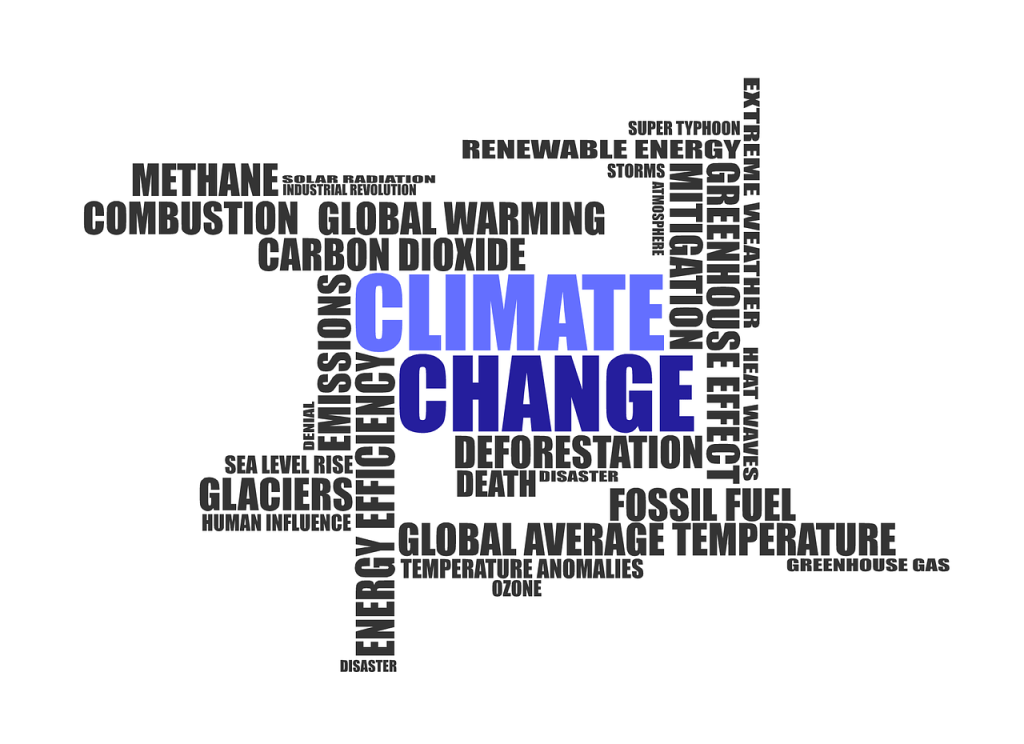
    Image by Gerd Altmann from Pixabay

    And just like we need a unified national response to COVID-19, we desperately need a unified national response to the climate crisis because there is a climate crisis.” – Remarks by President Joe Biden Before Signing Executive Actions on Tackling Climate Change, Creating Jobs, and Restoring Scientific Integrity

    Alicia Nicholls

    On February 19, 2021, the international community warmly hailed the United States’ (US) formal rejoining of the Paris Climate Agreement, some 107 days after its withdrawal under the previous administration. The Paris Agreement was concluded and adopted on December 12, 2015 by 196 Parties at the United Nations Framework Convention on Climate Change (UNFCCC) Twenty-first Conference of the Parties (COP 21) in Paris, France. It was the product of many years of efforts, but entered into force in record time on November 4, 2016.

    Under the Agreement, parties commit to taking actions to hold the global average temperature increase to “well below 2 degrees Celsius above pre-industrial levels”, while pursuing efforts to limit it to 1.5 degrees Celsius. To meet the Paris Agreement’s goals, countries are to submit nationally determined contributions (NDCs), outlining their post-2020 climate actions to reduce their national emissions and to adapt to climate change. NDCs are to become progressively more ambitious every five years. However, for developing countries, while financing is needed to achieve these efforts, the gap between mitigation and adaptation needs and available funding remains wide.

    This article discusses the significance of the US’ rejoining the Paris Climate Agreement. It argues that after taking several steps backward under the previous administration, the US’ recommitment to climate action is a welcomed step forward for increasing ambition in global mitigation efforts. It further posits, however, that nations must make giant leaps in their climate response ambitions to avert the worst case warming scenario. All developed nations should ramp up financing for developing countries’ climate action efforts, especially given the COVID-19 shock wrought on the economies of many of the world’s poorest and most vulnerable countries, including Small Island Developing States (SIDS).

    The steps backwards

    As a global challenge, climate change requires international cooperation for corrective action to be meaningful. Under the Barack Obama administration, the US was among the parties which negotiated and signed the Paris Agreement under the UNFCCC framework. Then Secretary of State, John Kerry, now President Biden’s Special Presidential Envoy on Climate Change, famously signed the Agreement on the US’ behalf with his granddaughter on his knee. Under the Obama Administration, the US committed under the Paris Agreement to reducing its emissions to 26-28% below 2005 levels by 2025.

    Even before assuming office officially, President Donald Trump quickly announced plans to pull the US out of the Paris Agreement, which he claimed was designed to kill American jobs. The Agreement’s withdrawal clause effectively bars any Party from withdrawing from the Agreement before a three year period from the Agreement’s entry into force for that party had elapsed, and such withdrawal would only take effect one year after.

    In the interim, President Trump rolled back or weakened over 100 Obama-era climate and environmental policies and regulations, covering anything from regulating vehicle to power plant emissions to endangered species. He also actively promoted the greater use of coal and other fossil fuels, and in his final days in office, he approved oil drilling in Alaska’s Arctic National Wildlife Refuge.

    On the five year anniversary of the Agreement’s signing, President Trump ‘honoured’ his campaign pledge and made the US the only country to date to pull out of the pact on November 4, 2020, just two days before the US presidential election. Although US action on climate change at the federal level ceased under the Trump administration, some States whose mayors, Governors and CEOs signed on to the “We’re still in movement” thankfully continued to implement clean energy and climate-friendly reforms.

    The steps forwards

    The world breathed a collective sigh of relief upon news of President Joe Biden’s election win which, among other things, brought the assurance that the US would once again follow the science that anthropogenic (man-made) climate change was real and urgent global action was needed to avert the looming climate crisis.

    On his first day of office, President Biden signed a letter of acceptance of the Paris Agreement. On January 27, 2021, the White House issued a comprehensive executive order drawing attention to the urgency of the climate crisis and making some key decisions, such as the establishment of a National Climate Task Force and a commitment to make climate change both a national and US foreign policy priority. Moreover, by twinning climate action with his economic recovery plan, Biden’s proposed $2 trillion dollar stimulus aims not only to ramp up US climate action to protect the planet, but to create jobs and promote US economic recovery in an environmentally sustainable manner.

    The giant leaps needed

    President Biden has called for bold climate action and given the four year lapse in federal action, he may have to propose targets which are more ambitious than the Obama-era targets. But he will need congressional support and action if his climate policies are to have any durability as executive actions can only go so far and can be easily overturned by a subsequent president.

    Other major polluting nations will also have to step up to the plate. According to the World Resources Institute (WRI) reporting, ten nations account for over 68% of global GHG emissions. China ranks as the world’s largest polluter emiting 26% of global GHGs, followed by the US at 13%, the EU at 7.8% and India at 6.7%. In a TedTalk held on the same day as the US’ rejoining of the Paris Agreement took effect, Special Envoy Kerry called the upcoming COP26 talks to be held in Scotland, UK later this year the “last, great hope”. He also accused other major polluters of not doing enough to reduce their greenhouse gas emissions, while noting that a global climate summit the administration will host on April 22 (Earth Day) will, inter alia, seek to increase ambition in advance of COP26.

    Although the COP26 was postponed from last year due to COVID-19, an ambition summit was held in December 2020 in which several parties pledged net zero targets. China’s President Xi in December 2020 restated China’s commitment to reach peak carbon levels by 2030 but upgraded China’s ambition level by pledging a carbon intensity reduction of over 65% on a 2005 baseline by 2030. Of note was that several SIDS were among those 75 countries which pledged new commitments at the Climate Ambition Summit. Barbados, Fiji, the Maldives and Nauru were among the countries which made net zero-related pledges, according to IISD reporting. The EU has committed to cutting net GHG emissions EU-wide by at least 55% by 2030 with the goal of achieving carbon neutrality by 2050, while the UK pledged to reduce its GHG emissions at least 68% below 1990 levels by 2030.

    But are these efforts ambitious enough? The latest Emissions Gap Report (2020) called the current levels of ambition in countries’ NDCs “seriously inadequate” and would result in an at least 3 degrees Celsius rise in global temperatures above pre-industrial levels by 2100. It further cautioned that the 7% decline in CO2 emissions in 2020 caused by the COVID-19 pandemic will “make no significant difference to long-term climate change”. Moreover, a recent empirical study by Liu & Raftery (2021) found not only that the probability of major polluters meeting their NDCs was low, but that for temperature increases to be less than 2 degrees Celsius, the average rate of decline in emissions would need to increase from the 1% to 1.8% per year.

    According to the US’ National Oceanic and Atmospheric Administration (NOAA), 2020 was second only to 2016 as the world’s hottest year on record. Large chunks of the glaciers in Greenland and Antarctica continue to melt, threatening SIDS and coastal communities with increased sea level rise. While SIDS are most at threat from climate change’s adverse impacts, continental States can also be affected. In his speech on the signing of the Executive Order, President Biden referenced the record wildfires in the western US and more powerful hurricanes affecting the US gulf and east coasts. Over the past week, the US state of Texas experienced unbearably cold temperatures due to a severe winter storm, which caused both power and water outages and several deaths.

    There is also the other important issue of climate financing to assist developing countries, which often face capacity constraints and limited domestic finance options, in their mitigation and adaptation efforts. At COP15 developed countries committed to mobilise jointly USD 100 billion each year in climate finance by 2020, but financing has fallen short of the target. The US had pledged $3 billion to the fund under the Obama administration, but paid only $1 billion ($500 million in two batches) before he left office. President Trump ordered a stop to the remaining $2 billion pledged to the fund. John Kerry has, however, pledged that US will “make good” on its pledge to the Green Climate Fund.

    At the Climate Ambition Summit, several countries, including the UK, made additional climate finance pledges, but these are only useful once they are acted upon. Climate finance is especially important now that many fiscally constrained SIDS, such as those in the Caribbean, have seen dramatic revenue drops because of COVID-19’s impact on their tourism industry. This leaves these governments with limited funds to finance their mitigation and adaptation efforts. This is coupled with the ineligibility of some Caribbean countries, like the Bahamas, Barbados and Trinidad & Tobago, for concessional financing due to their classification as upper middle income or high income economies solely on an income per capita basis.

    Redoubling efforts at making climate financing available for developing countries will also be critical for their achievement of the 17 UN Sustainable Development Goals (SDGs) by the 2030 target. Although SDG 13 speaks specifically to climate action, countries’ achievement of many of the other SDGs, for example, no poverty (SDG 1) and access to clean water (SDG 6), can be jeopardised by insufficient financing for climate action.

    Important step forward, giant leaps still needed

    In closing, the US’ rejoining of the Paris Agreement is an important step forward for the global climate fight, after taking several steps back under the previous administration. However, as ambition levels in countries’ current NDCs remain woefully inadequate for achieving the Paris Agreement’s objectives and avoiding the worst effects of climate change, all countries must make a giant leap forward to reduce their emissions. Developed countries should also redouble efforts to step up climate financing for developing countries, many of which are now even less financially able to fund their climate action due to the COVID-19 shock.

    Alicia Nicholls, B.Sc., M.Sc., LL.B. is an international trade and development specialist. Follow her on Twitter at @Licylaw and read her commentaries on www.caribbeantradelaw.com.
  • COP25 climate talks: What’s at stake?

    COP25 climate talks: What’s at stake?

    Alicia Nicholls

    Caribbean representatives will shortly join their international counterparts in Madrid, Spain, from December 2-13, 2019 for the 25th meeting of the Conference of the Parties – the decision making body of the United Nations Framework Convention on Climate Change (UNFCCC).

    Climate change is the greatest threat facing the planet, and for many low-lying small island developing States (SIDS), coastal cities and communities, it is an existential one.  In recognition of the climate crisis, leaders from over 190 countries signed the historic Paris Climate Change Agreement in 2015 at the end of COP21 in Paris. Inter alia, they agreed to the ambitious but important goal of keeping global average temperature increases to well below 2 degrees Celsius above pre-industrial levels and to pursue efforts towards a 1.5 degrees Celsius ceiling.

    To achieve this goal, the Agreement’s framers recognised that the world needed to reach global peaking of greenhouse gas (GHG) emissions as soon as possible.  However, with emissions still rising, countries’ levels of climate action and ambition remain too feeble to address the severity of the climate crisis. A significant increase in both at COP25 will be needed if the world is to avert the impending climate disaster.   

    World climate action/ambition still off-track

    The just released United Nations Environment Programme (UNEP) Emissions Gap Report 2019 showed that GHG emissions “continue on an upward trajectory and reached a record high of 55.3 GtCO2e in 2018”. The report found that G20 members, which account for 78 per cent of global GHG emissions, are collectively “on track to meet their limited 2020 Cancun Pledges”.  But, it noted that “seven countries are currently not on track to meet 2030 NDC commitments, and for a further three, it is not possible to say”. The report concluded that greater action by G20 members “will be essential for the global mitigation effort”.

    Making reference to the “large” emissions gap, the Emissions Gap Report further indicated that “in 2030, annual emissions need to be 15 GtCO2e lower than current unconditional Nationally Determined Contributions (NDCs) imply for the 2°C goal, and 32 GtCO2e lower for the 1.5°C goal”. This means the level of ambition in countries’ NDCs – their national commitments for reducing emissions and pursuing adaptation – remains too low to meet the Paris goal. As such, countries will need to agree to deeper emissions cuts in a shorter time frame.

    What will be discussed at COP25?  

    Even in its planning stages, COP25 has already faced and overcome two potential ‘crises’. Firstly, Chile assumed COP25 chairmanship after Brazil reneged on its offer to chair the event, shortly following the election of then incoming President Jair Bolsonaro. Secondly, weeks leading up to the event, Spain stepped in as the host nation after mass civil unrest caused the Chilean government to abandon hosting both the COP25 and an APEC trade summit. As such, the event will be chaired by Chile but held in Madrid. The President-designate of COP25 will be Her Excellency Carolina Schmidt of Chile.

    At COP24 in Poland last year, parties completed the majority of the implementation rules and guidelines of the Paris Agreement – the so called ‘Rulebook”. At COP25, they will continue deliberations to allow for the Agreement’s full operationalization. Key on the agenda to be resolved is establishing rules for implementing Article 6 of the Paris Agreement which pertains to market-based tools for limiting GHGs, such as international carbon markets.  Due to the sensitivity of this issue, the parties were unable to agree on ‘Article 6 rules’ at the COP24 and deferred the issue to COP25.

    Developing countries will, in particular, be concerned about climate finance critically needed for their mitigation and adaptation efforts. The parties at COP25 will also review the Warsaw International Mechanism for Loss and Damage associated with Climate Change Impacts.   

    Importantly, a goal of COP25 will be ramping up global climate ambition in advance of 2020 – when countries have committed to submitting their revised NDCs and their long-term low GHG emissions development strategies.

    On this note, it would not be lost on participants that the US, the highest producer of GHG emissions on a per capita basis, has formally withdrawn from the Paris Agreement. While the US’ withdrawal will not take effect until November 2020, the Trump Administration has in the interim been reversing environmental regulations, including those enacted under the former Obama Administration.

    To date, the US is the only country to have withdrawn from the Paris Agreement. Other major emitters such as China (the world’s largest producer of GHG emissions on an absolute basis), the EU and India have not followed suit. Indeed, incoming president of the EU executive Commission, Ursula von der Leyen, plans to make the EU “the world’s first climate-neutral continent” by 2050 and has promoted a European Green Deal.

    Although the Trump administration has been reversing federal level environmental regulations, several US states, cities and businesses have maintained their commitment to climate action under America’s Pledge Initiative. According to the America’s Pledge Initiative, these represent “65% of the US population and 68% of the economy”. While this is some comfort, the potential absence of the world’s second largest emitter from the Agreement is a political setback for ratcheting up climate action at a time when the stakes are ever higher.

    Stakes remain high

    The Intergovernmental Panel on Climate Change (IPCC) Special Report on Global Warming of 1.5°C published in 2018 found that human activity has already caused the earth to warm by 1 degree Celsius. Though a point five degree difference may sound negligible, the IPCC report found that even a 2 degree Celsius increase in warming could cause catastrophic impacts. The IPCC also more recently published two other special reports highlighting the real impact of climate change on land, and on the ocean and cryosphere.

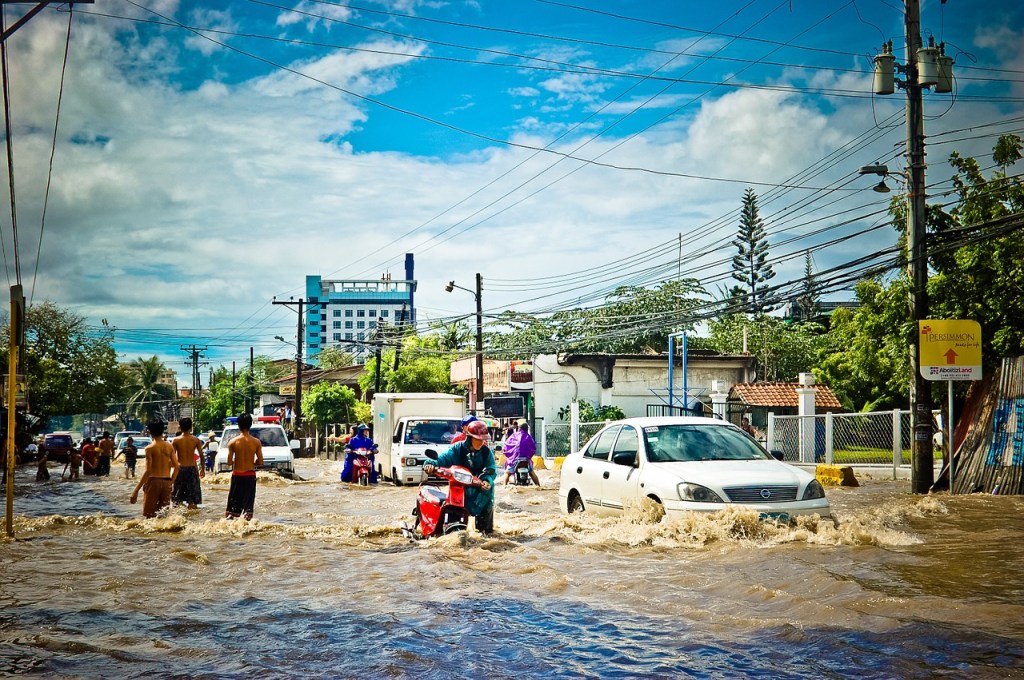
    There has been a noticeable increase in the number of climate-related events and disasters internationally, be it droughts, flooding, record wild fires or faster than expected melting of the polar ice caps. These events have affected several countries around the world. But, it must be emphasized, while SIDS contribute the least to climate change (together accounting for less than 1% of global emissions), they are among the most negatively affected by the adverse impacts of climate change. Indeed, rising sea levels are already negatively affecting our fragile coastlines.

    The recent IDB assessment on the effects and impact of Hurricane Dorian in the Bahamas estimated damages at $2.5 billion, and losses at $717.3 million, with most of the damage confined to the Abaco Islands and to a lesser extent, Grand Bahama. According to the IDB report, there were 67 confirmed deaths and 282 missing persons as of 18 October 2019. This is by no means an isolated incident. As sea surface temperatures increase, scientists predict more intense hurricanes.  

    Climate change has already caused shifts in weather patterns with implications for food security and access to water. Besides the human impact, it also threatens the tourism, manufacturing and agriculture industries, which are the economic building blocks, to varying extents, of most of our Caribbean economies.   

    Debate in silos

    On another note, the debate on climate change and trade is still to a large extent occurring in silos. The Paris Agreement does not touch on trade, which is not only a contributor to climate change, but can and has been impacted by climate change. Similarly, trade officials are not among the negotiators at climate talks.

    However, the World Trade Organisation, the global regulator of international trade, has since April 2018 hosted three Natural Disasters and Trade symposia, and will on November 29 host its fourth. With financing from the Permanent Mission of Australia to Geneva, three research studies focused on the macro-economic impacts on disaster-affected countries and the trade issues arising in the disaster response, recovery and resilience-building. The country studies were Nepal, the Caribbean (Dominica and St. Lucia) and The Pacific (Fiji, Tonga and Vanuatu).

    Barbados’ co-hosting of the UNCTAD XV quadrennial conference in October next year is the perfect opportunity to keep climate action high on the trade and development agenda and to bring these two disciplines together.

    In conclusion

    Nearly four years after world leaders gathered at COP21 and negotiated and signed the historic Paris Agreement, levels of climate action and ambition do not match the severity of the impending climate crisis. Certainly, governments, businesses, households, and individuals all have their role to play in reducing their emissions footprint. But it is imperative for governments to set the policy tenor by enacting environmental legislation, and creating an enabling environment for the adoption of renewable energy and climate-friendly practices, products and services. With COP25 a mere week away, what the world needs right now is urgent and coordinated action to step up mitigation and adaptation efforts and accelerate the shift to a climate-friendly and resilient future.

    Alicia Nicholls, B.Sc., M.Sc., LL.B., is an international trade and development consultant with a keen interest in sustainable development, international law and trade. You can also read more of her commentaries and follow her on Twitter @LicyLaw.

    DISCLAIMER: All views expressed herein are her personal views and do not necessarily reflect the views of any institution or entity with which she may be affiliated from time to time.

  • Climate refugees: A new reality for Caribbean Small States?

    Climate refugees: A new reality for Caribbean Small States?

    Alicia Nicholls

    For many people, the decision to leave one’s place of birth, family, friends and possessions for lands unknown is not one that is lightly taken. But this is a decision an increasing number of people will be forced to make. In 2018, a groundbreaking World Bank report entitled ‘Groundswell: Preparing for Internal Climate Migration estimated that in three regions of the world (Sub-Saharan Africa, South Asia and Latin America), just over 143 million people – or 2.8 percent of these regions’ population – could be internally displaced due to the effects of climate change by 2050. The year 2050 may seem like a long time away, but already in the Caribbean, we bear witness to the impact of displacement due to climate change.

    How climate change causes displacement

    Climate change is, without doubt, one of the biggest threats facing the planet and mankind. The Geneva-based Internal Displacement Monitoring Centre (IDMC) estimates that over the period 2008-2018, approximately 265.3 million people worldwide were internally displaced due to disasters. The IMDC further noted that Small Island Developing States (SIDS) were disproportionately affected by natural hazards. As climate change worsens, this number is increasing.

    Climate change causes displacement in several ways. Firstly, rising sea levels cause coastal erosion. Kiribati, an archipelagic nation in the Pacific comprising some thirty low-lying atolls, is on the frontlines of the climate crisis. Rising sea levels have already claimed some of its land area and it is estimated that the island nation will be uninhabitable within decades as whole islands could disappear.

    Secondly, hurricane damage can displace entire populations. The whole island of Barbuda (part of the island nation of Antigua & Barbuda) had to be temporarily evacuated following Hurricane Irma in 2017. A reported 130,000 Puerto Ricans (4% of the population) have left that US island territory in the aftermath of Hurricane Maria, according to the US Census Bureau.

    In September this year, the island of Abaco in the Bahamas was rendered virtually ‘uninhabitable’ due to category-five Hurricane Dorian which lingered above the island for hours unleashing torrential rain and storm surges. Thousands of Abaco residents had to be evacuated to Nassau, the capital of the Bahamas.

    Thirdly, changes in weather patterns can make some places uninhabitable due to drought, declining water supply and falling crop yields which force residents to move to more inhabitable and productive places. Sea level rise can also lead to saltwater infusion into natural aquifers, rendering the water undrinkable.

    Displacement due to climate change can affect any country. But the problem is exacerbated in SIDS like those in the Caribbean, the Asia-Pacific and the Indian Ocean, some of which are either low-lying and/or have small land areas. Even in some SIDS with larger land areas and/or more mountainous land topographies, the population and major infrastructure tend to be concentrated primarily along coastal areas putting them at risk to storm surges during storms and sea level rise.

    Whereas in a larger country like the US, for example, displaced populations can move to another State, inhabitants of small islands have no such luxury. For many SIDS, the threat of their homeland being rendered uninhabitable and eventually disappearing is a real one.

    What can be done?

    Firstly, it is important to tackle the root cause of climate-caused displacement – climate change. From individuals, to households, to businesses, to municipalities, to countries, we all have to make cutting our emissions and adopting environmentally friendly habits our imperative.

    We must pressure our leaders to honour the commitments they made upon signing the historic Paris Agreement in 2015. It is incumbent on SIDS to hold the international community to account, to not just aim for limiting global average temperature increases to no greater than 2 degrees Celsius above pre-industrial levels, but the more ambitious goal of 1.5 degrees. The previously mentioned World Bank Report noted that global action now could reduce the number of people forced to move due to climate change by as much as 80 percent.

    Secondly, while the term ‘climate refugee’ is used to describe natural persons who are displaced from their homelands by the adverse impacts of climate change, it is not a recognized term in international law. It also should be noted that while used interchangeably, ‘migrant’ and ‘refugee’ are two different concepts.

    The Convention Relating to the Status of Refugees of 1951 (Geneva Convention on Refugees), ratified by over 140 countries worldwide, only recognizes as a ‘refugee’ a person who is outside his or her country of nationality or habitual residence and who is unable or unwilling to return because of a wellfounded fear of being persecuted for reasons of race, religion, nationality, membership of a particular social group or political opinion”. Therefore, only persons falling under this definition are regarded under international law as ‘refugees’ and are entitled to the rights and protections under the Convention.

    Refugees have several rights and protections under the Geneva Convention on Refugees and other international conventions. These include the right of non-refoulement (not to be returned to the place where his/her life or freedom would be threatened due to any of the reasons listed in the Convention), right to education, employment, housing, freedom of movement, freedom of religion, inter alia.

    The UN Global Compact for Safe, Orderly and Regular Migration, signed by over 160 countries in 2018, was the international community’s first step towards recognising the concept of climate migrants for the first time. In light of growing numbers of displaced persons due to armed conflicts, political crises and natural disasters, this international agreement sought to create a global response for better managing migration. However, not only is the agreement non-binding, but several major countries have opted not to ratify it due to immigration concerns. The agreement is also limited to migrants, and does not explicitly recognise ‘climate refugees’.

    Countries’ asylum laws also do not currently recognize or protect ‘climate refugees’. It is, therefore, of interest to see one Democratic candidate, Julian Castro, in the current US Presidential election in 2020 commit to expanding US immigration law to provide recognition and protection for ‘climate refugees’.  In a report it was noted that “while the EU has so far not recognised climate refugees formally, it has expressed growing concern and has taken action to support and develop resilience in the countries potentially affected by climate-related stress”.

    The battle will not be easy. Climate-caused displacement is coinciding with a global migration crisis and a groundswell of nationalism, xenophobic sentiment and closing borders across the world, particularly in the US and western Europe. Just this week, in a sad but unsurprising move, the Trump Administration refused to grant temporary protection to Bahamians fleeing the post- Hurricane Dorian devastation in their homeland. However, as the countries most responsible for anthropogenic (manmade) climate change, the ‘Global North’ has a moral obligation to assist those poorer countries which are the most affected and least culpable for climate change, not only in terms of facilitating our mitigation and adaptation, but assisting our displaced people.

    The reality is that unless urgent action is taken to reduce global greenhouse gas emissions to limit climate change, we all may become climate refugees one day. Caribbean countries should join with other sympathetic nations to lobby for increased global action and lasting solutions to climate change, and the climate migration crisis. This includes calling for the explicit recognition of, and protections for, climate-displaced persons both in international law and the domestic law of countries.

    Alicia Nicholls, B.Sc., M.Sc., LL.B., is an international trade and development consultant with a keen interest in sustainable development, international law and trade. You can also read more of her commentaries and follow her on Twitter @LicyLaw.

    DISCLAIMER: All views expressed herein are her personal views and do not necessarily reflect the views of any institution or entity with which she may be affiliated from time to time.

  • COP 24: Paris Agreement Rule Book Agreed But Is It Enough?

    COP 24: Paris Agreement Rule Book Agreed But Is It Enough?

    Alicia Nicholls

    On December 15th, 2018, nearly 200 countries signed off on the rules required for translating the Paris Agreement from mere aspirational words on paper to an operable agreement. Agreement on the Paris Agreement ‘rule book’ came late on Saturday night, one day after the Twenty-Fourth Conference of the Parties to the United Nations Framework Convention on Climate Change (COP24) talks were scheduled to conclude.

    While there is understandable international relief and jubilation that an agreement for operationalising the Paris Agreement has been reached after two weeks of at times tension-filled negotiations, climate-vulnerable countries like Small Island Developing States (SIDS) would be justified in opining that the global political response to the climate change crisis still remains well below what is needed to stop irreversible global warming which threatens their very existence, and the future of the planet.

    Background

    Over 20,000 delegates from 196 nations converged in the small Polish town of Katowice from December 3-14, 2018 with one primary objective in mind – formulating the guidelines and institutional mechanisms for giving life to the landmark Paris Agreement adopted at COP21 in 2015 in Paris, France.

    While far from perfect, the Paris Agreement represents a commitment by the parties to hold the global average temperature increase to levels below 2 degrees Celsius above pre-industrial levels and to pursue efforts to limit it to 1.5 degrees Celsius, to increasing the ability to adapt to the adverse impacts of climate change and foster climate resilience, to make available finance flows for climate change mitigation and adaptation, and to reach global peaking of greenhouse gas emissions as soon as possible.

    The Paris Agreement rule book includes the modalities, procedures and guidelines for making this happen. A deadline of December 2018 was set for the rule book’s completion, which meant that negotiators were in a double race against time.

    Given the need to balance the national interests of almost 200 countries, the many technical issues to be negotiated, the threat to multilateral diplomacy posed by growing nationalism and populism, and the current climate-skeptic rhetoric by the world’s second largest anthropogenic carbon dioxide (CO2) emitter (the US), the success of the talks was hoped for, but not assured. Negotiators were walking a thin rope and the negotiated outcome reflects many areas of compromise, including on areas where climate-vulnerable countries, like SIDS, would have wished more robust language to reflect the urgency of the political action needed.

    What was agreed?

    The majority of the rule book has been completed. The parties have decided on the rules for reporting on their mitigation, adaptation and financing efforts in a universal and transparent manner.

    As opposed to a bifurcated system (separate rules for poor and rich countries), the rule book establishes a single set of rules for transparent reporting. This was one of the lines drawn in the sand by the US and the European Union (EU) to ensure, in particular, that large developing countries like China abide by the same transparency rules as they.

    The rules for the enhanced transparency framework provide flexibility for “developing country parties that need it in the light of their capacities” in the implementation of the transparency provisions of the Paris Agreement. This will be on the basis of self-determination, and developing countries seeking to avail themselves of these flexibilities must clearly indicate the provision to which flexibility is applied, concisely clarify capacity constraints, and provide self-determined estimated time frames for improvements in relation to those capacity constraints.

    A further flexibility comes with respect to reporting support. The rule book uses the legally binding language of “shall” for developed country parties with respect to providing information on support given, while for other parties, it uses less forceful language in the form of “should”.

    Under the Paris Agreement, each party committed to progressively ambitious Nationally Determined Contributions (NDCs) which reflect their pledges to climate action and are to reflect their highest possible ambition. Of note is that the interim public registry developed by the UNFCCC Secretariat will serve as the public registry for parties’ NDCs. The registry will be accessible for use by the parties, stakeholders and the public. From 2031 onward, parties are to apply common time frames to their NDCs. The exact time frame is to be determined later.

    One of the issues at COP24 was scaling up parties’ ambitions by 2020 because when calculated, the current ambition level in countries’ existing NDCs puts global average temperature increases on track for more than 3 degrees Celsius above pre-industrial levels. This was noted in a Special Report on Global Warming at 1.5 Degrees Celsius released by the Intergovernmental Panel on Climate Change (IPCC). This temperature increase would be well-above the Paris Agreement goal and towards levels that would lead to even more irreversible global warming, and would put some low-lying SIDS under water, literally.

    The IPCC further warned that restricting temperature increases to 1.5 degrees Celsius above pre-industrial levels would limit some of the more severe climate change impacts, than at 2 degrees, confirming what SIDS were arguing under their “1.5 to stay alive” campaign in the lead up to COP21 when the Paris Agreement was signed.

    How these scientific findings in the IPCC report were to be treated was a major sticking point in the COP24 negotiations. In a blow to climate activists and SIDS, fervent objection by the US and the major oil-exporting nations of Russia, Saudi Arabia and Kuwait led to a weak statement which merely welcomes the “timely completion” of the Report, but is silent on its dire findings.

    Financing for developing countries’ mitigation and adaptation efforts is critically important, especially for SIDS whose climate vulnerability far exceeds their ability to self-finance their mitigation and adaptation efforts. It was agreed that the Adaptation Fund, which was established under the Kyoto Protocol, will serve the Paris Agreement. Some countries have also made additional pledges to the Green Climate Fund, another multilateral fund. Another nugget of good news is that parties have agreed to increase the collective climate finance goal post 2020 beyond the current goal of 100 billion USD per year. However, it is not yet decided by how much.

    While the parties recognise the importance of capacity-building, they put off adoption of a decision on the initial institutional arrangements for capacity building to COP25.

    Loss and damage due to climate change’s irreversible and adverse impacts remains a sensitive issue for developed countries, but one on which climate-vulnerable countries, such as SIDS, are particularly concerned. Indeed, climate change impacts have cost some SIDS like Dominica after Hurricane Maria in 2017 the equivalent of 226% of GDP, at a time when that country was still recovering from the devastation of Tropical Storm Erika in 2015.

    SIDS fought hard for the inclusion of loss and damage in the Paris Agreement, and although ‘loss and damage’ is also included throughout the rule book, the language is less robust than desired. The transparency rules provide that countries “may, as appropriate” report on loss and damage, and the global stocktake rules “may take into account, as appropriate..efforts to avert, minimise and address loss and damage”.

    Another example of compromise is in the weak compliance mechanism provided for. Under the Paris Agreement, this mechanism is “to facilitate implementation of and promote compliance with the provisions of the Agreement”. The rule book makes clear that the committee is to “neither function as an enforcement or dispute settlement mechanism, nor impose penalties or sanctions, and shall respect national sovereignty”. This mechanism, therefore, will have to rely on moral suasion for ensuring compliance.

    The compliance mechanism will consist of an elected 12-member committee which is to function in a manner that is “transparent, non-adversarial and non-punitive”. In a nod to developing countries, the committee membership is to have “2 members each from the five regional groups of the United Nations and 1 member each from the small island developing States and the least developed countries, taking into account the goal of gender balance”. It “shall pay particular attention to the respective national capabilities and circumstances of Parties.”

    A critical area which remains incomplete is that of voluntary market mechanisms. Agreement on this was held up as Brazil objected strongly to rules preventing double counting. This issue has been deferred to COP25 which will be held in Chile.

    What next?

    The rule book is a welcomed achievement given the swirling headwinds it had to face leading up to its negotiation. But the reality of balancing varying political interests meant that the text features many areas of compromise, with the net result that the political response and ambition do not adequately reflect the urgency needed to confront the magnitude of the climate crisis.

    The Global Carbon Project released a report noting that global carbon emissions are to reach an all-time high in 2018. While SIDS are undoubtedly at the frontlines of the climate change battle, natural disasters, such as the impact of Hurricane Harvey (2017) and Hurricane Katrina (2005) in the US, show that large countries are by no means immune to climate change’s most disastrous effects. Climate action is, therefore, in all countries’ interests.

    Political headwinds, however, still threaten the global climate response as powerful fossil fuel interests now have climate deniers in the highest positions of political power. Brazil has withdrawn its offer to host next year’s COP25. Its incoming President Jair Bolsonaro, a climate change denier, has already signalled his support for increased agricultural production in the Amazon – the world’s largest green lung. The Trump Administration has re-emphasised a commitment to so-called ‘clean’ coal, rolled back many Obama-era emissions-cutting initiatives and has indicated earlier this year that the US is withdrawing from the Paris Agreement. Under the Agreement, the US cannot withdraw until 2020 and its delegation played an active role in the COP24 negotiations, especially on the issue of transparency. However, should President Trump be re-elected in 2020 and the US make good on its threat to withdraw, this will have implications for the Agreement and on global climate action more widely.

    The next few years will be critical for climate action. At COP25 in Chile next year, the parties will seek to finalise the final details of the rule book. However, before this, a special climate summit will be convened in September 2019 to mobilise ambition. The deadline for current emissions commitments is 2020 and new targets will have to be set. Failure to scale up ambitions puts SIDS and future generations at risk of climate disaster. More ambitious political action will be needed to ensure a transition to a low carbon and climate resilient world which ensures that the most deleterious climate change impacts are averted.

    The informal text may be found here.

    Alicia Nicholls, B.Sc., M.Sc., LL.B., is an international trade and development consultant with a keen interest in sustainable development, international law and trade. You can also read more of her commentaries and follow her on Twitter @LicyLaw.