Tag: SIDS

  • Could citizenship by investment be a homegrown solution to address loss and damage?

    Could citizenship by investment be a homegrown solution to address loss and damage?

    Javier Spencer, Guest contributor

    Javier Spencer

    “We have lost everything” is the harrowing cry you would hear from someone in the aftermath of a climate disaster. And ‘everything’ in this context is not a hyperbole but a stark reality. For instance, the paradise islands of Barbuda (part of Antigua & Barbuda) and Dominica were hit by catastrophic hurricanes in September 2017. The hard blow experienced by both islands resulted in permanent infrastructural damages, economic losses, and losses of lives and livelihoods. The onset of these disasters has been coming at an increased frequency with incomparable strength. Citizens of Caribbean Small Island Developing States (SIDS) have no choice but to toil forward in fear – not knowing when or how strong the next hit will be.

    After the catastrophe has departed, it leaves a dismal recovery for these Caribbean SIDS. These countries are characterized by small size, high debt burdens, and limited physical resources that make it particularly challenging to address the adverse impact of climate change disasters. This is what we call “loss and damage”. The consequences of climate change fast outpace the ability to adapt, coupled with the lack of resources to exploit in the face of a climate disaster. Out of curiosity, could Citizenship By Investment Programmes (CBI) in the Caribbean be one way to raise urgent finance to address loss and damage? This article considers whether these programmes could be one way to raise quick cash to address loss and damage.

    The binary view of loss and damage shows one side as economic losses and the other as non-economic, but both categories are often woven tightly together. On the one hand, economic loss and damage emanates from productive sectors being negatively affected by climate change. In contrast, non-economic loss and damage, on the other hand, is simply the unreckonable human casualties – that is, the loss of life, the human displacement, and even the proliferation of physical and mental illnesses.

    The writing on the wall is that Caribbean SIDS lack the requisite resources to build resilience and to merely implement adaptation and mitigation strategies equivalent to the extent of the resulting damage. Owing to this, developing countries, particularly SIDS, have for thirty years vociferously implored developed countries to agree to establish a multilateral fund that would assist them in tackling loss and damage.

    The key tenets of the multilateral fund, however, are ‘new’ and ‘additional’. This means that the funding arrangement should be separate and distinct from existing global financial structures marred by eligibility criteria checkboxes that would exclude most SIDS – the most climate vulnerable – from accessing these funds. Furthermore, a specific, fit-for-purpose multilateral funding arrangement that is governed under the oversight of the United Nations Framework Convention on Climate Change (UNFCCC) would guarantee access for vulnerable countries, establish legitimacy and enhance transparency.

    The logic is solid and cohesive. Yet, the road to a consensus to establish the fund was daunting and met with resistance from developed countries. Nevertheless, history was made by the sound of the gavel at COP27 in Sharm el-Sheikh, Egypt. Parties finally agreed to establish a long-awaited loss and damage fund for assisting developing countries that are particularly vulnerable to the adverse effects of climate change. This would compensate the most climate-vulnerable countries, which have contributed inconsequentially to the climate crisis.

    Now that there is an agreement, what’s next? The next hurdle is negotiating the operationalisation of the fund – what are the sources of finance? What will the fund look like? How will it be administered? And more importantly, how soon will beneficiaries be able to access the fund? With these looming questions and details to iron out, operationalising the fund could be lengthy. But time is a luxury that SIDS cannot afford.

    As cynical as this question may be, what if the fund takes another 30 years to operationalise? Some reports have indicated that the cost of weather-related events in 2021 is estimated at US $329 billion globally. In the context of Caribbean SIDS, out-of-the-box fundraising might have to be employed to fill the void and supplement a fund.

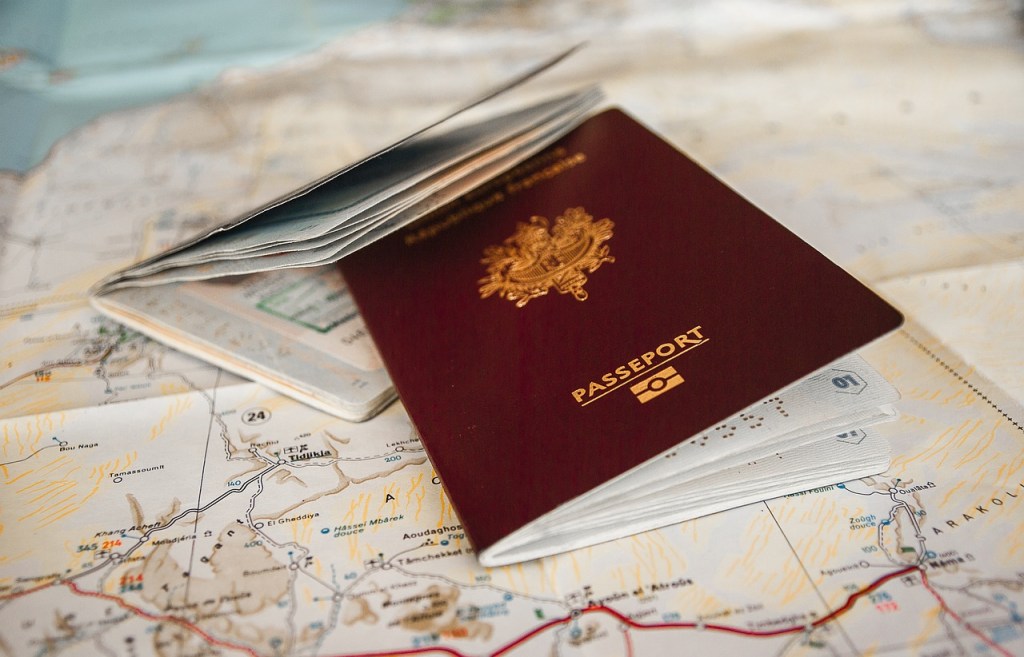
    Citizenship by Investment (CBI) Programmes have met favour with some Governments in the Caribbean in generating quick revenue outside of traditional revenue streams to repay debts, invest in development projects, and fund other initiatives. CBI Programmes grant investors citizenship for significant investment contributions to the economy. These programmes currently exist in Saint Kitts and Nevis, Dominica, Grenada, Saint Lucia, and Antigua and Barbuda.

    So far, these programmes are proving to be one way to generate foreign investment quickly. For instance, between 2016 to 2021, reports have shown that  the CBI programme generated an annual average for  Saint Lucia, XCD $ 30 million; Grenada, XCD $ 3 million; and Antigua Barbuda, XCD $ 33 million.

    Looking at the dollars and cents at the surface shows that CBI programmes could be a veritable income generator. Zooming in, with specific reference to the one in Antigua and Barbuda, the investment options for investors are the National Development Fund (NDF), Real Estate, Business Investment, and the University of the West Indies (UWI) Fund.

    In spite of the dollars and cents, these programmes have received negative global press – bringing into question governance, accountability and transparency. Ironically, the same carbon-emitting developed countries are the ones scrutinising CBI programmes in Caribbean SIDS. The increased scrutiny has certainly impacted these countries through blacklisting, tax haven labelling, and visa restriction for passport holders from these countries.

    Very soon, we could see a rapid decline or even a sudden halt in CBI programmes. But while they are still alive, now is the time to consider adding a new investment stream: Climate Resilience Fund. This new revenue stream would be exclusively used to address loss and damage. Establishing this would require the integration of relevant local and authorised environmental agencies and a robust transparency and accountability framework that governs these programmes. This article should not be misconstrued to replace the multilateral loss and damage fund but rather a speedy self-fundraising mechanism to supplement the fund. Is this feasible?

    Javier Spencer is an International Trade & Development professional with keen interests and specialization in Global Business, Communications and Diplomacy.  You are free to reach out to Javier via email at javier@javierspencer.com or on LinkedIn.


  • COP23: Five Negotiation Priorities for Small Island Developing States (SIDS)

    COP23: Five Negotiation Priorities for Small Island Developing States (SIDS)

    Alicia Nicholls

    In about a week’s time, delegates from over 190 countries will convene in Bonn, Germany for the 23rd Conference of the Parties (COP23) to the United Nations Framework Convention on Climate Change (UNFCCC). During this round of climate negotiations, which will last from November 6-17th, the parties will continue work on implementation guidelines for the Paris Climate Change Agreement signed at COP21 in December 2015.

    Despite United States’ President Donald Trump’s statement in June that the United States would be withdrawing from the Paris Agreement, there is some cause for optimism that this year’s COP negotiations will bear fruit. For the first time, a small island developing state (SIDS), the Republic of Fiji, has assumed the presidency of COP and brings to this task first-hand experience from the front lines of the climate change battle.

    Secondly, recent natural disasters worldwide have brought increased international attention to the devastating effects of climate change and the need for urgent action on reducing global greenhouse gas emissions. This point was well-made by President of Fiji, Mr. Frank Bainimarama, who stated at a Pre-COP Ministerial Meeting held on October 17 in Fiji that:

    “We can no longer ignore this crisis. Whether it is fires in California, Portugal and Spain. Flooding in Nigeria, India and Bangladesh. The dramatic Arctic melt. Ice breaking off the continent of Antarctica. The recent hurricanes that devastated the Caribbean and the southern United States. Or the hurricane that has just struck Ireland and Scotland – the tenth hurricane of the Atlantic season this year. It’s hard to find any part of the world that is unaffected by these events.”

    Thirdly, except for the US, political will among the world’s most powerful nations has coalesced on the side of climate action. The 19 other G20 countries reaffirmed their “strong commitment” to the Paris Agreement, calling it “irreversible” in their Summit Declaration following the Hamburg meeting in July.

    Below are five key likely priorities for SIDS as they go into the negotiations:

    1. Scaling up Climate Finance to SIDS

    At COP15 in 2009, developed countries committed to jointly mobilise USD 100 billion annually by 2020 to meet the mitigation and adaptation needs of developing countries. According to an OECD study, climate-related concessional finance has increased in both absolute terms and as a percentage of total concessional development finance, however annual commitments for 2014 were still 20% of the USD100 billion goal.

    SIDS often find it difficult to attract private financial inflows for development purposes due to their small size and economies, and current financing levels do not meet their current needs. Moreover, current graduation criteria have made some middle and upper income SIDS, like those in the Caribbean, ineligible for certain types of concessional financing.

    Pledged contributions, whether to the Green Climate Fund or otherwise, also do not necessarily always lead to timely disbursement, and there is the need for guidelines and protocols for incorporating the Adaptation Fund established at COP7 into the Paris Agreement’s framework.

    Finding innovative and effective ways to attract and increase financial flows, including from both public and private and bilateral and multilateral sources, will be key. For example, Fiji became the first developing country to issue a sovereign green bond, with technical support from the World Bank, to support the country’s mitigation and adaptation efforts.

    1. Loss and damage

    Loss and damage was one of the most contentious topics in the negotiations leading up to the Paris Agreement and was strongly lobbied for by SIDS and LDCs as they are the least culpable but most vulnerable to the harshest impacts of climate change. The concept recognises that there is some irreversible damage which cannot be avoided through mitigation and adaptation strategies.

    The Paris Agreement has recognised the concept of ‘loss and damage’ as a distinct concept of climate action and has made the Warsaw International Mechanism for Loss and Damage permanent. It, however, does not deal with liability or compensation, something which developed countries were adamant they did not wish to be included. The softer language used in Article 8, which, inter alia, itemises areas for cooperation and facilitation, is reflective of these developed country concerns.

    The costliness of this year’s Atlantic hurricane season is an important background against which SIDS should call for greater discussion on concretely addressing loss and damage, including the successful launch of the Clearing House for Risk Transfer which is slated to take place at COP23.

    1. Adaptation and Mitigation

    Developed countries’ continued and increased support will be necessary to assist SIDS in implementing national climate action plans, policies and projects in order to build climate resilience. This support for adaptation and mitigation includes not just financial support, but technology transfer and capacity building and technical assistance.

    Certain groups within societies are particularly vulnerable to climate change, including women and children, the disabled and indigenous and rural communities. As such, the COP23 negotiations will involve operationalizing the Gender Action Plan and the Local Communities and Indigenous Peoples Platforms.

    1. More ambitious NDCs

    Some 163 parties have already submitted their Nationally Determined Contributions which outline their emission reduction targets toward meeting the goal set out in Article 2 of the Paris Agreement of keeping average global temperature increase to no more than 2 degrees Celsius above pre-industrial levels and as close as possible to 1.5 degrees Celsius. These NDCs may be found at the interim NDC registry.

    However, the May 2016 synthesis report on the aggregate effect of INDCs showed that a higher level of ambition will be needed in order to reach the goal in Article 2.

    SIDS will want all parties to communicate to more ambitious NDCs after 2018 in order to meet the temperature goals in the Agreement and in keeping with the Article 4(3) commitment of communicating successively progressive NDCs.

    1. Preparations for Facilitative Dialogue 2018

    The Facilitative Dialogue which will take place in 2018 will be the first initial opportunity under the Paris Agreement to take stock of parties’ collective progress in a transparent manner towards meeting the Agreement’s long-term goal and inform the preparation of NDCs. It will be a precursor to the Global Stock Take, the first of which will take place in 2023 and will occur every five years thereafter.

    The Facilitative Dialogue 2018 will be launched at COP23 and parties will need to organise and decide on the procedures, events and expected outcomes in time for its convening. The President of Fiji, who must be commended on his country’s excellent work on preparations for COP23 to date, has indicated that these talks will approached on the principle of ‘talanoa’, a Pacific concept which values inclusive, participatory and transparent dialogue.

    A copy of the negotiating agenda for COP23 (current as at this date) may be viewed here.

    Alicia Nicholls, B.Sc., M.Sc., LL.B., is a trade and development consultant with a keen interest in sustainable development, international law and trade. You can also read more of her commentaries and follow her on Twitter @LicyLaw.


  • Climate Change, the US Elections and Small Island Developing States’ Survival

    Climate Change, the US Elections and Small Island Developing States’ Survival

    Alicia Nicholls

    We are the first generation to be able to end poverty, and the last generation that can take steps to avoid the worst impacts of climate change. Future generations will judge us harshly if we fail to uphold our moral and historical responsibilities.” – Ban Ki-Moon, Secretary General of the United Nations.

    In a step that was both historic and symbolic, the Presidents of the United States (US) and China last week ratified the Paris Agreement ahead of the on-going G20 summit in Hangzhou, China. This single showing of solidarity by the world’s two largest industrialised powers was welcomed news for the small island developing states (SIDS) such as those in the Caribbean, Pacific and the Africa, Indian Ocean, Mediterranean and South China Sea (AIMS) states. Through the 44-member Alliance of Small Island States (AOSIS), SIDS  pushed not only for the conclusion of the Paris Agreement but insisted on the inclusion of language in the Agreement in which parties endeavored to “pursue efforts to limit the temperature increase to 1.5 °C above pre-industrial levels” (Article 2(a) of the Paris Agreement).

    SIDS are the least culpable but most physically and economically vulnerable to the adverse effects of climate change. Rising sea levels have dislocated coastal communities and threaten the territorial integrity of the Pacific states of Kiribati and the Marshall Islands. Earlier this year, Cyclone Winston caused US1.4billion in damage, with the highest economic and human toll in Fiji, while Tropical Storm Erika in 2015 cost the Caribbean state of Dominica nearly half of its GDP. However, as the story of a remote Alaskan village which has voted to relocate from their ancestral home because of sea level rise shows, climate change is not a SIDS’ problem alone. It is a cross-cutting global issue which has implications not just for the global environment but for human health, security, sustainable development and economic growth.

    So what does all of this have to do with the upcoming election for the 45th President of the US? Well, if one considers the wide disparity in climate change rhetoric and policy proposals between the two major candidates running for the Oval Office, it is pellucid that the election of either Mrs. Clinton or Mr. Trump is the difference between strong US support for reducing GHG emissions and leading the global fight against climate change on the one hand, and on the other, a reversal of the gains that have been hard fought for. In other words, the future of SIDS’ survival could depend on the outcome of the US election.

    Current US climate change policy

    Current US policy supports global climate change efforts. US President Obama’s three-pronged Climate Action Plan commits to cutting carbon pollution in America, preparing the US for the impacts of climate change, and critically for the Paris Agreement, leading international efforts to address Global Climate Change. This is a policy position which Democratic candidate, Hillary Clinton, has pledged to honour should she be elected to office by the American people this November.

    The Paris Agreement was concluded in December 2015 at the end of the United Nations Framework Convention on Climate Change (UNFCCC) Twenty-first session of the Conference of the Parties (COP21). Since the Agreement’s opening for signature in April 2016, over 180 states have signed. However, as of September 3, only 26 states so far (representing 39% of global emissions) have ratified it. The recent ratification by the US and China, which together account for about nearly 40% of GHG emissions, is a significant step towards the threshold needed for the Agreement to come into effect; ratification by at least 55 countries which contribute to 55% of global GHG emissions. According to a White House press release on the US-China Climate Change cooperation outcomes, the two countries “committed to working bilaterally and with other countries to advance the post-Paris negotiation process and to achieve successful outcomes this year in related multilateral fora”.

    Climate Change Platforms of Candidates 

    While a four-way race in theory, the candidates of the two major parties, the Democratic Party and the Republican Party, still have a large lead ahead of the two other candidates (Jill Stein of the Green Party and Gary Johnson of the Libertarian Party). Perhaps never before has there been such wide disparity in the positions of two US presidential candidates on the issue of climate change. The democratic candidate, former US Secretary of State, Hillary Clinton, has vowed to “take on the threat of climate change and make America the world’s clean energy superpower”. Some of her major policy initiatives to this end are: launching a $60 billion Clean Energy Challenge, investing in clean energy production and infrastructure, cutting methane emissions across the economy and prioritising environmental and climate justice, inter alia.

    This stands in stark contrast to the stated position of Republican candidate, billionaire real estate mogul Donald Trump, who, inter alia, tweeted in November 2012 that “the concept of global warming was created by and for the Chinese in order to make US manufacturing non-competitive”. He later said he was joking. Unfortunately, for the world, and especially for SIDS, climate change is no joking matter.

    While Trump’s skepticism on the anthropogenic nature of climate change is not dissimilar to that of most Congressional Republicans, a Sierra Club report has rightly stated that “if elected, Trump would be the only world leader to deny the science of climate change.” He has also denounced the Paris Agreement as a bad deal for America, ascertaining it “gives foreign bureaucrats control over how much energy we use right here in America”, a claim soundly and poignantly rejected by the US special envoy for climate change (2009-2016) in a Washington Post op-ed. Mr. Trump first asserted he would renegotiate the Agreement and later stated that he would ‘cancel‘ the US’ participation in it. He has railed against environmental regulations. His proposals to reverse President Obama’s climate change initiatives, abolish the US Environmental Protection Agency, save the coal industry and continue subsidies to the oil and gas industry would jeopardise the US’s current emission reduction targets.

    Implications for SIDS of US Climate Policy Change

    Should a President Trump, if elected, implement his stated policies, not only will there be a 360 degree reversal of the US’ current commitment to meeting its emission-reduction targets, but an end to US cooperation or support for the global climate change agenda. If this happens, there will be little the world could do,besides raise universal condemnation. This is because one weakness of the Paris Agreement is that there is no binding enforcement mechanism in the agreement to force compliance of countries to the emissions limits they set for themselves. Already, there is skepticism that the current “nationally determined contributions” are not ambitious enough to conform with the Agreement’s goal of “holding the increase in the global average temperature to well below 2 °C above pre-industrial levels and to pursue efforts to limit the temperature increase to 1.5 °C above pre-industrial levels” (Article 2(a) of the Paris Agreement).

    Secondly, should the US withdraw from the Agreement or renege on its commitments, some other high emitters may feel less of a moral imperative to follow through with their own commitments or may withdraw as well.

    Thirdly, climate change finance is important for SIDS’ adaptation to, and mitigation of, the effects of climate change. Under Article 9 of the Paris Agreement developed country members are obligated to provide “financial resources to assist developing country Parties with respect to both mitigation and adaptation in continuation of their existing obligations under the Convention”.

    Caribbean countries  and several other vulnerable states around the world have benefited significantly over the years from the US Department of International Aid (USAID)’s projects which aim to build countries’ resilience to climate change. Climate change was one of the Obama Administration’s priorities for DA funding with $310.3 million in funding requested for Global Climate Change in the FY2017 Budget Request. The future of USAID aid flows to developing countries for climate change adaptation is bleak if current US policy towards climate change action changes under a Trump administration.

    What then for SIDS?

    The aim of this article is NOT to be an endorsement of either of the two major candidates running for the upcoming US Presidential election, neither is it an attempt to influence the American people’s decision. The US election is a democratic choice for the American people and only they can decide which of the four candidates’ platform better serves their interests. What this article attempts to do is to discuss and show the wide policy differences which exist between the two candidates of the major parties on climate change, and argues that any negative change in current US climate change policy will have far-reaching implications for the global climate change fight.

    There are a few nuggets of hope, however.  Because of Article 28 of the Paris Agreement, a President Trump would have to wait at least three years from the date the Agreement has entered into force in the US before he could notify his intention to withdraw the US from the Agreement and it would take another year for such withdrawal to come into effect.Any US withdrawal from the Paris Agreement is unlikely to be a popular move among Americans. Recent US polling data show there is grassroots support for Climate Change. Action. This includes not just environmental lobbies but the ordinary man on the street. There would also be universal condemnation by other major countries.

    SIDS may have a few allies in the fight within the US. Outside of federal action, some states, like Oregon, have quite robust climate change initiatives. Moreover, faced with pressure from more discerning and environmentally-aware consumers, more businesses and large corporations are forced to demonstrate their use of energy-friendly processes and products.

    Despite this, however, besides lobbying and moral suasion by other countries, there is little SIDS  can realistically do to change US climate change policy should there be a reversal. The vote for US president is a decision only the US electorate can make. However, for SIDS it could be a matter of survival.

    Alicia Nicholls, B.Sc., M.Sc., LL.B. is a trade and development consultant with a keen interest in sustainable development, international law and trade. You can also read more of her commentaries and follow her on Twitter @LicyLaw.

  • Over 170 Countries Sign the Paris Agreement: What next for SIDS?

    Alicia Nicholls

    Earth Day 2016 was extra symbolic this year. On this day (April 22nd), 174 countries plus the European Union signed the Paris Agreement at a High-Level Signature Ceremony at the United Nations’ Headquarters in New York. Among the signatories were small island developing states (SIDS) from the Caribbean, the Pacific and the Indian Ocean, for whom climate change is a serious matter of survival.

    The Paris Agreement, which will replace the Kyoto Protocol when it comes into force, is a landmark climate change agreement which aims to strengthen the global response to climate change. Many years in the making, the Paris Agreement was concluded and adopted at the end of intense negotiations during the United Nations Framework Convention on Climate Change’s (UNFCCC) 21st annual Conference of the Parties (COP21) held in Paris last December.

    Climate change is a global problem with implications for us all. According to the United States’ National Oceanic and Atmospheric Administration (NOAA) and NASA, 2015 was the hottest year on record since the start of record keeping in 1880. If these first few months of 2016 are anything to go by, this year may shatter that record handily.

    SIDS which are responsible for less than 1% of global GHG emissions, are the most vulnerable to its adverse effects. Besides sea level rise, extreme weather events have caused tremendous economic devastation and loss of human life. The Rapid Impact Assessment showed that Tropical Storm Erika cost Dominica 90% of its gross domestic product (GDP). Earlier this year, the Category 5 Severe Tropical Cyclone Winston ravaged the Pacific SIDS of Fiji, Vanuatu, Tonga and Niue. In Fiji the storm left 44 dead, destroyed over 31,000 homes and caused 1 billion USD in damage.

    For SIDS, climate change is an existential threat to our economies, societies and survival, which led our states to push the “1.5 to stay alive” campaign. To keep the temperature increase to just 1.5 percent above pre-industrial levels or even 2 percent, signature of the Paris Agreement is just one step.

    Signature is not the same as ratification

    The turnout for the signature of the Paris Agreement is reported to be a record number for a new treaty. However, signature does not make a treaty legally binding on a signatory party unless the Treaty specifically provides for this. In the case of most treaties, like the Paris Agreement, it is only after a party has deposited its instrument of ratification (or accession, approval or accession) that it has consented to be bound by the treaty.

    The ease of the domestic ratification process depends on the legal system and domestic political processes in each state. In the US, the type of international agreement determines the process. Article II, section 2 of the US Constitution requires approval of two-thirds of the US Senate for a treaty to be approved. Executive type agreements do not require congressional approval. Given the strong objection to the Paris Agreement in the Republican-controlled Congress, the US negotiators were careful to avoid any language or provisions, such as mandatory emission reduction targets, which would require Congressional approval of the agreement. However, the US has not yet ratified the Agreement and the upcoming US Presidential election this November could lead to a dramatic reversal in US policy on climate change depending on whom is elected president. No one wants a repeat of the Kyoto Protocol; the US had signed it but did not ratify and was therefore not bound by the Agreement.

    According to Article 21, the Paris Agreement will enter into force 30 days after at least fifty-five parties which account for at least fifty-five percent of total global greenhouse gas emissions (GHG) have deposited instruments of ratification. As at the time of writing this article, 177 parties have signed the agreement, which represents the vast majority but not all the 195 countries which negotiated the agreement in December. Conspicuously absent from the  signatures are several major oil producing states, namely Nigeria, Saudi Arabia and Iraq. Signature will be open for one year until April 2017 so there is still time for more states to sign.

    Fifteen countries have so far ratified the Agreement, three of which with declarations. It is no surprise that SIDS led the way in the number of ratifications. Those countries which ratified already are the Marshall Islands, Nauru, Tuvalu, Palau, Somalia, Palestine, Barbados, Fiji, Grenada, St. Kitts & Nevis, Samoa, Maldives, St. Lucia, Mauritius and Belize.

    Scaling Up of Climate Action

    Even before the entry into force of the Agreement, countries will need to scale up their climate actions to reduce emissions. Prior to the conclusion of the Paris Agreement, most countries submitted their Intended Nationally Determined Contributions (INDCs) which set out their policies, targets and actions for contributing to the reduction of GHG emissions. In Barbados’ INDC, for example, the country intends to achieve an economy-wide reduction in GHG emissions of 44 percent compared to its business as usual (BAU) scenario by 2030. In absolute terms, this means an intended reduction of 23 percent compared to 2008 levels.

    However, the just released updated UN synthesis report of all INDCs communicated by Parties by 4 April 2016, a total of 189 Parties (96% of all Parties to the UNFCCC), found that the level of ambition is still not enough to lead to an increase of less than 2 degrees above pre-industrial levels. There is the need to deepen ambitions and convert intention to concrete actions and achievements. This will require planning, political will, cooperation among all stakeholders, the implementation of legislative frameworks and systems for monitoring progress, implementation and reporting.

    Of critical importance will be the level of reduction of GHG emissions  by countries, such as the US, China, India and in Europe, which account for over 50 percent of global GHG emissions. However, domestic politics within these countries could be an issue for meeting their goals. As an example, in August 2015, US President Obama and the US Environmental Protection Agency (EPA) announced the Clean Power Plan to lower US emissions by curbing carbon dioxide emissions from power plants through shifting from coal-fired power to renewable power. Some major fossil fuel producing states like West Virginia and Texas have challenged the administration’s plan and by a 5-4 decision the US Supreme Court issued a stay of the Clean Power Plan pending judicial review. Additionally, there is no guarantee that the next US president will be as committed to the climate change mitigation goals set out by the Obama administration to reduce emissions between 26 to 28 percent by 2025, which already is a modest target.

    Climate Finance for Adaptation and Mitigation

    SIDS require financing not just to build climate-resilient infrastructure but to transition to climate-resilient economies. One of the stated goals in the preamble of the Paris Agreement is to jointly provide USD 100 billion annually by 2020 for mitigation and adaptation, and to provide appropriate technology and capacity-building support.

    Many Caribbean States have been graduated from accessing grants and concessionary loans due to their relatively high gross domestic product per capita (GDP per capita), while their high levels of indebtedness also make borrowing on international markets difficult. While several climate change finance streams are available, including funding from Multilateral Development Banks, official development assistance and dedicated funds, some SIDS Governments have raised concern  that the red tape for accessing funds is often cumbersome.

    What next for SIDS?

    The signature of the Paris Agreement is just but one step. Though SIDS account for less than one percent of GHG emissions, we all have our part to play in lowering emissions and contributing to a climate-friendly future. Domestically, our governments need to focus on implementing our INDC commitments and encourage the use of climate friendly technologies, including in buildings, transportation and the agriculture, tourism and manufacturing sectors. This is not a task for governments alone, but will require continued cooperation with civil society, the business community and ordinary citizens.

    It also requires the continued encouragement of a shift from fossil fuels to renewable energy. In Barbados’ INDC, it was noted that energy consumption accounted for 72% of our GHG emissions in 2008, followed by the waste sector (16%). Disconcertingly, major players in the island’s solar energy industry have complained that falling oil prices have led to a decrease in solar installations. Barbados has been a leader in the solar industry, with a high level of solar water heater use which  saved the country a reported US$100 million on its fuel import bill in 2002. We cannot allow the drop in oil prices to allow us to lose sight of the necessity of shifting from fossil fuels for achieving our climate goals and preserving an environmentally-sustainable future for the next generations.

    On the multilateral level, continued participation and advocacy in climate change talks are a must for SIDS governments. As I had indicated in my previous article, the Paris Agreement is an important step but its efficacy will depend on its ratification and implementation and subsequent follow-up, especially by those countries which contribute the most to GHG emissions. The future of our states, and the world, depends on it.

    The full text of the Paris Agreement may be found here. Barbados’ statement at the High-level signing ceremony may be found here.

    Alicia Nicholls, B.Sc., M.Sc., LL.B. is a trade and development consultant with a keen interest in sustainable development, international law and trade. You can also read more of her commentaries and follow her on Twitter @LicyLaw.