Tag: Summit

  • Historic first CARICOM-Africa Summit – LIVE STREAM

    Historic first CARICOM-Africa Summit – LIVE STREAM

    Alicia Nicholls

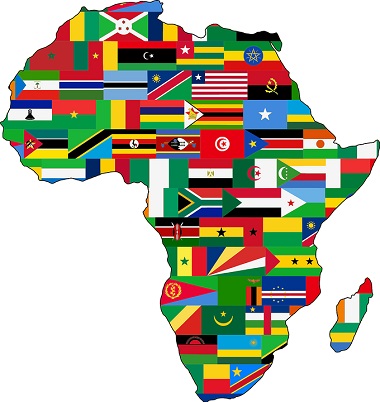
    Days after the first ever United Nations (UN) International Day for People of African Descent was celebrated, there will be the first ever Caribbean Community (CARICOM)-Africa Summit! The summit, which was originally carded for July 2020, was postponed due to the COVID-19 pandemic. The rescheduled summit, which will now be held on September 7, will be hosted by the Government of Kenya and chaired by Kenyan President, His Excellency Uhuru Kenyatta under the theme “Unity Across Continents and Oceans: Opportunities for Deepening Integration”. The event will be livestreamed on CARICOM’s Youtube and Facebook pages. You can watch it below:

    CARICOM Today notes that participants will include “Heads of State and Government of the Caribbean Community and the African Union, Chairs of CARICOM and the African Union Commission, and the Africa Regional Economic Communities (RECs), the Secretaries-General of CARICOM and the Organisation of the African Caribbean and Pacific States (OACPS), and the President of Caribbean Development Bank (CDB)”.

    The summit is the latest initiative in a push on both sides of the Atlantic for closer Africa-CARICOM ties which transcend traditional historic and cultural ties towards real commercial ties and deeper economic and cultural cooperation. As I noted in a previous piece back in 2019 entitled “Africa-Caribbean Trade: What are the prospects?“, current Africa-Caribbean trade remains small, but the prospects for expanded Africa-Caribbean trade are promising given four main factors: (1) Caribbean countries’ push for export partner diversification, (2) Africa is on the rise, (3) increased Caribbean-African awareness such as the Timaya-Machel collaboration, (4) the signing of the Africa Continental Free Trade Agreement (AfCFTA). I had further argued in that piece that “since it is firms which trade and not countries, building linkages between chambers of commerce and investment promotion agencies in the Caribbean and African countries would also be key”.

    On another note, starting Monday, I am truly pleased to have co-convened this Afronomicslaw. org Blog Symposium with the brilliant Dr Ohiocheoya Omiunu (PhD) on “Prospects for Deepening Africa-Caribbean Economic Relations“! The insightful contributions to this symposium will be released daily (from Monday) and can be read on the Afronomics Law Blog. Deepest appreciation to our expert contributors for their invaluable contributions!

    The CTLD Blog wishes the organisers a successful CARICOM-Africa summit. I sincerely hope that the results go more beyond simply a lengthy communique of hortatory goals, but there will be a concrete action plan on deepening CARICOM-African ties.

    Alicia Nicholls, B.Sc., M.Sc., LL.B. is a trade and development consultant with a keen interest in sustainable development, international law and trade. All views herein expressed are her personal views and should not be attributed to any institution with which she may from time to time be affiliated. You can read more of her commentaries and follow her on Twitter @LicyLaw.

  • G20 Leaders’ Hangzhou Summit: Trade and Investment Takeaways

    “Our growth, to be strong, must be reinforced by inclusive, robust and sustainable trade and investment growth.”  –G20 Leaders’ Communiqué 2016

    Alicia Nicholls

    Against the backdrop of an uneven global economic recovery, subpar global trade and investment growth, trade disputes and the recently held Brexit referendum vote in the UK, trade and investment were top of mind for world leaders at the just-concluded Eleventh Group of 20 (G20) Summit held on September 4-5, 2016  in Hangzhou, China.

    The G20 is the premier international forum for cooperation on global economic governance and its members account for 86 percent of global GDP and 78 percent of global trade. China currently holds the G20 presidency.

    With the goal of providing political leadership to ensure “inclusive, robust and sustainable trade and investment growth”, G20 leaders endorsed the decisions taken by G20 trade ministers at their Trade Ministers Summit held in Shanghai in July this year. Among the key outcomes of that July meeting were the Terms of Reference of the new G20 Trade and Investment Working Group, the G20 Strategy for Global Trade Growth and the G20 Guiding Principles for Global Investment Policymaking.

    Key Trade and Investment-Related Aspects of the G20 Leaders’ Communiqué

    Below are some of the key trade and investment-related takeaways from the G20 Leaders’ Communiqué:

    • Reiteration of G20 leaders’ recognition that strong growth must be reinforced by “inclusive, robust and sustainable trade and investment growth”;
    • Commitment to strengthening G20 trade and investment cooperation;
    • Commitment to a “rules-based, transparent, non-discriminatory, open and inclusive multilateral trading system” with the World Trade Organisation (WTO) playing a central role;
    • Commitment to continuing the post-Nairobi work. It is instructive that the Doha Round was not mentioned, confirming that the Doha Development Round is effectively dead despite disagreement among WTO members on the round’s future in the communique to the WTO Nairobi Ministerial held December 2015;
    • G20 leaders also reiterated their support for the inclusion of new issues into the WTO negotiating agenda, another area on which WTO members saw strong divergences of opinion in the aftermath of the Nairobi Ministerial. The G20 leaders  noted that “a range of issues may be of common interest and importance to today’s economy, and thus may be legitimate issues for discussions in the WTO, including those addressed in regional trade arrangements (RTAs) and by the B20″;

    • Commitment to ensure their regional agreements and bilaterals complement the multilateral trading system;
    • Commitment to ratify the Trade Facilitation Agreement by the end of 2016;
    • Indicated their support for the importance of the role that WTO-consistent plurilateral trade agreements “with broad participation” can play in complementing global liberalization initiatives and mentioned the Environmental Goods Agreement as an example;
    • Reiteration of their opposition to protectionism on trade and investment “in all forms” and reiterated the commitments to standstill and rollback protectionist measures till the end of 2018 and to support the work of the WTO, UNCTAD and Organisation for Economic Development (OECD) in monitoring protectionism;
    • In recognition of the rising anti-globalisation and anti-trade sentiment in many western countries, G20 leaders “emphasize[d] that the benefits of trade and open markets must be communicated to the wider public more effectively and accompanied by appropriate domestic policies to ensure that benefits are widely distributed”;
    • Endorsed the G20 Strategy for Global Trade Growth, as well as the G20 Guiding Principles for Global Investment Policymaking which “will help foster an open, transparent and conducive global policy environment for investment”. These were decided at the G20 Trade Ministers Meeting held in July;
    • Indicated their support of policies encouraging firms of all sizes (particularly women and youth entrepreneurs, women-led firms and SMEs) to take full advantage of global value chains (GVCs);
    • Although China was not specifically identified, G20 leaders noted that global steel oversupply was a global issue requiring a collective response and increased information-sharing. They called for the formulation of a Global Forum on steel excess capacity to be facilitated by the OECD with the active participation of G20 members and interested OECD members.

    For the tax-related aspects of the communiqué by FRANHENDY Attorneys, please visit  here.

    The full communiqué may be read here.

    Alicia Nicholls, B.Sc., M.Sc., LL.B. is a trade and development consultant with a keen interest in sustainable development, international law and trade. You can also read more of her commentaries and follow her on Twitter @LicyLaw.

  • G-20 Summit Begins in Antalya, Turkey

    Alicia Nicholls

    The leaders of 20 of the world’s largest economies, the G-20, are meeting for the tenth annual G-20 Leaders Summit which begins Sunday, November 15th in the resort city of Antalya, Turkey. The two-day summit which is expected to focus on a myriad of issues, including climate change finance, the global economy, the migrant crisis and the refugee crisis, will likely be overshadowed by the issue of terrorism in light of Friday’s Paris attacks.

    On November 13, 2015 gunmen linked to Islamic State (ISIL) targeted six sites in Paris, killing 129 persons and wounding over 350. The reports that one of the suspects responsible for the attacks may have been a Syrian refugee raises issues for the EU’s response to the migrant crisis, with the right-wing government of Poland pulling out of any plans to accept refugees. In light of the attacks, the President of France, Francois Hollande, announced he will be no longer attending to the G-20 and that Foreign Minister and Finance Minister will attend in his place.

    G-20 leaders have a packed schedule ahead of them and some of the topics on the official schedule include climate change and development, the global economy, terrorism and the refugee crisis, financial regulation and IMF reform, trade and energy. Even with the terrorist attacks in Paris, the issues of terrorism will have dominated the discussions due to the rise in Islamic State from a regional to a global threat. The conflicts in Syria and the resultant refugee crisis are of particular security concern to European countries whose borders have been flooded by Syrian refugees, raising both human rights and national security concerns.

    In its Joint Letter setting out the EU’s agenda for the summit, the European Council and European Commission highlighted several key issues to be discussed at Antalya, including social issues such as youth employment and social inclusion and trade opening. In regards to the issue of taxation, the European Council spoke of the need to tackle cross-border tax avoidance and tax evasion, including finalisation and implementation of the OECD Base Erosion and Profit Shifting action plan (BEPS).

    Another area identified by the EC and said to be a major issue for Prime Minister Narenda Modi of India is climate change. It is hoped that this issue will not be pushed on the backburner in light of the attacks. Action on climate change, particularly climate change finance and commitments for the 21st Conference of Parties (COP21) in Paris, are critical to developing countries, including small island developing states like those of the Caribbean which will be among the hardest hit by the effects of climate change. Other issues of concern to the developing country members of the G-20 are IMF reform, including the reform of the quota system which would give emerging economies more say in that organisation.

    The G-20 is an international forum comprised of 20 major world economies, including 19 countries (Argentina, Australia, Brazil, Canada, China, France, Germany, India, Indonesia, Italy, Japan, Republic of Korea, Mexico, Russia, Saudi Arabia, South Africa, Turkey, the United Kingdom, the United States) and 1 regional grouping (the European Union).

    In light of the attacks, security for the Summit has reportedly been heightened.

    The official programme for the Summit is as follows. It will be interesting to read the Communique and Antalya Action Plan once released upon the conclusion of the summit.

    Alicia Nicholls, B.Sc., M.Sc., LL.B. is a trade and development consultant with a keen interest in sustainable development, international law and trade. You can read more of her commentaries and follow her on Twitter @LicyLaw.