Alicia Nicholls
Over the next two weeks (November 30 to December 11), leaders and delegates from over 190 countries are gathered in Paris, France for the 21st Conference of the Parties (COP21) of the United Nations Framework Convention on Climate Change (UNFCCC), with the aim of achieving a legally binding multilateral agreement on climate change.
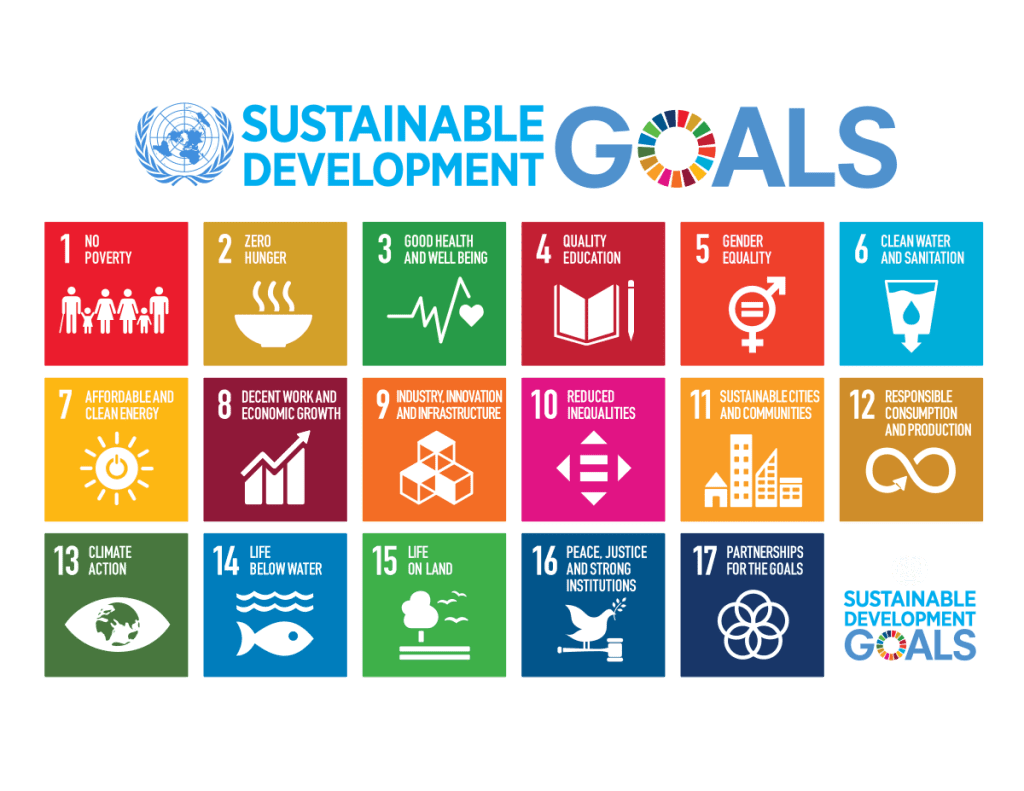
For small island developing states (SIDS), which are already suffering the adverse effects of climate change, the stakes are particularly high. The importance of climate change to the post 2015 development agenda has been reflected by its inclusion as Goal 13 of the Sustainable Development Goals. Failure to act on climate change has implications not just for the economies, societies and survival of SIDS, but will undermine their achievement of many of the sustainable development goals, including poverty reduction.
Vulnerabilities
SIDS are not the only countries affected by climate change. However, while combined their contribution to global greenhouse gas (GHG) emissions is minuscule, they are among the most vulnerable to the adverse manifestations of climate change. The geographical vulnerabilities of small states, such as their geographic location, small land masses, concentration of human settlements and major infrastructure along coastal and low-lying areas and dependence on limited industries, enhance their vulnerabilities to rising sea levels, ocean acidification, coral bleaching, more frequent and destructive weather events and changing precipitation patterns.
Several SIDS, including those of the Caribbean Community (CARICOM), are already experiencing beach erosion, more devastating hurricanes, flooding and longer droughts. The situation is even direr in lowlying islands and atolls in the Pacific like Kiribati which face displacement of coastal communities because of rising sea levels.
Sustainable Development Goals and Climate Change
Addressing climate change has been made part of the post-2015 development agenda. SDG 13 mandates states to take urgent action to combat climate change and its impacts. The targets under goal 13 include strengthening resilience and adaptative capacity to climate-related hazards and natural disasters, integrating climate change measures in policy frameworks, improving education and awareness, promoting mechanisms for raising capacity for effective climate change planning in LDCs and SIDS and implementing developed countries’ commitment of mobilizing jointly $100 billion annually by 2020 to address the needs of developing countries.
Climate change poses not only an existential threat to SIDS but also to their ability to meet sustainable development goals. Longer droughts as a result of changing precipitation patterns diminish crop yields and hurt livestock which in turn diminish the livelihoods of farmers and the families which depend on small plots of land for income and food. Low agricultural yields means reduced food production which has an impact on nutrition and food security, with implications for the achievement of SDG 2 – zero hunger. For subsistence farmers, income from surplus yields is used to finance household expenses and education of children. Loss of homes and livelihood from cyclones, droughts and floods has an impact on the eradication of poverty (SDG 1 – no poverty). In many poorer countries, women make up the majority of small farmers and are the ones required to fetch water for their families, highlighting the gendered impact of climate change which affects the achievement of SDG 5 – gender equality.
The oceans are the lifeblood of SIDS, whether through fisheries or as part of their tourism product. Ocean acidification due to oceanic uptake of CO2, warming seas and coral bleaching cause fish to migrate to more favourable waters resulting in lower fish yields and loss of aquatic biodiversity (SDG 14 – life below water). This in turn leads to loss of income for fishermen, glass bottom boat operators and entire coastal communities which depend on marine biodiversity and fish catches for food and income, again with implications for poverty reduction (SDG 1). Another alarming aspect of climate change is saltwater intrusion into freshwater aquifers which limits the availability of fresh water for human consumption, farming and other economic activities and will undermine the achievement of SDG6 – clean water and sanitation.
Speaking of the achievement of SDG9 – industry, innovation and infrastructure, the major economic drivers in SIDS tend to be tourism, agriculture, fisheries, which are climate sensitive industries. In Grenada an entire nutmeg harvest was devastated by Hurricane Ivan in 2005. Major infrastructure in many islands, such as hotels, road networks, electrical power plants and such, are concentrated along coastal areas which can become inundated by rising sea levels and destroyed by hurricanes. Destruction or damage of these ports of entry impact on their ability to receive tourists, which is crippling for economies dependent on tourism.
Aside from these impacts on economic growth and sustainability, infrastructure and livelihood, the loss of human life is one of the greatest threats. One only needs to consider the devastation by Tropical Storm Erika in Dominica and the loss of life to see that the impact is indeed real. According to the Rapid Damage and Impact Assessment, the damage and loss has been estimated at US $483 million which is equivalent to 90 percent of Dominica’s GDP.
The scale of the problem
Climate change has been one foreign policy area on which CARICOM countries have been steadfastly united. They have participated keenly in climate change negotiations and have submitted their intended nationally determined contributions (INDCs) setting out their post-2020 country commitments. A taskforce on climate change was also established.
Previous attempts by the global community to achieve an internationally accepted binding agreement for the reduction of GHG emissions have left a lot to be desired. The Kyoto Protocol, adopted in Kyoto, Japan in 1997 and entered in force in 2005, is the first multilateral treaty requiring countries to cut their GHG emissions. However, the US, currently the second largest emiter, never ratified the Agreement and China (currently the largest emiter) and India, were exempted from the emission cuts because they were not major emiters during the period of industrialisation. Moreover, the emission cut targets of 5.2% under Kyoto are not enough.
The inertia of the world’s major emiters on substantially cutting emissions and on achieving an ambitious binding agreement so far on climate change has had devastating consequences. The World Meteorological Organisation reported that concentrations of carbon dioxide increased at their fastest rate for 30 years in 2013. Moreover, a World Bank scientific report published in 2012 found that the world is heading towards a temperature increase of 4 degrees celsius by the turn of the century if current emission levels remain. A recent report by the IPCC further reiterated this. Such an increase would be catastrophic for SIDS.
The current global position for emissions reduction is for limiting temperature increase to no more than 2 degrees above pre-industrial levels. However, any long term temperature increase by 1.5 degrees Celsius over pre-industrial levels will have a devastating impact on SIDS. As such, countries of the Alliance of Small Island States (AOSIS), including CARICOM, have been pushing the “1.5 to Stay Alive” campaign to raise awareness and support for cuts which will limit the increase to no more than 1.5 degrees.
Moreover, the current level of actual financing provided by developed nations to meet the adaptation needs of small states has been woefully inadequate.
CARICOM negotiating position
The Rt. Hon Dr. Kenny Anthony, Prime Minister of St. Lucia, has lead responsibility for climate change for CARICOM.
In a press conference given by Dr. Anthony, CARICOM’s negotiating position was articulated. It re-emphasises the position taken in the Community’s Declaration for Climate Action issued pursuant to regular meeting of CARICOM Heads of Government in Barbados in July of this year. As stated by Dr. Anthony, CARICOM is advocating for:
the retention of the principal of special circumstances and unique vulnerability of SIDS;
five-year review cycles of green house gas emission reduction targets with the first review to take place prior to 2020, to allow for the adjustments necessary to achieve the goal of 1.5 degrees;
recognition of loss and damage (the irreversible, slow onset impacts of climate change to which it is not possible to adapt, example sea-level rise and ocean acidification) as a critical issue for SIDS and the development of a mechanism to address this element, treated separately from adaptation;
support for REDD+ (efforts to reduce emissions from deforestation and forest degradation and the sustainable management of forests);
adequate provisions for adaptation to help Caribbean countries reduce their vulnerability to effects of climate change and develop great climate resilience where possible; and
commitment by developed countries to take the lead in scaling up the provision of adequate, predictable and new sources of financing for mitigation, adaptation, loss and damage, and for technology support.
The threat of climate change to the livelihoods, economies and very existence of SIDS cannot be understated. World leaders in their various statementsleading up to the conference have all recognised that COP 21 represents a critical development juncture where adaptative and corrective action can still be taken towards charting a new course towards a climate friendly sustainable future. However the window of opportunity for avoiding an environmentally catastrophic global temperature increase of 4 degrees Celsius is closing.
A comprehensive, legally binding agreement with ambitious and substantive commitments on emissions reductions to reduce the global temperature increase to no more than 1.5 degrees over pre-industrial levels, which provides binding commitments for technology transfer, capacity building and adequate financial support for adaptation of SIDS and other vulnerable countries and communities to climate change and which recognises the vulnerability and differentiated responsibility of small states and LDCs will help reverse this. The hope of SIDS for a sustainable future depends on what action or inaction world leaders take over the next few days.
Alicia Nicholls, B.Sc., M.Sc., LL.B. is a trade and development consultant with a keen interest in sustainable development, international law and trade. Please note that the views expressed in this article are solely hers. You can also read more of her commentaries and follow her on Twitter @LicyLaw.
 Caribbean Trade Law and Development