Tag: Trade Policy Review

  • Trinidad & Tobago receives largely positive feedback during latest WTO Trade Policy Review

    Trinidad & Tobago receives largely positive feedback during latest WTO Trade Policy Review

    Alicia Nicholls

    On May 22 and 24, 2019, the Republic of Trinidad & Tobago underwent the fourth review of its trade policies and practices under the World Trade Organization (WTO) Trade Policy Review Mechanism. Trade Policy Reviews are the process by which the trade practices and policies of each WTO member are collectively evaluated by the WTO Membership (acting as the Trade Policy Review Body) at periodic intervals. Trinidad & Tobago is reviewed every six years and previously underwent reviews in 2012, 2005 and 1998.

    In April this year, the Trade Policy Review Mechanism celebrated 30 years of existence. It is an important aspect of the WTO’s monitoring function and aims to periodically evaluate the impact of each Member’s trade policies and practices on the multilateral system, thereby ensuring accountability, predictability and transparency of the rules-based multilateral trading system.

    An independent report prepared by the WTO Secretariat and a report by the WTO member being reviewed form the basis of the review. Trade Policy Reviews are a detailed and lengthy process which begin many months in advance of the actual meetings in Geneva. In January 2019, a WTO Review team visited Trinidad & Tobago and consulted with various government and private sector stakeholders. This week a delegation from Trinidad & Tobago which was led by H.E. Senator Paula Gopee-Scoon, Minister of Trade and Industry of Trinidad & Tobago and comprised five technical members, was in Geneva, Switzerland for the period May 20-24 to attend the review meetings at the WTO.

    Trinidad & Tobago received largely positive feedback for the current review period (2012-2019). According to the concluding remarks by the Chairperson, more than 200 questions were submitted by 15 Members. The questions and answers are usually available six weeks after the review process is completed. The Chairperson’s concluding remarks noted that Trinidad & Tobago provided answers to all the written questions submitted in advance of the meeting.

    The Chairperson’s concluding remarks listed the areas in which WTO Members appeared to be pleased with Trinidad & Tobago’s performance, including the return to economic growth after a period of recession, the steps taken to improve its government procurement regime through the passage of the Public Procurement and Disposal of Public Property Act, the modernization of its customs infrastructure and the introduction of a single electronic window in 2012 and the introduction of a new online payment system for import tariffs and other taxes and fees in 2019. They also praised the twin island Republic’s active participation in the WTO, its acceptance of the Protocol Amending the Agreement on Trade-Related Aspects of Intellectual Property Rights (TRIPS) in 2013 and its ratification of the Trade Facilitation Agreement in 2015.

    Trinidad & Tobago was encouraged by some Members to join the Information Technology Agreement (ITA) and to become an observer to the Agreement on Government Procurement. Other areas suggested for improvement include facilitation of access to visas and foreign exchange, improving the regime for Sanitary and Phyto-sanitary Standards (SPS) and providing further information on enforcement actions for intellectual property rights. Some Members also encouraged Trinidad & Tobago to notify its announcement of an import ban on plastics from 2019 to the Committee on Technical Barriers to Trade to allow comments from Members.

    Members, however, raised some areas of particular concern. On the issue of tariffs, they noted, for example, that the applied Most Favoured Nation (MFN) rate exceeded the country’s bound rate on 59 tariff lines in 2018, up from 50 in 2011 during its last review. Another area of concern for Members was while the import surcharges imposed in 1990 were supposed to be temporary, the Government had continued to apply new import surcharges. Members also noted that Trinidad & Tobago’s notifications were either not up to date or outstanding in some areas, but were pleased to learn that the country made a formal request for technical assistance on notifications.

    While Trade Policy Reviews are an often intensive exercise for the Member being reviewed, they are an important opportunity for WTO Members to query other Members’ trade policies and practices, as well as for Members themselves to receive objective periodic feedback on their adherence to rules, disciplines and commitments under the WTO’s agreements, as well as on their general trade and investment framework. This feedback could be useful to Governments seeking to make business and investment facilitation reforms to improve their competitiveness and investment attraction.

    The Secretariat’s detailed report contains extensive information on the overall business environment of the Member reviewed for the review period, including its macroeconomic environment, its legal and regulatory framework for trade and investment and trade policies and practices by measure and by sector. As such, trade policy review documents are often rich initial sources of information for businesses and investors interested in doing business or investing in a particular economy.  

    Once Trinidad & Tobago submits its replies within a month’s time to any follow up questions raised during the meeting, the Trade Policy Review will have been successfully concluded.

    The documents from Trinidad & Tobago’s latest review may be accessed here. Also visit the website of the Ministry of Trade and Industry for press releases related to the review here.

    Alicia Nicholls, B.Sc., M.Sc., LL.B., is an international trade and development consultant with a keen interest in sustainable development, international law and trade. You can also read more of her commentaries and follow her on Twitter @LicyLaw.

    DISCLAIMER: All views expressed herein are her personal views and do not necessarily reflect the views of any institution or entity with which she may be affiliated from time to time.
  • Belize undergoes third WTO Trade Policy Review

    Belize undergoes third WTO Trade Policy Review

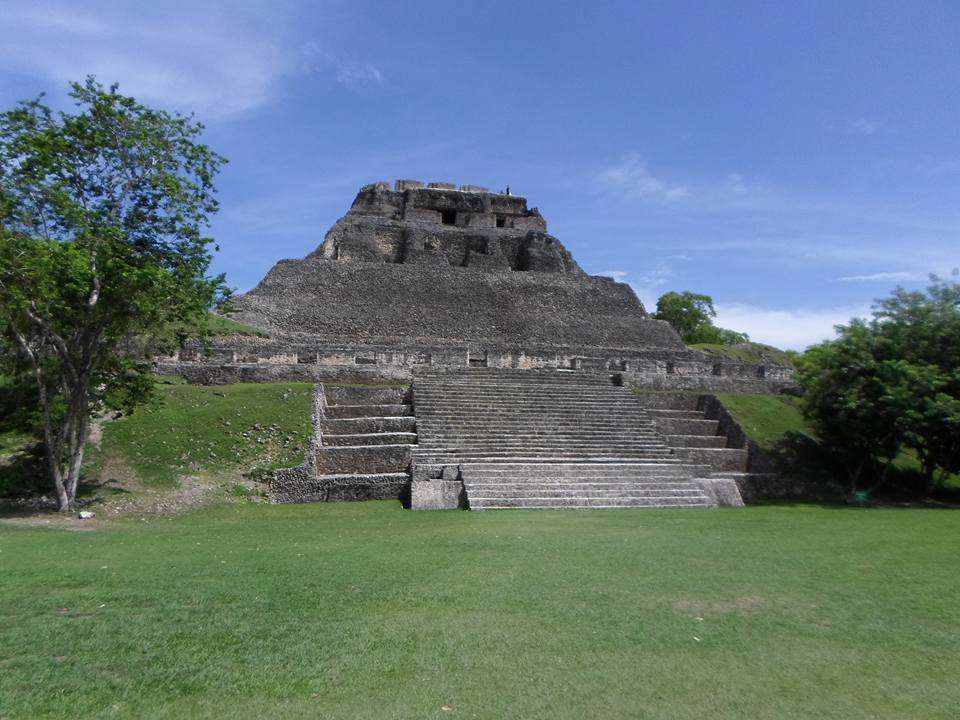
    Photo credit: Alicia Nicholls 2016

    Alicia Nicholls

    Belize underwent its third World Trade Organisation (WTO) mandated Trade Policy Review over the period April 24th and 26th, 2017. Trade Policy Reviews are a mandatory exercise under the WTO’s Trade Policy Review Mechanism. Each WTO member country’s national trade and other trade-related policies are peer-reviewed by the Trade Policy Review Body (the WTO General Council acting under special rules and procedures).

    The frequency of the reviews depends on the country’s share of world trade. The purpose of the trade policy reviews is to help to ensure transparency of member countries’ trade policies. Belize has previously undergone reviews in 2010 and 2004.

    Some key findings from Belize’s 2017 review

    These findings were taken from the WTO Secretariat Report and the Chairman’s concluding remarks.

    The Report noted that several issues had affected Belize’s economy during the review period, including the decline in oil prices, disease outbreaks affecting its agriculture sector and the impact from the loss of correspondent banking relationships due to the de-risking practices of major global banks.

    Areas of praise

    Members praised Belize for the following:


    • Its diversification into tourism which is now the major driver of the country’s economy, and the adoption of the country’s first National Trade Policy Framework.
    • Belize’s participation in the WTO. Some members also suggested that the country establish a permanent mission in Geneva.
    • Belize was commended  for being among the first Members to ratify the Trade Facilitation Agreement and for having notified its Category A commitments.  Belize also recently established a National Committee on Trade Facilitation
    • Members commended Belize’s efforts to modernize its trade regime and customs procedures.
    • Reduction by half of the number of products subject to import licensing, but some members noted that this was followed by tariffication, resulting in some applied MFN tariffs exceeding their bound rates.
    • Noting Belize’s membership of the Caribbean Community (CARICOM), Members encouraged Belize to continue engagement in regional integration and trade liberalization schemes.
    • Belize was commended for its acceptance of the Protocol amending the TRIPS Agreement; while some Members encouraged Belize to join the WIPO treaties.
    • The establishment of Belize’s first Internet Exchange Point to reduce the costs of local internet traffic.
    • Members acknowledged the recent reforms to Belize’s financial services regulatory framework.
    • Some Members welcomed Belize’s efforts to improve its air transport infrastructure and air links, and encouraged Belize to replicate such efforts to enhance land and maritime transport.

    Areas of concern

    • Members, however, were concerned that Belize had not submitted notifications in a number of areas, and urged for compliance with the WTO requirements.
    • Several Members highlighted Belize’s three incentive programmes granting export subsidies which should have been eliminated by 31 December 2015. However, they acknowledged Belize’s ongoing efforts to amend the relevant legislation.

    As noted by the Chairman, Belize was commended for providing prompt and helpful answers to all written questions submitted in advance by members, as well as to all that came after the deadline.

    Belize is the fourth WTO member country to undergo review so far for the year, following Sierra Leone, Japan and Mexico. The other CARICOM member state to be reviewed this year is Jamaica which will undergo its review on September 13 & 15.

    The documents from Belize’s review, including the full WTO Secretariat Report and the Chairman’s Concluding Statement, may be viewed here.

    Alicia Nicholls, B.Sc., M.Sc., LL.B., is a trade and development consultant with a keen interest in sustainable development, international law and trade. You can also read more of her commentaries and follow her on Twitter @LicyLaw.

  • Report of Haiti’s 2nd WTO Trade Policy Review now online!

    Alicia Nicholls

    Following up to my previous article, Haiti has completed its second WTO Trade Policy Review which took place this week December 2nd-4th. The report of Haiti’s second review is now online.

    Haiti’s Economic and Trade Performance

    Some of the key summary points from the 2015 report in regards to Haiti’s economic and trade performance are as follows:

    • Haiti’s economy has been recovering slowly since the devastating earthquake in January 2010.
    • The fiscal deficit is largely financed by external grants and poses a considerable problem for medium-term expenditure sustainability.
    • The Haitian Government has implemented a set of measures to increase revenues and reduce the level of expenditure.
    • Haiti has maintained a large trade deficit for many years.
    • Remittances sent by Haitian workers living abroad are the main source of foreign exchange in the domestic economy.
    • Haiti’s main exports are textiles and clothing.
    • Services contribute around 56% of GDP.
    • Financial services still make only a modest contribution to GDP, although banking institutions have rapidly increased their holdings in recent years.

    Haiti’s Trade Policy Framework

    Some of the summary points in regards to its trade policy framework are as follows:

    • Generally speaking, Haiti’s trade and investment laws are relatively old.
    • Haiti has not signed any of the WTO plurilateral agreements.
    • Haiti receives non-reciprocal preferential treatment from a number of developed countries under the Generalised System of Preferences (GSP) and is also a member of the Caribbean Community (CARICOM).
    • Tariffs are still among Haiti’s principal trade policy tools, as well as being an important source of income, since customs revenue accounts for around one third of fiscal revenue each year.
    • There have been no major changes to the export regime since the previous Trade Policy Review.
    • Haiti has no legislation on competition, standardization or contingency trade measures.
    • Although a major step forward was made with the adoption of the legislation on copyright and related rights, the system of intellectual property protection remains weak, however, and trademarks are frequently infringed.
    • The agricultural sector continues to play a key role in food security and employment.The mining sector makes only a marginal contribution to GDP, despite its considerable potential.
    • Contributing to the majority of Haiti’s exports, the manufacturing sector’s contribution to GDP has remained relatively stable over recent years, at around 8%.

    The full WTO Secretariat report, the Government report and other documents from Haiti’s second trade policy review may be accessed here.

    Alicia Nicholls, B.Sc., M.Sc., LL.B. is a trade and development consultant with a keen interest in sustainable development, international law and trade. Please note that the views expressed in this article are solely hers. You can also read more of her commentaries and follow her on Twitter @LicyLaw.