Tag: trade

  • IMF raises global GDP growth forecast but protectionist policies a threat

    IMF raises global GDP growth forecast but protectionist policies a threat

    Alicia Nicholls

    The sharp downtown in global trade in recent years is both a symptom of and a contributor to low growth“. – Making Trade an Engine of Growth for All (IMF, WTO, World Bank Report of April 2017)

    Protectionism leading to trade warfare is a ‘salient threat’ to global economic growth, warned the International Monetary Fund (IMF) economists, not for the first time, in their recently released World Economic Outlook for April 2017.

    The good news is that the Fund’s April outlook was much more upbeat than its January 2017 outlook. According to the Fund, the global economy is projected to expand by 3.5 percent in 2017, a modest increase from its 3.4 percent projection in its January 2017 outlook but greater than the 3.1 percent growth in 2016. The Fund has maintained its outlook for 2018 at 3.6 percent.

    The not so good news, as already noted, is that the tenuous economic recovery remains vulnerable to several downside risks, including protectionism. Bear in mind as well that the global economy expanded on average 4.2 percent between 1999-2008, so the projected rate of growth is still below the pre-crisis rates of growth.

    The Fund’s most recent WEO report comes on the heels of the release by the World Trade Organisation (WTO) of its trade growth forecast which projected some recovery in global trade growth to 2.4 percent in 2017. Most readers would remember that 2016 saw the slowest rate of global trade growth since the global economic and financial crisis which coincided with the slowest rate of global economic growth in 2016 since 2009.

    As noted by the WTO in its press release, “the volume of world merchandise trade has tended to grow about 1.5 times faster than world output, although in the 1990s it grew more than twice as fast.” However, dampened trade volumes have been linked to a subdued global economy and global trade grew less than global economic growth in 2016. Although, the WTO’s projected rate of growth for 2017 signals a cautious recovery, the rate of merchandise trade growth is still much lower than pre-crisis merchandise trade growth and the forecast risk is higher due to both economic and policy uncertainty.

    The IMF’s most recent WEO also follows a joint report released by that institution, the WTO and the World Bank entitled “Making Trade an Engine of Growth for All: The Case for Trade and for Policies to Facilitate Adjustment” in which it was stated, inter alia, that the role of trade in the global economy is ‘at a critical juncture’, and arguing that further trade integration was important for stimulating global growth.

    At the same time, the IMF warned that protectionism could lead to trade warfare, citing several factors in mainly advanced economies which have seen greater political support for nationalist and protectionist policies. There is good reason for this concern, stemming from protectionist turns and mercantilist rhetoric emanating from political quarters in advanced economies, namely the US and Europe. Moreover, the communique from the March 2017 G-20 Finance Ministers’ Meeting in Germany  saw, for the first time, the exclusion of the pledge to “resist protectionism”. On the multilateral front, although the WTO’s Trade Facilitation Agreement has come into effect, there has been little progress otherwise on multilateral trade negotiations.

    Trade is an important driver of global growth, and helped to propel global growth in the latter half of the 20th century. Trade has also played an important role in boosting competition, productivity and improving living standards and productivity. However, there has been dislocation as a result of free trade. In the case of developing countries, there has been the negative impact of competition from cheaper subsidised (particularly agricultural) imports from advanced countries on domestic industries which have higher production costs due to lack of economies of scale and lower technology use. An Oxfam report noted the  negative impact on Mexico’s corn industry following the introduction of the North American Free Trade Agreement (NAFTA).

    While the cheaper imports benefit consumers through lower prices, they, however, can negatively impact domestic industries and jobs, and with implications for countries’ balance of trade, and in the case of the agricultural sector, food security. This is an issue which has been noted by developing countries and development economists for years but only seemed to gain mainstream discussion once the effects became more palpable in advanced economies, such as the US and Europe.

    However, this is not to suggest that trade is undesirable or that the negatives outweigh the positives. Trade, as the IMF has rightly noted, is an important driver of the global economy. It does, suggest, however, that there needs to be greater consideration of the “social impact” of trade policies and of the need to make trade policies much more inclusive by ensuring that the most vulnerable to the negative fall-outs of trade, such as women and the poor, are protected through supporting policies and mechanisms. As such, domestic policies to assist with, and mitigate, these trade-related adjustments are important, a point made in the joint report by the IMF, WTO and World Bank.

    Besides protectionism, the IMF also noted faster than expected interest rate hikes in the US, aggressive financial deregulation, financial tightening in emerging market economies, geopolitical tensions, inter alia, as among the inter-connected downside risks to global growth. Furthermore, the IMF emphasised the importance that countries’ policy choices will have on the global economic outlook and on reducing risks to this outlook.

    To read the full IMF WEO April 2017 report, please visit here.

    Alicia Nicholls, B.Sc., M.Sc., LL.B., is a trade and development consultant with a keen interest in sustainable development, international law and trade. You can also read more of her commentaries and follow her on Twitter @LicyLaw.

  • Trump’s Trade Executive Orders target deficit and uncollected AD/CV Duties

    Trump’s Trade Executive Orders target deficit and uncollected AD/CV Duties

    Alicia Nicholls

    United States (US) President Donald Trump has sent a warning signal to those countries which he accuses of engaging in ‘unfair trading practices’ argued to be costing American manufacturing jobs. Proclaiming that the “theft of American prosperity will end,” the President concluded the work week by signing two trade-focussed executive orders aimed respectively at identifying the causes of the US’ reported $500 billion dollar total trade deficit and the $2.3 billion dollars (as at May 2015) in uncollected anti-dumping and countervailing duties owed to the US government. Ultimately, the twinned measures are to “set the stage for the revival of US manufacturing” as noted in the President’s remarks at the signing ceremony.

    Presidential Executive Order Regarding the Omnibus Report on Significant Trade Deficits

    Taking aim at the US’ trade deficit  blamed for a decline in American prosperity and jobs, President’s Trump executive order mandates the Secretary of Commerce, Wilbur Ross, and the United States Trade Representative (USTR), Robert Lighthizer (yet to be confirmed) to prepare and submit to him an Omnibus Report on Significant Trade Deficits. This is to be done in consultation with relevant departments and agencies. The Secretary of Commerce and the USTR may hold public meetings and receive comments from relevant government and non-governmental stakeholders.

    Primarily, this report is to examine the US’ trading relationships country by country. It will identify those foreign trading partners with which the US had a significant trade deficit in goods in 2016, and seek to ascertain the reasons for the deficits, including whether it is because of trade abuses (or what President Trump has termed “cheating”) by these countries, assess the effects of the trade relationship on US employment and wage growth and identify imports and trade practices that may be impairing US national security.

    Most Caribbean countries can perhaps breathe a sigh of relief as the US has a trade surplus with the Region, as at the last report on the operation of the CBERA. The exception is the oil-rich Trinidad & Tobago which enjoys a merchandise trade surplus with the United States. According to US Census Bureau data, in 2016, the US imported $2,961 million in goods from the twin-island republic and exported $2,334 million, resulting in a deficit of $617 million. Natural gas, crude oil and petrochemicals comprise the majority of US imports from Trinidad & Tobago as this table shows.

    While it may appear that Trinidad & Tobago might potentially be in the Administration’s cross-hairs as it has a trade surplus with the US, it should be noted that (a) the US’ deficit with Trinidad & Tobago in 2016 was not ‘significant’ and has been declining since 2011 (b) the Report is supposed to consider other factors as well, including whether the country engages in ‘unfair trading practices’ which Trinidad & Tobago does not. (c) As the Trump Administration will seek to increase US onshore petroleum production, its imports from Trinidad & Tobago (and its deficit with that country) will continue to decrease.

    Presidential Executive Order on Establishing Enhanced Collection and Enforcement of Anti-dumping and Countervailing Duties and Violations of Trade and Customs Laws

    In a warning salvo to China, President Trump’s second executive order targets US importers which evade anti-dumping/countervailing duties by improving collection of these duties at the border. Dumping in the trade context refers to where an exporter sells a product in an export market at a price lower than in the home market. Under the WTO’s Anti-dumping Agreement, a country may, after investigation, impose extra duties (anti-dumping duties) on a “dumped” product from another country to ensure the price is close to the “normal value” or to offset injury to its domestic industry.

    Specifically, the executive order mandates the Secretary of Homeland Security, through the Commissioner of Customs & Border Patrol (CBP), to “develop and implement a strategy and plan for combating violations of US trade and customs laws for goods and for enabling interdiction and disposal”.

    The order also seeks to ensure the timely and efficient enforcement of laws protecting intellectual property rights holders from the importation of counterfeit goods. It therefore requires the Treasury Secretary and the Secretary of Homeland Secretary to take all appropriate steps to ensure that the CBP can share any information with rights holders which is necessary to determine whether there has been an IPR infringement or violation, and regarding merchandise voluntarily abandoned, once such information is shared consistent with the law.

    Memo on NAFTA

    In other news, last week a leaked draft memo to Congress signed by the Acting USTR revealed what appeared to be the Administration’s orientation towards the renegotiation of the North American Free Trade Agreement (NAFTA), an agreement which Trump had called the “worst trade deal ever signed by the US”. However, during a daily press briefing the White House Press Secretary, Sean Spicer, has said the memo is “not a statement of administration policy”.

    Trade had been a major plank of President Trump’s platform, which aimed to stop ‘bad trade deals’ and eradicate the US’ trade deficit. One of his earliest executive orders was mandating the Acting USTR to withdraw the US from the Trans-Pacific Partnership (TPP).

    Alicia Nicholls, B.Sc., M.Sc., LL.B., is a trade and development consultant with a keen interest in sustainable development, international law and trade. You can also read more of her commentaries and follow her on Twitter @LicyLaw.
  • UK-US Trade Inquiry launched by UK Parliament’s International Trade Committee

    UK-US Trade Inquiry launched by UK Parliament’s International Trade Committee

    Photo source: Pixabay

    Alicia Nicholls

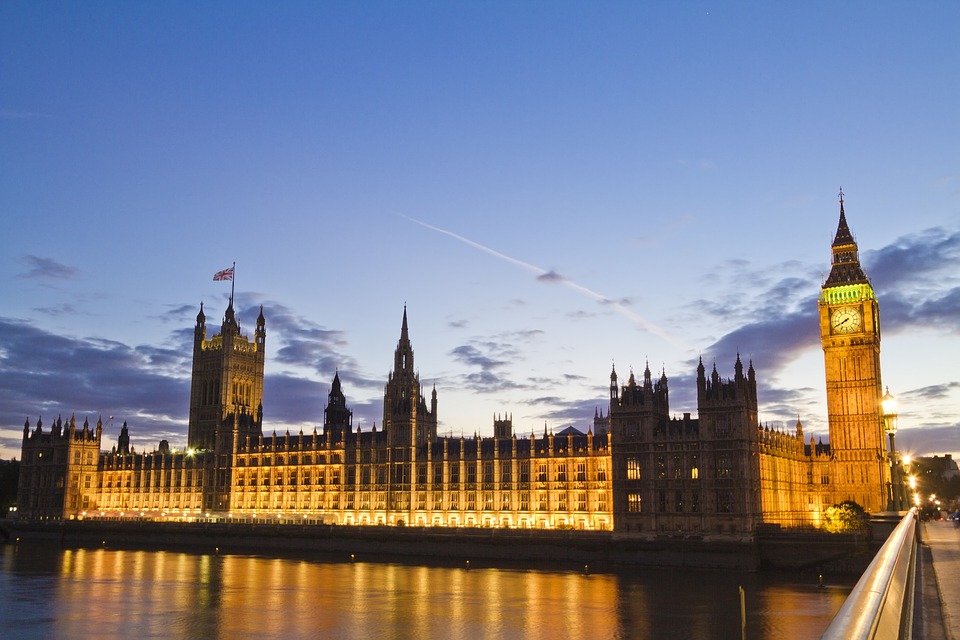
    The House of Commons’ International Trade Committee is accepting submissions from interested organisations and individuals pursuant to an inquiry it has launched into UK-US trade relations. According to the official press release on the Committee’s website, the inquiry will:

    • examine the potential for a UK-US trade agreement
    • the opportunities and challenges any agreement might present
    • the implications for the production and sale of goods and services on both sides of the Atlantic
    • make recommendations to the Government on how it should approach trade relations with the US.

    The Committee is inviting interested organisations or individuals to submit written evidence to the Committee via the inquiry page in accordance with the guidelines provided. The deadline for written submissions is Monday 27 February 2017.

    For further information, please see the official page of the Committee.


    Alicia Nicholls, B.Sc., M.Sc., LL.B., is a trade and development consultant with a keen interest in sustainable development, international law and trade. You can also read more of her commentaries and follow her on Twitter @LicyLaw.


  • TPP: Trump to Withdraw US from Agreement on day one

    TPP: Trump to Withdraw US from Agreement on day one

    Alicia Nicholls

    United States (US) President-elect Donald Trump has made clear his intention to honour one of his more popular campaign pledges; withdrawing his country from the Trans-Pacific Partnership (TPP) Agreement. He reiterated this promise in an online video aimed at updating the American people on the progress of his transition and policy plans for the first one hundred days of his presidency which will officially begin on January 20, 2017.

    In a video which was silent on his more controversial plans like building a wall Mexico would supposedly pay for or pulling out of the Paris Climate Change Agreement, Mr. Trump stated that on the first day of taking office he would “issue a notification of intent to withdraw” from the 12-member mega-regional trade agreement whose members account for forty (40) percent of global GDP.

    Referring to the TPP as “a potential disaster for our country”, the President-elect stated that he would instead “negotiate fair bilateral trade deals that bring jobs and industry back to American shores”, one of the main cornerstones of his Trade Policy. The US has signed the TPP but has not yet ratified it.

    The TPP has faced tremendous opposition. Among other things, TPP critics have denounced the negotiations’ secrecy and lack of transparency, the potential impact on access to medicines by the stronger intellectual property rights provisions, and the investor-state dispute settlement provisions which allow investors to sue . However, Mr. Trump’s criticisms of the Agreement have been largely vague centering around the need to bring back American jobs and take back control of the American economy. On the campaign trail Mr. Trump famously called the TPP “a rape of our country“.

    While Mr. Trump’s former opponent, former Secretary of State Hillary Clinton, had revoked her support of TPP during her democratic primary fight against Senator Bernie Sanders, current US President Barack Obama has been a staunch supporter of the TPP. The outgoing President recently defended the Agreement at last week’s Asia-Pacific Economic Cooperation (APEC) summit in Lima, Peru.

    Mr. Trump’s promise to withdraw from the TPP may be music to the ears of TPP critics and workers in US ‘rustbelt’ states but fellow TPP member states are not optimistic. Japanese Prime Minister Shinzo Abe has said the TPP would be “meaningless” without the US. Reuters reports that Peru has proposed talks to save the TPP. It should be noted that none of the countries have ratified the Agreement as yet. With the TPP practically “dead on arrival”, Asian states appear to be already pivoting towards the China-pushed rival deal, the Regional Comprehensive Economic Partnership  (RCEP), and the Free Trade Area of the Asia-Pacific (FTAAP).

    In the short video, President-elect Trump also reiterated his promise to cut regulations and increase the production of fossil fuels and pledged to “direct the Department of Labour to investigate all abuses of visa programmes that undercut the American worker”. Mr. Trump has promised in the video to share more updates in upcoming days.

    The President-elect’s full video may be viewed here.

    Alicia Nicholls is a trade and development consultant with a keen interest in sustainable development, international law and trade. You can also read more of her commentaries and follow her on Twitter @LicyLaw.