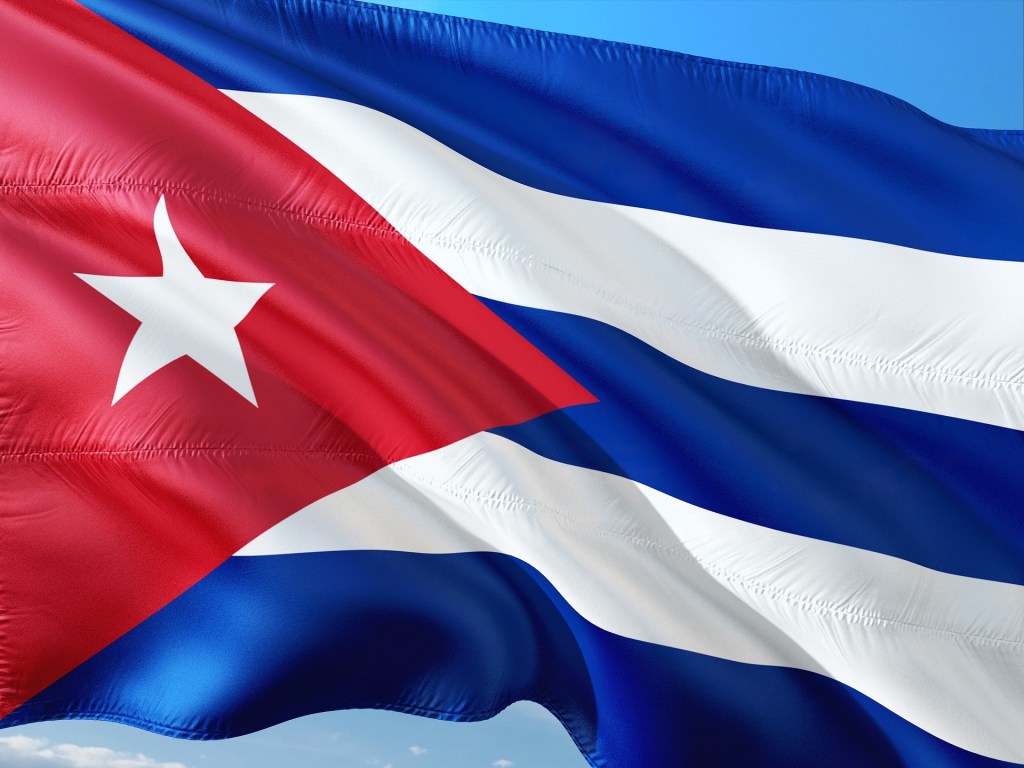
We are barely into the second month of 2026, and already it feels as though the world has shifted beneath our feet. The pace of global change, or even upheaval, has driven many to tune out the news altogether. Yet here in the Caribbean we should not look away from what is unfolding in one of our neighbouring island states, Cuba. For decades, Cuba has been more than a steadfast neighbour to the anglophone Caribbean. It has provided scholarships to our students to study medicine and other disciplines at its universities. It has provided health care to our citizens, sent doctors and nurses to assist us during the COVID-19 pandemic, sent soldiers to fight in anti-colonial struggles, and stood with countless countries globally in moments of crisis.
Following the Cuban Revolution of 1959 and since 1962, Cuba has been under a comprehensive US trade and economic embargo. Over time, these sanctions have been tightened, loosened and tightened again. They extend beyond US-Cuba bilateral trade, with the US seeking to apply it extra jurisdictionally to third countries and companies that do business with the island by leveraging its control of the global financial system as the world’s reserve currency. For a small island nation of roughly 11 million people and some 110,000 squared kilometers, this has meant decades of restricted access to many goods, services and investment.
While no government is without fault and there have been some governance challenges and restrictions on political freedoms, it is impossible to ignore the structural pressure exerted by more than a half a century of economic isolation imposed by the world’s most powerful country. Despite its economic and political challenges, Cuba has achieved social outcomes that rival far wealthier nations. Its life expectancy is on par with that of the US, while its child mortality rate is lower than the US’ and many countries with significantly higher GDP per capita. These achievements reflect sustained investment in universal health care and education, policy choices in keeping with its socialist ideology which prioritises social development of its people.
Today, however, Cuba faces an acute humanitarian crisis. On January 29, 2026, the US branded Cuba an “unusual and extraordinary threat” to its national security and foreign policy and has taken measures to further restrict the island’s access to essential supplies. Regular oil shipments from Venezuela have ceased following the US’ invasion and removal of President Nicolas Naduro from that country. Other countries, such as Mexico, which had been supplying oil have been met with US threats of economic retaliation, including tariffs.
This escalation in US aggression is particularly concerning because in a world which still depends on fossil fuels, oil is not a luxury. It powers ventilators in intensive care units serving sick patients and premature babies. It runs water systems and electric grids. It keeps lights on in homes. When fuel stops flowing, daily life begins to unravel. The result is widespread blackouts, queuing at gas stations, rationing of basic necessities, rising prices, and mounting strain on hospitals and households, prompting Cuban President Miguel Diaz Canel to repeatedly condemn this latest escalation in US aggression, while maintaining Cuba’s openness to constructive dialogue. United Nations Secretary-General, Antonio Guterres, has warned of the humanitarian implications of this escalated US action. Starving Cuba of oil is to literally starve the Cuban people.
What is perhaps most troubling is the global silence, despite some perfunctory statements of solidarity made. Powerful nations have, thus far, stood by as Cubans endure growing shortages and hardship for daring to choose a governance model that does not accord with capitalist interests and for seeking to navigate an asymmetric international system on its own terms. It is, therefore, both unsurprising, but also deeply disappointing, that Caribbean countries, which were among the first to establish diplomatic ties with Cuba and each year call for the end of the unjust US embargo, have been largely silent on these latest aggressions. It could very well be that regional leaders are quietly behind the scenes using diplomatic channels to engage the US government and legislators on this. But we also know that Caribbean governments have reportedly faced threats, such as tariffs, visa restrictions and economic retaliation, and some being allegedly forced to stop sending their students to Cuba.
For small states, the calculation is stark, either speak out and face victimisation or be silent and shield your own citizens on whom you depend for electoral support from immediate harm. After all, if the more powerful countries lack the moral courage to stand up to the world’s most powerful country, who are we to do otherwise, right? But since when do we in the Caribbean determine our own morality by the actions of the most powerful? If the larger nations lack the courage to act, does that absolve us of our responsibility to come together and advocate for Cuba like we have done in the past?
Solidarity with the Cuban people is not optional, it is a moral imperative. Just like the ongoing genocide in Gaza, history will record and judge how the world responded in this moment. We as citizens are not powerless. We can push our governments to act. We can write and we can organise to urge our leaders to engage bilaterally, and to advocate in regional and international fora. As individual governments we are limited, but by acting as a collective, we can advocate on behalf of Cuba, and for an end to this escalation and for the end of an embargo which has not only failed in its purpose but has only served to make the Cuban people stronger and more resilient.
Cuba has been a friend to us and to many around the world. It is our time, as a region and as a global community, to step up and be a friend to Cuba when it matters the most. Moral courage is neither easy, nor convenient, but necessary. The question before us is whether when this juncture in history is remembered, will we be able to say we raised our voices in solidarity with our hermanos y hermanas cubanos (Cuban brothers and sisters), or do we choose the ‘safety’ of silence. Whatever happens, I hope and pray that Cuba vencerá (Cuba will overcome).
Alicia Nicholls, B.Sc., M.Sc., LL.B. is an international trade specialist and the founder of Caribbean Trade & Law Development Blog: www.caribbeantradelaw.com.
Rahym R. Augustin-Joseph (Mr.) (Guest contributor)
Early last week, the Prime Minister of Trinidad and Tobago, Hon. Kamla Persad-Bissessar, indicated via Press Release, that, her government unequivocally supported the deployment of American Military assets into the Caribbean Region in order to destroy the terrorist drug cartels.
Interestingly enough, the Prime Minister noted that it was not the government’s intention to engage CARICOM, as the foreign policy of each CARICOM state is within their sovereign domain and must be articulated for and by themselves. After all, one’s foreign policy is indeed based on one’s national interests, values, pragmatism, ideology, et cetera.
Albeit, accurate in theory, but not truly in praxis, particularly when a country is within a regional integration movement and history has shown that greater results emanate from the Caribbean speaking as one voice within the global political ecosystem, by virtue of their bargaining power as a bloc which eclipses our size constraints. In fact, some naysayers will argue that when the foreign policy dictates of a country is not solely influenced internally, it is reflective of a reduction in sovereignty. But sovereignty is also an action which permits the island’s foreign policy to be in sync with other countries.
Thus, the utilisation of polar opposition positions within the Caribbean, encourages a colonial ‘divide and conquer’ strategy for developed countries which only elevates their position and agenda, at the expense of the interests of the Caribbean.
Of course, there has been many instances of Caribbean disunity propagated by the USA, such as the Ship Riders Agreement in the 1990’s, debates over permitting the US invasion of Grenada, inability to support one candidate in the Commonwealth SG Race of 2022, recognition of Jerusalem as the capital of Israel, Venezuela- USA Debacle under President Trump, among others.
What is generally done, is the major powers co-opt CARICOM States to be against each other or pick them off one by one through inducements such as aid, financial and technical aid et cetera. It is for this reason I support the Golding Commission’s Report Recommendation 26 which suggested “a review of the procedures for foreign policy consultation and coordination in order to avoid as far as possible, the types of conflict and embarrassing positions that have emerged from time to time among CARICOM members depriving it of the collective force it is capable of exerting.”
While the Prime Minister is accurate that CARICOM countries, reserve the sovereign authority to articulate their individual foreign policy position, it is a known fact that her unilateral position undermines one of the core pillars of the regional integration movement, i.e., foreign policy coordination, as noted in Article 6 (h) of the RTC which notes in part that one of the Community’s objectives is “enhanced co-ordination of Member states’ foreign and foreign economic policies.” It is where countries within the Caribbean Community, seek to find common ground on our individual national positions on these myriad of hemispheric and international issues of great importance to the Caribbean Community, such as the Venezuela- Guyana Dispute and the infiltration of overseas drug cartels which affect Trinidad and Tobago and the wider Caribbean.
But what is also ironic and confusing about the Prime Minister’s position, is that she, without the concurrence of her CARICOM colleagues endorsed the American deployment in the ‘Caribbean Region’, not only in the waters close to Trinidad and Tobago, but the Caribbean, while quickly denouncing her Government’s intention to engage CARICOM on the subject matter.
But, even beyond this foreign policy vernacular, Trinidad and Tobago should not make decisions under the guise of the sovereign name of Trinidad and Tobago when these decisions have life and death implications for the wider Caribbean Region peoples without consulting CARICOM.
Thus, the invitation of war to the shores of the Caribbean, with wanton disregard for the potential effects on human life, through the permitting of US military operations which can have counter-military responses within the small landmass in the Caribbean region potentially affecting multiple Caribbean countries is a decision that should not be taken as fiat by one Caribbean country.
As one online commentator noted, decisions about war are not akin to putting on the call of duty video game, but requires careful deliberation, analysis, consultation, respect for international law et cetera.
It is as if the Prime Minister, in the absence of the Chair of CARICOM is speaking for the region without their concurrence, while still attempting to confine her foreign policy position to Trinidad and Tobago.
But, the articulation of such position should have been even more circumspect, because under the Quasi-Cabinet of CARICOM, Prime Minister Bissessar is the Lead for Security (Drugs and Illicit Arms). As such, when she speaks and takes definitive positions, both for Trinidad and Tobago and implicitly for the Caribbean, it is as akin to a response from the CARICOM, which makes it even more problematic, questionable and worrying. After all, CARICOM is one of the bastions of Caribbean sovereignty.
As such, if the regional Quasi Cabinet works anything like our domestic cabinet, Prime Minister Bissessar has just articulated a policy position of CARICOM, while admitting ‘boldfacely’ that she would not be consulting with her CARICOM colleagues.
But one would believe though that such a request for the deployment of military assets has already been made to the Government of Trinidad and Tobago, which prompted this press release. But, instead, the Prime Minister indicated that, no requests have ever been made by the American government for their military assets to access Trinidad and Tobago territory for any military action against the Venezuelan regime.
But, still, she offers it, citing that should the Maduro regime launch any attack against the Guyanese people, her government will provide the access if required to defend the people of Guyana against Venezuela.
What is also concerning about this policy position by Bissessar is that at the domestic level, it is a confining and narrowing of liberal democracy to the political elite, such that the people of Trinidad and Tobago have not been given any meaningful opportunity to form any opinion on whether they are supportive of the utilisation of foreign military assets by the USA, to fight drug cartels and/ or, as a launching pad for war against the Venezuela regime, with significant potential for retaliatory measures against Trinidad and Tobago which will affect their peoples.
Certainly, Bissessar has shown that the people of Trinidad and Tobago, at the recent ballot box, engaged in what Jean Jacques Rosseau calls a simultaneous exercise in, and surrender of sovereignty, such that the very moment they made the x, was the same moment they surrendered their sovereignty to her, such that all decisions of national importance are only decided by the political elite. They remain excluded from engaging in the political lives of their society and have surrendering all of their power to their representatives.
Of, course the common retort of her colleagues and supporters would be that ‘the people voted for a promise of the reduction of crime and violence’ and provided the government with the latitude to engage in measures such as this to pursue the outcome.
A typical example of the ‘ends justify the means’ only that in governance the means, more than ‘the ends’ matter. How and why, you do what you do matters in politics.
But this position is also at odds with other positions taken in Trinidad and Tobago, in the past under Dr. Eric Williams, where in response to internal turmoil with the Black Power Movement, the USA entered the territorial waters; in order to quell the uprising and they were not welcomed by the Government.
But the policy position is also bewildering because is the administration providing their support for the ‘stationing of military assets to destroy drug cartels’ which emanate from or do not emanate from Venezuela?
Or is it to provide the Americans with the launching pad for war against Venezuela if they attack Guyana? Or is it both?
Under the latter, such a retaliatory response under collective self-defence as per International Law, can only be invoked where there was indeed an ‘armed attack’, the victim state must have declared itself to be under attack, and must request assistance, and that this assistance should still be necessary and proportionate.
It apparently is both because days later, we then see video footage of American military assets destroying an alleged Venezuelan vessel on the waters which was allegedly carrying drugs. What this confirms is that there seems to possibly be a request by the Americans for deployment, contrary to the Prime Minister’s assertion which was accepted by the Prime Minister. Further, the aim of the deployment is not only to respond to the Venezuelan state against Guyana, but to also respond to drug cartels emanating from the state of Venezuela.
In any instance, both are problematic.
Certainly, the former is because, notwithstanding the realities that Trinidad and Tobago faces, wherein the data suggests that there has been an infiltration of violence because of the Venezuelan political and economic crisis, it also places Bissessar in a diplomatic chokehold and at odds with the regional position which also recognises that the influx of unlicenced firearms are due in part to the second amendment right under the USA constitution, to bear arms.
Such that, guns continue to be rampant in our countries, which allegedly also come from the USA without the necessary support from the USA, to revisit their internal background checks and support stronger border control to reduce the influx of firearms.
As noted, in a recent peer-reviewed journal article published in the European Journal of International Security by Dr Yonique Campbell, Professor Anthony Harriott, Dr Felicia Grey and Dr Damion Blake titled “From the ‘war on drugs’ to the ‘war on guns’: South–South cooperation between Mexico and the Caribbean” diagnoses the burgeoning gun violence epidemic permeating the Caribbean is as a result of the illegal trafficking of guns stemming from the illegal trafficking of guns from the US, given that an “estimated 60–90% of guns used in criminal acts in LAC are trafficked from the United States”. Further, the article also notes that some of the necessary pragmatic solutions include a “ban on the sale of military-grade weapons to civilians” and “punitive measures against legitimate carriers that convey illegal weapons across national borders as well as monitoring and performance reviews.”
As noted in an instructive piece assessing this situation through the lens of realism, in International Relations Theory, by Dr. Emmanuel Quashie, lecturer in International Relations, notes and he is quite accurate that, “the Trump administration should also declare a War on the illegal trafficking of guns from the US that is responsible for the bloody violence ravaging our communities and destroying and slaughter of our people as the Prime Minster of Trinidad and Tobago Kamala Persad-Bissessar stated in which she seems to blame the issue solely on “evil traffickers”.
Sidestepping this reality, repeating of the American narrative shared by Vice President Vance which does not apportion responsibility and culpability for the crime and violence in this region equally, and not factoring the American complicity into the policy and diplomatic response and engagement is certainly antithetical to the reduction of crime and violence.
As a matter of fact, it continues to sidestep and pass the difficult task of reduction of crime and violence to the United States of America, ignoring the internal national efforts that Trinidad and Tobago could engage in to reduce crime and violence.
As no amount of warships parked outside of Trinidad can fix the issues of trust in the institutions, corruption of the police force, court backlogs, income inequality, lack of youth opportunities which provide an environment for crime to fester, broken education system which creates tiers of citizens, broken family and community structures, border control which reduces the influx of illegal firearms, et cetera.
After all, crime emerges as the data has shown, not simply out of the existence of drugs and guns i.e., manifest tools of crime and violence. But there is an economic, social and political explanation, which lies in the government’s inability to adequately provide for the majority of citizens. Thus, government inadequacy, which cannot be replaced with warships in seas of foreign vessels, must be blamed and responded to.
It is a short-term knee jerk reaction to appease the West and to remove culpability on the nation-state’s complicit role in festering crime and violence through inaction in a time when long-term sustainable actions are necessary.
But the decision is also at odds with prevailing data from the US itself, which notes that as per academic and departmental research, that 84% of the cocaine seized in the US comes not from Venezuela, as they are not a cocaine producer, but from Colombia.” In fact, the major cartels that pose a threat to the USA according to the U.S. DEA are the Sinaloa Cartel, and the New Generation Cartel from Mexico. As such, Dr. Quashie argues and he may be accurate that this position has less to do with Trinidad’s benevolence and altruistic foreign policy in advancement of Guyana’s self-determination, or alternatively in reduction of violence in Trinidad and Tobago, but in the destabilisation of the Maduro regime which may result in their view in a return of the Oil market for Trinidad and Tobago, which was obliterated with the Petro-Caribe Initiative.
But, the naivety of the Prime Minister, unless this is exactly what it was meant to be, seems to be unaware that regime change only benefits the USA’s self-interest of reduction of communism, socialism and other ‘isms’ and is a continuation of their entrenched doctrines in the Caribbean.
Her support as a friendly host will not result in any benefits for the peoples of Trinidad and Tobago and the wider Caribbean but only be a lesson in the realist nature of geopolitics and the international political economy of war and conflict as noted by Dr. Emmanuel Quashie.
Haile Sellasie words are thus instructive when he lamented the inaction of the League of Nations, during the League of Nations address when his country was defeated by the Italian army of Mussolini, that “today it is us, but tomorrow it will be you.”
Dr. Quashie is also thus also instructive and accurate when he noted that, “thus, the idea that the US military presence in the Caribbean will result in a reduction in illegal guns, drugs and violent crimes is to have a fanciful and superficial understanding of Us foreign policy. Plain and simple, it’s about Venezuela’s oil, because they hold the largest oil reserves in the world and nothing to do with supposed “drug cartels,” or “narco-terrorists” or even the issue of illegal guns that actually comes from the United States and are the main source of the burgeoning gin violence that is ravaging our Caribbean communities.”
But it is important for citizens to not be distracted by the Prime Minister’s utilisation of the trauma of the victims as an excuse for diplomatic prostitution, as she implicitly suggest that it is an all-or-nothing approach. Such, that, if the USA warships are not stationed in the waters, crime and violence cannot be solved.
Scholar Lowenthal is thus accurate then as he is now, when he said that “it is a deceptively attractive policy because it seemed cheap and simple, but it is a dangerously short signed, since it amounted to putting out the fires while doing nothing to remove the flammable material.”
The actualisation of the position was thus seen in the US illegal strike on a boat that the Trump administration claimed were carrying 11 Venezuelan gang members from the Tren De Aragua cartel that was loaded with drugs bound for the US which resulted in the destruction of the vessel and the killing of the individuals. The Prime Minister’s response praising the military operation “that the US Military should kill them all violently” is an affront to the rule of the law, due process, right to a fair hearing, proportionality, among other human rights safeguards enshrined in domestic Constitutional and international human rights treaties.
Certainly, in Trinidad and Tobago and within the USA, these offences are not meted out with ‘death’ ‘vigilante justice’ or an ‘eye for an eye’. There is no legal penalty for drug trafficking which is summary execution without due process, i.e., being arrested, charged, provided with a trial and permit the prosecution to prove its case beyond a reasonable doubt. In fact, even in circumstances where guilt is proven, or plead by the perpetrators, the penalty is not death by execution as witnessed over the last few days.
As such, why should this be the policy position on the waters by these states, in flagrant disregard for domestic and international law?
Instead, in these countries, which boast and are rated highly their admiration for the ‘rule of law’ officials could have simply conducted maritime interdiction of the drug shipments utilising their intelligence, and the subsequent processing, charging, prosecuting and sentencing of the individuals without attacking the vessel’s occupants.
In some reports, they have noted that in most instances, those transporting the drugs are not big drug traffickers, but rather very young poor people from the region utilised for the enhancement of the drug trade.
But, in typical Caribbean Prime Minister fashion, anyone who interrogates the policy is somehow an enemy of progress, the state, unpatriotic and not a law-abiding citizen, as opposed to embracing critics who question the rationale, nature, safeguards et cetera of the policy position. And hosting forums, conversations among other forms of public engagement meant to address these concerns and invite people into the confidence of the decision making of the political elite.
Patriotism and active citizenship is certainly not clothed in selling Caribbean sovereignty to the highest bidder, but in being self-reflective and interrogating the societal issues and the responses by the political elite.
But the policy position is also problematic because it lacks the necessary details, which can cause citizens to possibly rally and interrogate the position.
It reeks of an unquestioning endorsement of the Ship Riders Agreement, such that the USA can continue to deploy and operate their coast guard outside their territorial waters, to respond to terrorism and other related activities.
So, it is important to ask:
What of any benefit is the parking of warships in the Caribbean Sea, and how will it actually seek to reduce crime and violence?
Under what conditions are they present?
How can any ordinary fisherfolk be certain that with the mechanisms utilised they too would not be randomly killed by military arsenal from the US, as young black men are killed in America, by killing first and finding out they do not possess any weapons after? After all, there have been many cases where some Jamaican fishermen have been subjected to abusive measures by the US Coast Guards who accused them of drug smuggling, burning their boats, stripped searched, and shackled like slaves as noted by Bekiempis in a 2019 article published on the subject.
For how long will they remain the Caribbean Sea?
What are the safeguards in place to ensure that they will only pursue their purpose?
What have the two states and the Caribbean region agree should not be done during this military deployment, such as killing of children, women, among other ‘rules of war’, or is it summary execution of every boat on the seas?
What if any are the ramifications if the conditions are breached?
How does the Caribbean people reconcile the history of the West, of utilising our waters and countries as pawns for their own political agenda, at the expense of our small island interests?
Does the President truly mean his friends in the Caribbean will not be terrorised by Venezuela, or is that there is an ulterior motivation of staving off communism as has been embedded within the US-Caribbean relations?
Moreover, as one saw with the recent attack, how can one be assured that the intelligence of the USA and Trinidad and Tobago is accurate such that they are indeed attacking drug cartels, and not just immigrants?
How can we be assured that the execution of the policy is in response to a genuine threat or merely a response to the critics to show that there is a threat?
When the Prime Minister noted that “all traffickers” should be killed violently, how will they ensure if they engage in summary execution that the individuals killed are traffickers as opposed to the trafficked?
And, also, what of the diplomatic courtesies of notification and other forms of engagement with neighbouring states when actions will have regional impacts, or is the Prime Minister still of the insular belief that Trinidad’s actions have no impact elsewhere?
How does the Prime Minister countenance the potential of a return of the US ships and the possible retaliation by Venezuelan authorities on Trinidad and Tobago and potentially the Caribbean region?
Has the Prime Minister engaged in any analysis of the international law surrounding the abovementioned and satisfied herself that it is being followed, or is there just a disregard for law and order?
How does this alter the Caribbean philosophical position of being a zone of peace?
Naturally, the Caribbean people could remember the pretence of the USA, when they claimed they were ‘saving medical students in Grenada’, only to realise that it was an attempt to destabilise and destroy the Revolutionary Government led by Maurice Bishop. Or one only has to remember the USA’s interventions in Dominican Republic, Guyana, among others to maintain their hegemonic status and stave off potential communism in their backyard, i.e., the Caribbean.
But, even today with the onslaught of attacks on Grenada’s ability to retain Cuban medical professionals, under the false pretence of solving human trafficking, only to further isolate Cuba’s medical internationalism, is another apt example of the USA utilising their big stick for their own foreign policy outcomes.
History can repeat itself, only if we are not conscious enough to know it and take corrective action. And even if it does not repeat itself, certainly this is a rhyme.
But, in all of these instances, it is important for the defenders of Caribbean freedom and sovereignty to be conscious of how embedded within the US foreign policy has been the Monroe Doctrine, Big Stick Policy, Platt Amendment, among others which advance the USA first interest, and an assumption of an innate hegemonic status in the Western hemisphere.
Such that, any political squabbles in another state would be interpreted as a hostile act against the USA, that they must respond to. Further, that the region continues to be their backyard, such that any action that is taken, must be in consonant with their underlying interests.
It is in contradistinction to the Barbados foreign policy position, which other CARICOM leaders have supported, and seem to adopt at their own, at Independence by Prime Minister Errol Barrow, when he said that “we should be friends of all, and satellites of none.”
But this position by the Prime Minister of Trinidad and Tobago is also a satellite position because in the latter, it advocates pre-emptively responding to war, as opposed to advocating for the Caribbean sea to continue to be a zone of peace.
Prime Minister Bissessar could have taken the opportunity instead to play a leading role in the Caribbean Region to enhance dialogue over preparation for war. As done in the previous Arnos Vale Accord, Venezuela and Guyanese parties were brought together for dialogue with the ultimate goal of peace. More particularly, the Summit resulted as you know in a Joint Declaration of Argyle for Dialogue and Peace between Guyana agreeing to: “.. directly or indirectly not threatening or using force against one another in any circumstances, including those consequential to any existing controversies between the two States.” This, of course, is in keeping with international law, particularly the customary rule of Article 2(4) of UN Charter, which “prohibits the threat or use of force and calls on all Members to respect the sovereignty, territorial integrity and political independence of other States.”They also agreed “that any controversies between the two States will be resolved in accordance with international law, including the Geneva Agreement dated February 17, 1966.
And that the talks have not completely yielded peace, does not provide an impetus for the preparation and support of war.
Or are we so satisfied with being the choir singers of the West that we believe that the more we support the West interest and imperatives, we will be included in the ‘America First’ policy, especially with the endorsement of President Trump, that we are his friends and he will protect us.
The words of Prime Minister Mia Amor Mottley of Barbados in one of her first UNGA Speeches in 2019 are instructive and should be followed by other Caribbean leaders when she noted, “The time for dialogue, the time for talk, my friends can never be over in a world that wants peace and prosperity. We do not take sides, but what we know is that you cannot propel war over dialogue.”
Eternal vigilance is truly the price of liberty! Let us advocate that peace and good sense prevails!
Rahym Augustin-Joseph is the 2025 Commonwealth Caribbean Rhodes Scholar. He is a recent political science graduate from the UWI Cave Hill Campus and an aspiring attorney-at-law. He can be reached via rahymrjoseph9@ gmail.com and you can read more from him here.
It has been generally recognized by most Caribbean Community (CARICOM) countries, at least in principle, that a coordinated voice on foreign policy issues endows our small countries with bargaining power beyond our size constraints. Indeed, foreign policy coordination is one of the four pillars of CARICOM, with economic integration, human and social development, and security being the other three. However, given the current and increasing discord among CARICOM countries on key international developments, is CARICOM foreign policy coordination still a priority, or is it merely a pipe dream?
An exercise of foreign policy is an exercise of a State’s sovereignty. In general terms, a State’s foreign policy is its strategy in interacting with other States, and is influenced by what that State determines to be its strategic national interests, values, goals and priorities. The key words here are “national interests”, and they may be underpinned by ideology, pragmatism or a combination of the two. A State’s foreign policy is not static, and may change depending on the ideology of the Government in power (for example, whether right-wing, left-wing or centrist) and changing national interests, values, goals and priorities.
As a State’s foreign policy is determined by its national interests, this means that a regional coordinated foreign policy inevitably necessitates the strategic alignment of the national interests of the countries concerned.
Rationale behind the goal of a coordinated CARICOM foreign policy
From as early as the days of CARIFTA (the Caribbean Free Trade Area), the predecessor of CARICOM, the founding architects of the Caribbean regional integration project viewed a coordinated foreign policy as a life raft for assisting our small, then newly independent Caribbean States, to navigate often hostile international Cold War waters in which powerful big country sharks would prey on us little small state ‘sprats’.
Our founding fathers, and later the drafters of the Revised Treaty of Chaguaramas which established the CARICOM Single Market and Economy (CSME), saw a unified foreign policy position as an insurance policy against bullying tactics and the politics of ‘divide and conquer’ – the practice by major powers of playing off CARICOM States against each other, or picking them off one by one through inducements such as aid and other financial support in order to secure votes on hemispheric and international issues. It recognises the old adage of “strength in numbers”. For example, Article 6(h) of the Revised Treaty of Chaguaramas states as one of the Community’s objectives “enhanced co-ordination of Member States’ foreign and [foreign] economic policies”.
Indeed, there have been several instances where Caribbean countries have successfully leveraged their collective voice and numeric strength to their own benefit. Comprising nearly half of the membership of the Organisation of American States (OAS), CARICOM countries are a crucial voting bloc which powerful countries deem necessary to court for voting support on critical hemispheric issues. In the United Nations (UN), CARICOM countries are a smaller but still critical voting bloc.
But do CARICOM member States’ national interests really align to such an extent that a coordinated foreign policy on all issues is still (or was ever) achievable? CARICOM comprises fourteen independent countries and one British Overseas Territory (Montserrat). This necessitates balancing national interests, values, goals and priorities which do not always necessarily align. Indeed, CARICOM countries, while all small States, have their differences, whether in terms of language, geography, economic structure, population, resource endowment or size. All of these factors impact on each State’s perceived national interests, values, goals and priorities.
Foreign policy coordination has been successful in areas like climate change where Caribbean countries see their national interests as inextricably linked. But even on this important issue, there is some policy incongruence. On the one hand, CARICOM countries have demanded more urgent global action to fight climate change, while on the other, some CARICOM member States are still pursuing hydrocarbon exploration and exploitation, as part of their economic development strategy.
There have also been increasing (and frankly, embarrassing) instances of CARICOM foreign policy disunity, from as far back as the infamous US Ship Rider issue in the 1990s, the inability to unite around a single candidate for Commonwealth Secretary General in 2015, to as recently as the UN vote on the US’ controversial motion to recognize Jerusalem as the capital of Israel (instead of Tel Aviv). There is also the still unresolved issue of the region’s position on the One China Policy – some States recognize the People’s Republic of China, while a few still recognize the Republic of China (Taiwan).
The Venezuela Humanitarian Crisis
The latest example of foreign policy disunity relates to the devolving political, economic and humanitarian crisis in the Bolivarian Republic of Venezuela – a country which, despite some differences, has been an important friend to the region in terms of aid and other support. I highlight the Venezuela crisis not just because it is one of the biggest hemispheric crises affecting the region, but it is a nuanced issue which clearly shows the divide in CARICOM countries’ national interests, and hence their diverging positions on the perceived solution.
The suffering of the Venezuelan people wrought by the incompetence of the Maduro regime, and made no better by western countries’ economic sanctions, have caused spill-over security, health, economic and other risks for neighbouring countries. According to the UN, over three million Venezuelans have fled that South American country since the start of the crisis. Many have migrated (illegally in many cases) to neighbouring countries, including Trinidad & Tobago. It is, therefore, in CARICOM countries’ interest for the humanitarian crisis to be solved. However, CARICOM countries differ on what they believe the solution should be.
On January 10, 2019, the OAS Permanent Council approved a resolution not to recognize the legitimacy of the second term of current Venezuelan President, Nicolas Maduro Moros. CARICOM’s disunity on this issue was again on full display for the world to see. The Bahamas, Guyana, Haiti, Jamaica and Saint Lucia were among the 19 OAS member states which voted to approve the resolution. Dominica, St. Vincent and the Grenadines and Suriname were among the 6 (including of course, Venezuela) which voted against the resolution. St. Kitts and Nevis, Trinidad and Tobago, Antigua and Barbuda, Barbados and Belize abstained, while Grenada was the only OAS member State which was absent for the vote.
What explains this disunity? To my mind, mainly national interests, exacerbated by the fact that CARICOM remains an inter-governmental organisation. For instance, Guyana is currently embroiled in a long-standing border dispute with Venezuela, which has been inflamed under the current Maduro regime. This may explain Guyana’s vote in favour of the resolution. Ditto could be said for Jamaica which had recently decided to reacquire Venezuela-owned shares in Petrojam. On the other hand, some other CARICOM Member States are members of the Bolivarian Alternative for the Americas (ALBA) and recipients of assistance from Venezuela through, inter alia, the PetroCaribe Initiative. This may explain why they voted against the resolution. National interests not only dictate a country’s position on an issue, but are what determine whether a CARICOM member State will change its vote based on the promise of aid or support.
Moreover, while the majority of CARICOM member States appear to have adopted a position of non-intervention, some member States (the Bahamas and Haiti) have decided to follow major Western powers in recognizing Opposition leader, Juan Guaido, as interim president of Venezuela.
Given the region’s friendship with Venezuela and the implications of the ongoing crisis for many CARICOM countries, it is commendable that some CARICOM governments have assumed a leadership role on this issue. Some CARICOM governments have vociferously challenged the pronouncements of the OAS Secretary General His Excellency Luis Almagro as not speaking for all OAS member states. A CARICOM delegation led by current CARICOM chairman Dr. the Honourable Timothy Harris, Prime Minister of St. Kitts & Nevis, recently initiated a visit to the UN to discuss the crisis. It should be noted, however, that not all CARICOM governments took part in this meeting, which shows that even on this very important issue, the region still cannot sing from the same hymn sheet.
Is a coordinated CARICOM foreign policy merely a pipe dream?
There appears, at least in rhetoric, a renewed interest by CARICOM leaders in advancing the regional integration process, of which foreign policy coordination has traditionally been a major pillar. This has been aided no doubt by the initiative taken by Jamaica in the commissioning and publication of the Report of the Commission to Review Jamaica’s Relations within the CARICOM and CARIFORUM Frameworks, more popularly referred to as the ‘Golding Report’, and the reinvigorated leadership displayed by Barbados under its new Prime Minister (lead for the CSME in CARICOM’s quasi-cabinet).
The Golding Report identified the glaring failures in foreign policy coordination as one of several challenges currently confronting the regional integration process. The report rightly cites several of the issues which account for this policy disunity, including offers of aid in exchange for votes, lack of political will, inability of diplomats to get clear policy instructions from their capitals, and of course, national interests. As such, recommendation 26 of the Report is to “review the procedures for foreign policy consultation and coordination in order to avoid as far as possible, the types of conflicts and embarrassing positions that have emerged from time to time among CARICOM members depriving it of the collective force it is capable of exerting”.
However, I would go further. In this time of increased introspection by our leaders on the regional integration process, I think there needs to be reconsideration of whether a coordinated foreign policy is really an achievable goal for the region or are we merely chasing a lofty pipe dream which our diverging national interests, values, goals and priorities may be unable to bridge. Indeed, can we really say that the region is any closer to a unified position on the One China policy? Moreover, given the current ideological divide in the region on the issue of citizenship by investment programmes (CIPs), can we really mount an effective and unified CARICOM approach against the EU’s targeting of CIPs in the region?
Let me clarify that I staunchly support our founding fathers’ conviction that there is strength in unified foreign policy positions. Indeed, the enormity of the global challenges confronting the region, whether from Brexit, the possibility of another global downturn, Venezuela, rising populist and nationalist sentiments internationally, blacklisting etc, means that a unified CARICOM front, to the extent possible, should be the desired default position for helping us navigate these challenges.
On the flipside, I also recognise that we must be honest with ourselves. We must face the reality that the goal of a coordinated foreign policy on all issues may be too ambitious given divergent national interests which have accounted for the increasing track record of foreign policy disunity. Indeed, these all too public displays of foreign policy disunity only serve to undermine the Caribbean public’s faith in the sincerity of our leaders’ commitment to the regional integration process, and to empower CARICOM-skeptics. We, perhaps, are setting ourselves up for failure.
An alternative and more achievable approach, therefore, could be for CARICOM member states to clearly identify specific foreign policy priority areas on which they would strive to present a unified policy position. The European Union (EU), for instance, has sought to harmonise its foreign policy (Common Foreign and Security Policy) primarily around security and human rights issues. For CARICOM, priority areas for foreign policy coordination could be more straightforward “low-hanging fruits” such as foreign trade, security, the loss of correspondent banking relationships due to de-risking by global banks, tax issues, and climate change. These are areas in which a unified CARICOM foreign policy position is perhaps most achievable and most effective.
I appreciate that my view may be unpopular and differs from traditional orthodoxy, but in these times of increased economic and geopolitical uncertainty, the continued desirability of pursuing a coordinated foreign policy is an issue which CARICOM will need to resolve and do so quickly, even if we decide we will only coordinate on certain foreign policy issues.
Alicia Nicholls, B.Sc., M.Sc., LL.B., is an international trade and development consultant with a keen interest in sustainable development, international law and trade. You can also read more of her commentaries and follow her on Twitter @LicyLaw.
On June 29th 2005, fourteen of the Caribbean countries which met with the late President Hugo Chavez Frias in the beautiful northern Venezuelan port city of Puerto La Cruz signed an energy cooperation agreement which would seek to be a beacon of south-south cooperation and solidarity. Nearly eleven years after the ink has dried on the Agreement, a triad of developments has added fuel to the growing fire of concerns about the sustainability and viability of the Petrocaribe Agreement which provides beneficiary countries in the Caribbean and Central America with Venezuelan oil on very generous terms.
First, oil prices this month have continued their months-long slide, dropping to twelve year lows. In light of current geopolitical realities, a recovery in prices is unlikely any time soon. Secondly, in December last year the United Socialist Party of Venezuela (PSUV), the party of the late President Chavez and his successor President Nicolas Maduro, lost its majority in the Venezuelan National Assembly. The newly elected Opposition majority is calling for a review of Venezuela’s oil agreements. Thirdly, Venezuela’s continued economic turmoils have prompted President Nicolas Maduro to decree a 60-day economic state of emergency. This decree is currently being debated by the National Assembly, Venezuela’s unicameral legislature.
This article argues that despite Petrocaribe’s popularity in the region and President Maduro’s pledge of continued support for the initiative, the triad of developments above will eventually force a revision of the terms of the arrangement. Beneficiary countries in the Caribbean should prepare themselves for this eventuality.
“Petrocaribe, towards a new Order in our America”
This was the title of President Chavez’s speech at the opening session of the Fourth Petrocaribe Heads of Government Meeting in Cuba in 2007 and sums up the philosophic underpinning of the arrangement. The Petrocaribe Energy Cooperation Agreement was the brainchild of President Chavez as part of his thrust towards creating an alternative, development-friendly model of integration based on the principles of solidarity and development as opposed to exploitation and neo-imperialism.
The stated goals of the Petrocaribe Initiative are to guarantee energy security, promote social and economic development and promote the integration of Caribbean countries “through the sovereign use of energy resources, sustained by the guiding principles of the Bolivarian Alternative for the Americas (ALBA)”, which President Chavez offered as an alternative to the US-initiated and now shelved Free Trade Area of the Americas (FTAA). Petrocaribe has been continued under his successor, President Nicolas Maduro, after President Chavez’s death from cancer in March 2013.
Petrocaribe has largely benefited the Region
Seventeen countries of the Caribbean and Central America, plus Venezuela, are signatories to Petrocaribe. This includes Cuba and the Dominican Republic and all countries of the Caribbean Community (CARICOM), except for Barbados and oil-exporter Trinidad & Tobago. Barbados and Trinidad & Tobago had declined to join, stating it would prejudice their other arrangements.
Venezuela’s state-owned oil company Petroleos de Venezuela (PDVSA) provides Petrocaribe beneficiary countries with oil on extremely generous terms in keeping with Petrocaribe’s aim of facilitating development and not profit. Beneficiary countries pay only a percentage of the price of the oil up front (within 30-90 days) and are given grace periods of between one-two years, and up to twenty-five years to repay the remainder of the loan at interest rates of one percent if oil prices are above $US40 per barrel and two percent if they are below. The higher the price of oil per barrel the higher the percentage of the loan which may be repaid long term. The loan may be repaid in cash or in services and goods. Cuba has used medical and educational services as a way of repaying its loan, while until recently Guyana had a rice for oil arrangement with Venezuela.
These generous terms have made Petrocaribe extremely attractive, particularly to the small island developing States of the Caribbean which are highly dependent on imported fossil fuels (with the exception of Trinidad & Tobago). Fuel imports comprise a large portion of Caribbean countries’ import bills and high electricity costs have an impact on business competitiveness. Petrocaribe’s financing terms make oil much cheaper.
In a context where Caribbean countries are finding it increasingly difficult to access concessional financing, Petrocaribe has been an alternative source of financing. In the countries of the Organisation of Eastern Caribbean States (OECS), Venezuelan support under ALBA has provided investments in social programmes, including the provision of eye care treatment services by Cuban and Venezuelan doctors under Mission Miracle. In Jamaica, the Government established the Petrocaribe Development Fund which uses inflows accruing to Jamaica under Petrocaribe to finance critical development projects.
However, while the Petrocaribe arrangement allows cash-trapped governments more leeway to spend money on social and development programmes, the accumulation of Petrocaribe debt has added to beneficiary countries’ already high debt burdens. Critics also argue that despite its stated goal of improving Caribbean countries’ energy security, the cheap oil provided by Petrocaribe has arguably lessened Caribbean islands’ impetus towards transitioning to alternative energy sources.
…But Petrocaribe makes little financial sense to Venezuela
While largely economically beneficial to the Caribbean and rooted in a development-oriented philosophy, Petrocaribe’s generous terms have made little financial sense for Venezuela. The main benefit of the Agreement to Caracas is the diplomatic support it has been able to secure from Caribbean countries on hemispheric and international issues. The CARICOM bloc is an important voting bloc in the Organisation of American States and Caracas has benefited from CARICOM countries’ support. Petrocaribe has also expanded Venezuela’s sphere of influence in a region historically regarded as the United States’ backyard.
Although Venezuela has the largest proven reserves of crude oil in the world and oil accounts for about 95% of its exports, economic stresses have plagued the country for some time now and have only deteriorated as oil prices continue their plunge. At the time of Petrocaribe’s signature in 2005, oil prices hovered around $50 a barrel. As at the time of writing this article, the price of brent crude oil is $28 a barrel. In its October 2015 forecast, the IMF forecasted Venezuela’s economy to contract in 2015 and 2016 by 10% and 6% respectively.
Venezuela’s oil exports and international reserves are down and the country has been reliant on loans from China. According to El Universal, President Maduro has called for an emergency meeting of OPEC before the next meeting scheduled for June this year and has decreed a state of economic emergency.
Petrocaribe’s Terms will likely be revised
Petrocaribe’s generous terms were steeped in Chavez’s philosophy for an alternative integration model which was based on development and solidarity as opposed to profit and exploitation. Without doubt Petrocaribe has brought social and economic benefits to beneficiary countries, a fact recognised by Caribbean leaders who continue to speak favourably of the Agreement and by President Maduro who has sought to reassure Caribbean countries of Venezuela’s continued support for Petrocaribe. In the midst of an escalation of Venezuela’s border dispute with Guyana, President Maduro undertook a Petrocaribe tour in October last year where he reiterated Venezuela’s commitment to the region.
However, as economic pressures continue to mount in Venezuela so has the internal opposition to the generous terms of the Petrocaribe deal. Back in 2013 Opposition Leader Alfonso Marquina had called on the Venezuelan Government to modify the terms of the Petrocaribe agreement as it was “seriously hurting Venezuela”. More recently in December last year, the newly elected Opposition majority in the Venezuelan National Assembly announced its intention to review Venezuela’s oil agreements, including Petrocaribe.
In light of the diplomatic and geostrategic importance of the Caribbean to Venezuela, it is likely the Petrocaribe Agreement will not be discontinued but modified in the short term. Modification of the Agreement’s terms could take various forms, including increasing the percentage of the loan which must be paid in the short term, raising the interest rate, reducing the repayment term, among mechanisms.
To some extent Petrocaribe’s numbered days have been recognised by some beneficiaries. Last year the Dominican Republic used money raised on bond markets to redeem a large portion of its outstanding debt to Venezuela under Petrocaribe, while Jamaica did a debt buy-back. Caribbean countries must also place renewed importance on reducing their dependence on fossil fuels and developing renewable energy options. Low oil prices at the moment should not be a reason for complacency. The plan by St. Vincent & the Grenadines for a geothermal plant by early 2018 is therefore encouraging.
Petrocaribe beneficiaries will have to brace themselves for the inevitability of its revision and for the eventual loss of this concessional financing.
Alicia Nicholls, B.Sc., M.Sc., LL.B. is a trade and development consultant with a keen interest in sustainable development, international law and trade. You can also read more of her commentaries and follow her on Twitter @LicyLaw.



 Caribbean Trade Law and Development
You must be logged in to post a comment.