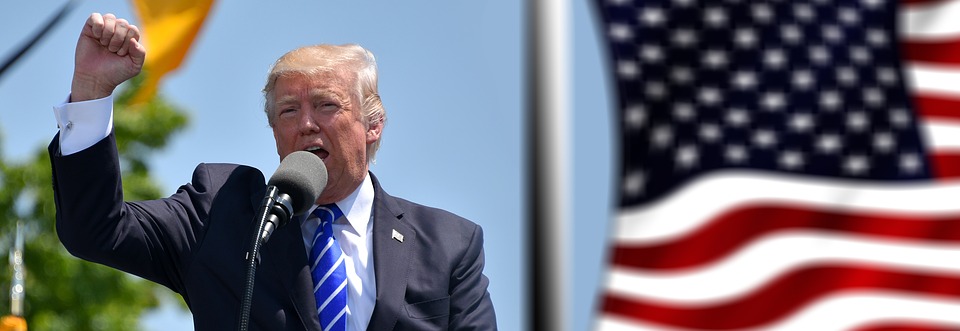
On July 26, 2019, United States (US) President Donald Trump signed a memorandum on reforming developing country status in the World Trade Organization (WTO). This memorandum mandates the United States Trade Representative (USTR) to secure changes to the current method of WTO members’ eligibility for special and differential treatment (S&DT) in the WTO. Failing this, it outlines specific steps the USTR should take.
Background
Special and differential treatment (S&DT) is a bedrock of the rules-based multilateral trading system and grants certain flexibilities to developing countries and Least Developed Countries (LDCs) under the WTO’s agreements. These include, for example, longer time periods for implementing Agreements and commitments; measures to increase trading opportunities for developing countries; and provisions requiring all WTO members to safeguard the trade interests of developing countries. Least developed countries (LDCs), a special sub-category of developing country, also benefit from further flexibilities.
Eligibility for S&DT in the WTO is
currently premised on a country’s self-designation as a ‘developing country’
and at present, at least two-thirds of the WTO’s membership of 164
self-designates as ‘developing’. Unlike with LDCs which are based on the United
Nations’ criteria and list, there is no criteria guiding designation as a
‘developing country’ in the WTO.
In recent times, the issue of eligibility of certain WTO Members for S&DT has become increasingly contentious. Thus far, the European Union, Canada, the US and Norway have tabled proposals, which to varying degrees, call for a rethinking or reforming of the current eligibility model for S&DT in the WTO. Developing countries, on the other hand, argue for a retention of the eligibility status quo, while noting that the focus should be on the Doha mandate of ensuring effectiveness of S&DT.
Earlier this year, the US took the call for reform a step further by not only tabling a lengthy paper in which it argued that self-designation risks condemning the WTO to institutional irrelevance, but followed this up with a draft General Council decision in which it proposed four exclusionary criteria which would, if implemented, exclude a large number of developing countries from eligibility from S&DT in current and future WTO negotiations.
The US’ resubmission of these two documents during the WTO General Council‘s meeting last week and the Memorandum signed by President Trump reiterate that the US is not taking this issue lightly and is prepared to take any steps necessary to bring the WTO to heel in this matter.
What does the Memorandum Entail?
Inter alia, the Memorandum states that “while some developing-country designations are proper, many are patently unsupportable in light of current economic circumstances. ” It lists several countries which self-designate as ‘developing countries’ in the WTO, while being members of the G20 and/or the Organization for Economic Cooperation and Development (OECD) and/or are among the 10 wealthiest economies in the world as measured by GDP per capita. It dedicates several paragraphs to signalling out China as an example of a country which the US argues inappropriately self-designates as a ‘developing country’.
It goes on to note that “When the
wealthiest economies claim developing-country status, they harm not only other
developed economies but also economies that truly require special and
differential treatment. ” It further states that “such disregard
for adherence to WTO rules, including the likely disregard of any future rules,
cannot continue to go unchecked. ” Moreover, it states “with respect
to the WTO, there is no hope of progress in resolving this challenge until the
world’s most advanced economies are prepared to take on the full commitments
associated with WTO membership. “
The Memorandum directs the United States
Trade Representative (USTR) to, as appropriate and consistent with applicable
law, use all available means to secure changes at the
WTO that would prevent self-declared developing countries from availing
themselves of flexibilities in WTO rules and negotiations that are not
justified by appropriate economic and other indicators.
The Memorandum further mandates the USTR to,
where appropriate and consistent with law, pursue this action in cooperation with other like-minded WTO Members. It also directs the USTR to update the President on his
progress within 60 days of the date of the memorandum.
But here comes the interesting part. If, within 90 days of the date of this memorandum, the USTR determines that substantial progress has not been made toward achieving those changes at the WTO, the USTR is to no longer treat as a developing country for the purposes of the WTO any WTO Member that in the USTR’s judgment is improperly declaring itself a developing country and inappropriately seeking the benefit of flexibilities in WTO rules and negotiations; and where applicable, not support any such country’s application for membership of the OECD.
The Memorandum further mandates what appears to
be a ‘name and shame’ exercise by directing the USTR to publish on its website
a list of all self-declared developing countries that the USTR believes are
inappropriately seeking the benefit of developing-country flexibilities in WTO
rules and negotiations.
What potential
implications for the Caribbean?
Currently all CARICOM Member States are WTO Members, with the exception of The Bahamas which is currently in accession, and all self-designate as developing countries. It is no secret that the US’ main targets are larger emerging economies which continue to self-designate as developing countries.
However, while Caribbean countries do not appear to be among the countries specifically targeted by the US, some Caribbean countries could still inadvertently be caught up in the large fishing net the US proposes to catch the big fish it has in its sight.
For instance, one of the proposed criteria for exclusion for S&DT under the draft General Council decision advanced by the US is classification by the World Bank as a “high income” economy. If implemented, this criterion would deny five Caribbean countries: Antigua & Barbuda, The Bahamas (currently in accession to WTO), Barbados, St. Kitts & Nevis and Trinidad & Tobago from eligibility for S&DT in current and future WTO negotiations. While these countries are classified as ‘high income’ economies for World Bank lending purposes, GDP per capita does not tell the whole development picture. It does not, for example, take into account income inequalities, indebtedness or these countries’ vulnerabilities to financial or weather-related shocks.
The US has shown that it is committed to
reforming the current model of eligibility for S&DT in the WTO to ensure
that countries which it feels should not be eligible no longer have this right.
As such, Caribbean small vulnerable economies should only monitor these
developments closely, but advance their own positions on this issue to ensure
their voices are heard in the reform process.
Firstly, it would be useful to ascertain to
what extent are Caribbean countries utilising the current flexibilities under
the WTO agreements. Secondly, do Caribbean countries agree that there is need
for reform of the eligibility model currently utilised by the WTO? If so, what
do we propose? Do we support an objective criteria approach as that being
advanced by the US, or should we use this opportunity to reopen the call for an
SVE sub-category, or is there something else we could propose which ensures
that the most vulnerable economies remain eligible for S&DT. These are
issues on which the region cannot afford to be silent.
The full Memorandum may be accessed here.
Alicia Nicholls, B.Sc., M.Sc.,
LL.B., is an international trade and development consultant with a keen
interest in sustainable development, international law and trade. You can also
read more of her commentaries and follow her on Twitter @LicyLaw.
DISCLAIMER: All views expressed
herein are her personal views and do not necessarily reflect the views of any
institution or entity with which she may be affiliated from time to time.


 Caribbean Trade Law and Development