Tag: WTO

  • Belize undergoes third WTO Trade Policy Review

    Belize undergoes third WTO Trade Policy Review

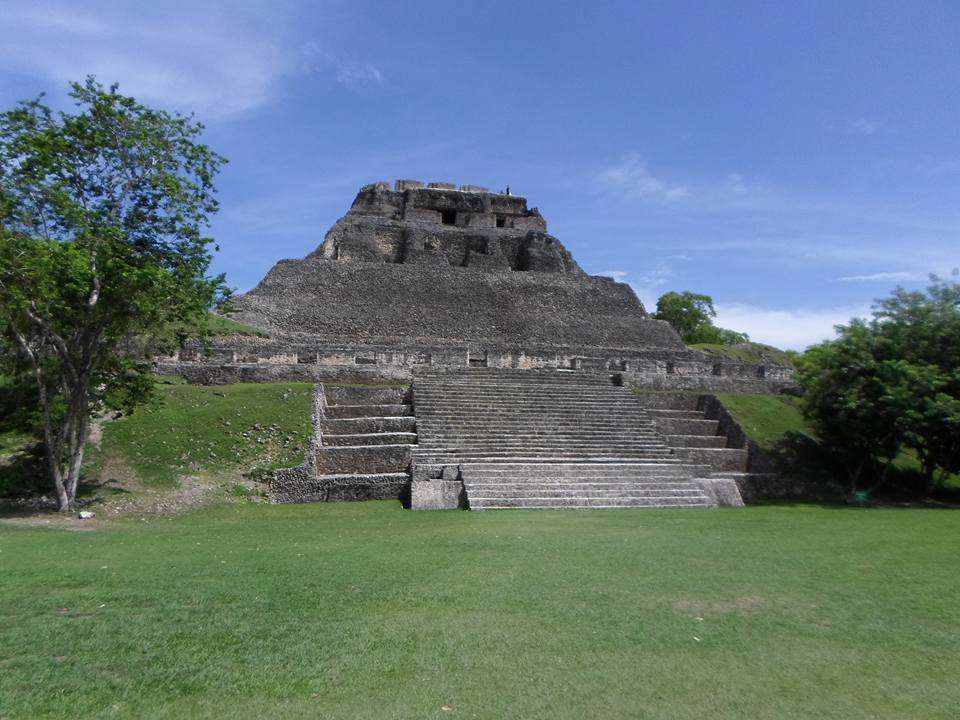
    Photo credit: Alicia Nicholls 2016

    Alicia Nicholls

    Belize underwent its third World Trade Organisation (WTO) mandated Trade Policy Review over the period April 24th and 26th, 2017. Trade Policy Reviews are a mandatory exercise under the WTO’s Trade Policy Review Mechanism. Each WTO member country’s national trade and other trade-related policies are peer-reviewed by the Trade Policy Review Body (the WTO General Council acting under special rules and procedures).

    The frequency of the reviews depends on the country’s share of world trade. The purpose of the trade policy reviews is to help to ensure transparency of member countries’ trade policies. Belize has previously undergone reviews in 2010 and 2004.

    Some key findings from Belize’s 2017 review

    These findings were taken from the WTO Secretariat Report and the Chairman’s concluding remarks.

    The Report noted that several issues had affected Belize’s economy during the review period, including the decline in oil prices, disease outbreaks affecting its agriculture sector and the impact from the loss of correspondent banking relationships due to the de-risking practices of major global banks.

    Areas of praise

    Members praised Belize for the following:


    • Its diversification into tourism which is now the major driver of the country’s economy, and the adoption of the country’s first National Trade Policy Framework.
    • Belize’s participation in the WTO. Some members also suggested that the country establish a permanent mission in Geneva.
    • Belize was commended  for being among the first Members to ratify the Trade Facilitation Agreement and for having notified its Category A commitments.  Belize also recently established a National Committee on Trade Facilitation
    • Members commended Belize’s efforts to modernize its trade regime and customs procedures.
    • Reduction by half of the number of products subject to import licensing, but some members noted that this was followed by tariffication, resulting in some applied MFN tariffs exceeding their bound rates.
    • Noting Belize’s membership of the Caribbean Community (CARICOM), Members encouraged Belize to continue engagement in regional integration and trade liberalization schemes.
    • Belize was commended for its acceptance of the Protocol amending the TRIPS Agreement; while some Members encouraged Belize to join the WIPO treaties.
    • The establishment of Belize’s first Internet Exchange Point to reduce the costs of local internet traffic.
    • Members acknowledged the recent reforms to Belize’s financial services regulatory framework.
    • Some Members welcomed Belize’s efforts to improve its air transport infrastructure and air links, and encouraged Belize to replicate such efforts to enhance land and maritime transport.

    Areas of concern

    • Members, however, were concerned that Belize had not submitted notifications in a number of areas, and urged for compliance with the WTO requirements.
    • Several Members highlighted Belize’s three incentive programmes granting export subsidies which should have been eliminated by 31 December 2015. However, they acknowledged Belize’s ongoing efforts to amend the relevant legislation.

    As noted by the Chairman, Belize was commended for providing prompt and helpful answers to all written questions submitted in advance by members, as well as to all that came after the deadline.

    Belize is the fourth WTO member country to undergo review so far for the year, following Sierra Leone, Japan and Mexico. The other CARICOM member state to be reviewed this year is Jamaica which will undergo its review on September 13 & 15.

    The documents from Belize’s review, including the full WTO Secretariat Report and the Chairman’s Concluding Statement, may be viewed here.

    Alicia Nicholls, B.Sc., M.Sc., LL.B., is a trade and development consultant with a keen interest in sustainable development, international law and trade. You can also read more of her commentaries and follow her on Twitter @LicyLaw.
  • WTO Trade Forecast 2017: Cautiously Optimistic about trade growth recovery

    WTO Trade Forecast 2017: Cautiously Optimistic about trade growth recovery

    Alicia Nicholls

    After decelerating considerably in 2016, world merchandise trade growth is expected to recover to 2.4% in 2017. This is according to the cautiously optimistic trade forecast released today by the World Trade Organisation (WTO).

    According to the WTO, although global merchandise trade volumes have historically on average grown 1.5 times faster than global GDP, this ratio has slowed to 1:1 since the crisis of 2008. Last year’s merchandise trade growth of 1.3% was the slowest pace of trade growth since the world economic crisis of 2008 and was linked primarily to a weak global economy.

    In his press conference remarks, Director-General of the WTO, Roberto Azevedo, explained that early indicators, such as the record increases in global container shipping throughput, the high levels of global export orders, and the expected recovery in world economic output, point to a recovery in global trade in 2017.

    However, the WTO Chief also cautioned that this forecast assumes that governments pursue the right policy mix and that forecasts of an expected recovery in global GDP are accurate. The report noted that trade growth could be negatively affected by governments’ trade, monetary and fiscal policies.

    Indeed, the Director-General’s remarks to this point perfectly sum this up as follows:

    Overall, I think that while there are some reasons for cautious optimism, trade growth remains fragile and there are considerable risks to the downside. Much of the uncertainty around the outlook is of course political — and not only geopolitical. Part of this is driven by people’s concerns about the impact that trade can have.

    Given the high levels of uncertainty which have increased the forecast risk factor, WTO economists have also given a growth range of between 1.8 and 3.6% for 2017.

    Observing that trade does cause some dislocation, the WTO Director General cautioned governments against protectionism and highlighted that innovation, automation and new technologies, and not trade, were responsible for eighty percent of the loss of manufacturing jobs.

    The WTO’s forecasts for 2018 are much more optimistic, with a growth forecast of between 2.1 and 4.0%

    For further information, please see the WTO Director-General’s press conference remarks here and the WTO’s press release here.

    Alicia Nicholls, B.Sc., M.Sc., LL.B., is a trade and development consultant with a keen interest in sustainable development, international law and trade. You can also read more of her commentaries and follow her on Twitter @LicyLaw.
  • WTO Trade Facilitation Agreement enters into force

    WTO Trade Facilitation Agreement enters into force

    Alicia Nicholls

    Today the World Trade Organisation (WTO) Trade Facilitation Agreement, the first multilateral trade agreement to be concluded since the WTO came into being over twenty years ago, has entered into force. The Trade Facilitation Agreement aims to expedite the process of the movement of goods across  national borders and was concluded as part of the Bali Package coming out of the WTO Ministerial in 2013.

    For immediate entry into force the Agreement needed to be ratified by two-thirds of the WTO’s membership, that is, 110 member countries. That threshold was met today when Chad, Jordan, Oman and Rwanda submitted their instruments of ratification.

    As the World Bank’s Annual Doing Business Reports show, countries’ customs procedures can vary from a few to a multiplicity of steps, which can significantly increase the amount of time goods take to clear borders, which increases costs to both suppliers and consumers. As supply chains become  increasingly globalised, so is the need for more expeditious trade flows and standardisation of customs procedures. The Trade Facilitation Agreement’s provisions provide standards which were inspired by international best practices.WTO economists in the World Trade Report 2015 estimated that the Agreement would lower members’ trade costs by an estimated 14.3% on average.

    Developing countries and Least Developed Countries (LDCs) have the option to determine their pace of implementation by designating each of the provisions according to one of three categories: A,B,C, with A being the commitments each country can undertake as soon as the Agreement comes into force. The Agreement also includes provisions on customs cooperation. A Trade Facilitation Facility was also created at the request of developing countries to assist them and Least Developed Countries in implementing the Agreement.

    So far besides St. Vincent & the Grenadines, the following countries of the Caribbean Community (CARICOM) have ratified the TFA: Trinidad & Tobago, Belize, Guyana,  Grenada, Jamaica, St. Kitts & Nevis, St. Lucia and Dominica. Reforms undertaken by CARICOM countries pursuant to Agreement could help to facilitate the movement of goods trade within the Community through more simplified customs procedures and lower border costs. Like other developing countries, CARICOM countries would also be able to access the Trade Facilitation Facility to assist in their implementation of the Agreement’s reforms.

    For further information, please see the WTO’s press release.

    Alicia Nicholls, B.Sc., M.Sc., LL.B., is a trade and development consultant with a keen interest in sustainable development, international law and trade. You can also read more of her commentaries and follow her on Twitter @LicyLaw.

  • Dominica Ratifies WTO Trade Facilitation Agreement

    Dominica Ratifies WTO Trade Facilitation Agreement

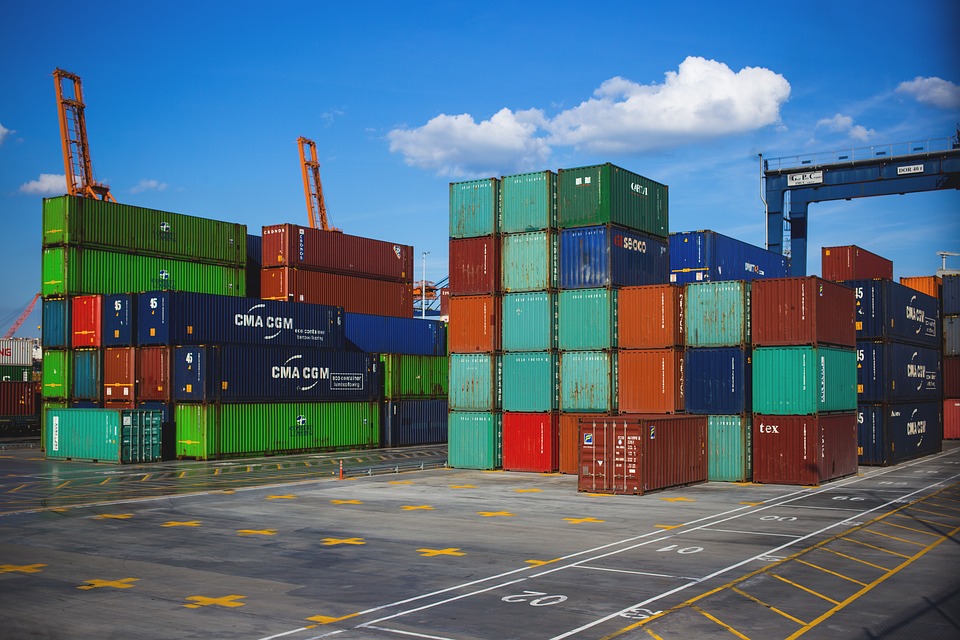
    Photo source: Pixabay

    Alicia Nicholls

    Dominica has become the latest Caribbean Community (CARICOM) member state to ratify the World Trade Organisation’s (WTO) Trade Facilitation Agreement, according to a WTO press release. On November 28, 2016 Dominica, along with Mongolia, deposited its instrument of acceptance to the WTO. These two ratifications bring the number of WTO member states to have ratified the Agreement to 100, just 10 shy of the number (two thirds of WTO membership) needed for the Agreement to go into effect, according to the press release.

    The Trade Facilitation Agreement, which was concluded at the WTO’s Bali Ministerial in 2013, aims to lower trade costs by expediting the movement, clearance and release of goods, thereby cutting red tape, and improving cross-border customs cooperation on trade and customs compliance issues. Upon the request of developing and least developed country (LDC) WTO members, a Trade Facilitation Agreement Facility  was established in 2014 to assist them with implementing and gaining the benefits from the Agreement.

    The WTO expects the Agreement to  boost global merchandise exports by up to $1 trillion per year if fully implemented. As I had noted in a previous post on the Agreement, ratification and full implementation  of the Trade Facilitation Agreement by all CARICOM states could also improve Caribbean regional integration by easing transaction costs of exporting across CARICOM states. Implementing these reforms would also send a strong signal to the international business community of these countries’ commitment to improving their ease of doing business.

    The following other CARICOM countries have already ratified the Agreement: Trinidad & Tobago, Belize, Guyana, Grenada, St. Lucia, Jamaica and St. Kitts & Nevis.

    The WTO press release may be viewed here.

    Alicia Nicholls, B.Sc., M.Sc., LL.B., is a trade and development consultant with a keen interest in sustainable development, international law and trade. You can also read more of her commentaries and follow her on Twitter @LicyLaw.