Tag: WTO

  • Barbados ratifies WTO Trade Facilitation Agreement

    Barbados ratifies WTO Trade Facilitation Agreement

    Alicia Nicholls

    On January 31, 2018, Barbados became the 130th World Trade Organisation (WTO) member to ratify the WTO’s Trade Facilitation Agreement.

    According to the press release from the Barbados Government Information Service (GIS), “the instrument of ratification was formally handed over by Ambassador to the United Nations and Other International Organisations, Bentley Gibbs, to Secretary General of  the WTO, Robert Azevedo, in Geneva, Switzerland”.

    The Trade Facilitation Agreement came out of the WTO’s Bali Ministerial in 2013 and entered into force in February 22, 2017 after two-thirds of the WTO’s membership ratified the Agreement. It aims to expedite the movement, release and clearance of goods across borders by reducing red tape, improving transparency and facilitating cooperation among customs authorities.

    The benefits of these provisions, once implemented, include reducing trade costs for businesses, increasing participation in global value chains and improving trade flows. Ratification of the Agreement is, therefore, an important signal to investors of a country’s commitment to improving its business environment for trade.

    In keeping with the principle of Special and Differential Treatment, there are implementation flexibilities in Section II for developing and least developed countries, recognising they may need more time to implement the provisions of the Agreement. Like other developing and least developed countries, Barbados has access to the Trade Facilitation Agreement Facility which provides assistance for notification, capacity-building support and grants.

    The following other Member States of the Caribbean Community (CARICOM) have already ratified the Trade Facilitation Agreement: Trinidad & Tobago, Belize, Guyana, Grenada  and St. Lucia (2015), Jamaica and St. Kitts & Nevis  (2016), St. Vincent and the Grenadines, the Dominican Republic and Antigua & Barbuda (2017).

    Alicia Nicholls, B.Sc., M.Sc., LL.B., is an international trade and development consultant with a keen interest in sustainable development, international law and trade. You can also read more of her commentaries and follow her on Twitter @LicyLaw.

  • ACP Trade Ministers demand ‘concrete outcomes’ at upcoming WTO MC11

    ACP Trade Ministers demand ‘concrete outcomes’ at upcoming WTO MC11

    Alicia Nicholls

    Trade ministers and other representatives from the 79-member Africa, Caribbean and Pacific (ACP) countries added their voices to demands for ‘concrete outcomes’ at the upcoming World Trade Organisation’s Eleventh Ministerial Conference (WTO MC11). Preparations for the upcoming WTO MC11 was one of several topics discussed by ACP trade representatives at their 20th ACP Ministerial Trade Committee meeting held in Brussels on 18-19 October last week.

    According to the press release from the meeting, the ACP representatives  reiterated the need for a development-friendly and robust MC11 work programme which recognized differences between developed, developing and least developed countries and whose outcomes were aligned with the Sustainable Development Goals (SDGs).

    Reaffirming their commitment to the multilateral trading system, they also called for “inclusiveness, consensus and transparency in all WTO decision-making processes, as well as careful framing of any reform evaluation of the WTO to ensure that the interests of all countries are protected”. Guyana was chosen to be the spokesperson for the ACP Group at the Ministerial which will take place in Buenos Aires December 10-13, 2017.

    In a speech delivered at the ACP meeting, the WTO’s Director General, Roberto Azevedo, acknowledged the important role ACP countries have played in shaping the WTO’s work.

    Mr. Azevedo gave a brief status report on the WTO’s preparatory work for the upcoming Ministerial Conference, lauding the ACP countries for being at the “forefront” of these discussions. He noted that although there were some positive signs, the many gaps to bridge meant that there was still much work ahead with respect to the negotiations.  He further reiterated that in order to achieve concrete results in Buenos Aires, “more focused engagement and negotiation will be required to quickly identify areas of convergence”.

    In the meeting which was chaired by the Hon. Carl Greenidge, Vice President and Minister of Foreign Affairs of the Cooperative Republic of Guyana, ACP trade representatives also focused on several  other topics of importance to ACP countries’ trade, including enhancing trade among ACP countries and trade issues with the European Union (EU).

    The ACP press release also notes that ACP representatives have committed to “increased integration, unity and solidarity” among ACP countries, including taking more “joint ACP approaches to trade and development”.

    The press release from the ACP can be read here.

    The WTO Director-General’s full speech can be read here.

    Alicia Nicholls, B.Sc., M.Sc., LL.B., is a trade and development consultant with a keen interest in sustainable development, international law and trade. You can also read more of her commentaries and follow her on Twitter @LicyLaw.
  • Belize undergoes third WTO Trade Policy Review

    Belize undergoes third WTO Trade Policy Review

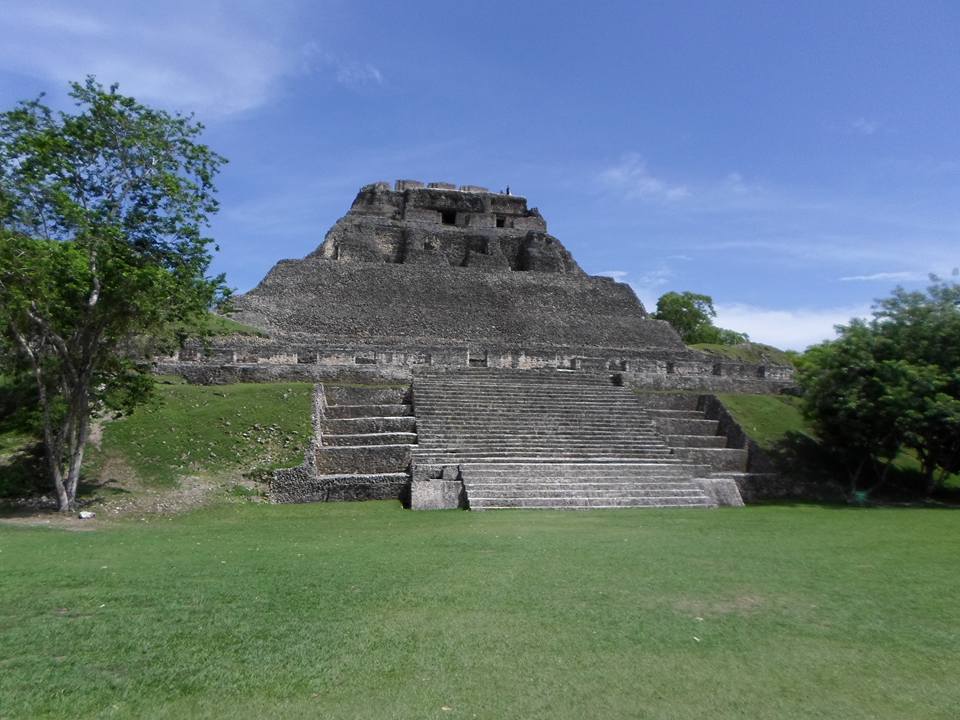
    Photo credit: Alicia Nicholls 2016

    Alicia Nicholls

    Belize underwent its third World Trade Organisation (WTO) mandated Trade Policy Review over the period April 24th and 26th, 2017. Trade Policy Reviews are a mandatory exercise under the WTO’s Trade Policy Review Mechanism. Each WTO member country’s national trade and other trade-related policies are peer-reviewed by the Trade Policy Review Body (the WTO General Council acting under special rules and procedures).

    The frequency of the reviews depends on the country’s share of world trade. The purpose of the trade policy reviews is to help to ensure transparency of member countries’ trade policies. Belize has previously undergone reviews in 2010 and 2004.

    Some key findings from Belize’s 2017 review

    These findings were taken from the WTO Secretariat Report and the Chairman’s concluding remarks.

    The Report noted that several issues had affected Belize’s economy during the review period, including the decline in oil prices, disease outbreaks affecting its agriculture sector and the impact from the loss of correspondent banking relationships due to the de-risking practices of major global banks.

    Areas of praise

    Members praised Belize for the following:


    • Its diversification into tourism which is now the major driver of the country’s economy, and the adoption of the country’s first National Trade Policy Framework.
    • Belize’s participation in the WTO. Some members also suggested that the country establish a permanent mission in Geneva.
    • Belize was commended  for being among the first Members to ratify the Trade Facilitation Agreement and for having notified its Category A commitments.  Belize also recently established a National Committee on Trade Facilitation
    • Members commended Belize’s efforts to modernize its trade regime and customs procedures.
    • Reduction by half of the number of products subject to import licensing, but some members noted that this was followed by tariffication, resulting in some applied MFN tariffs exceeding their bound rates.
    • Noting Belize’s membership of the Caribbean Community (CARICOM), Members encouraged Belize to continue engagement in regional integration and trade liberalization schemes.
    • Belize was commended for its acceptance of the Protocol amending the TRIPS Agreement; while some Members encouraged Belize to join the WIPO treaties.
    • The establishment of Belize’s first Internet Exchange Point to reduce the costs of local internet traffic.
    • Members acknowledged the recent reforms to Belize’s financial services regulatory framework.
    • Some Members welcomed Belize’s efforts to improve its air transport infrastructure and air links, and encouraged Belize to replicate such efforts to enhance land and maritime transport.

    Areas of concern

    • Members, however, were concerned that Belize had not submitted notifications in a number of areas, and urged for compliance with the WTO requirements.
    • Several Members highlighted Belize’s three incentive programmes granting export subsidies which should have been eliminated by 31 December 2015. However, they acknowledged Belize’s ongoing efforts to amend the relevant legislation.

    As noted by the Chairman, Belize was commended for providing prompt and helpful answers to all written questions submitted in advance by members, as well as to all that came after the deadline.

    Belize is the fourth WTO member country to undergo review so far for the year, following Sierra Leone, Japan and Mexico. The other CARICOM member state to be reviewed this year is Jamaica which will undergo its review on September 13 & 15.

    The documents from Belize’s review, including the full WTO Secretariat Report and the Chairman’s Concluding Statement, may be viewed here.

    Alicia Nicholls, B.Sc., M.Sc., LL.B., is a trade and development consultant with a keen interest in sustainable development, international law and trade. You can also read more of her commentaries and follow her on Twitter @LicyLaw.

  • WTO Trade Forecast 2017: Cautiously Optimistic about trade growth recovery

    WTO Trade Forecast 2017: Cautiously Optimistic about trade growth recovery

    Alicia Nicholls

    After decelerating considerably in 2016, world merchandise trade growth is expected to recover to 2.4% in 2017. This is according to the cautiously optimistic trade forecast released today by the World Trade Organisation (WTO).

    According to the WTO, although global merchandise trade volumes have historically on average grown 1.5 times faster than global GDP, this ratio has slowed to 1:1 since the crisis of 2008. Last year’s merchandise trade growth of 1.3% was the slowest pace of trade growth since the world economic crisis of 2008 and was linked primarily to a weak global economy.

    In his press conference remarks, Director-General of the WTO, Roberto Azevedo, explained that early indicators, such as the record increases in global container shipping throughput, the high levels of global export orders, and the expected recovery in world economic output, point to a recovery in global trade in 2017.

    However, the WTO Chief also cautioned that this forecast assumes that governments pursue the right policy mix and that forecasts of an expected recovery in global GDP are accurate. The report noted that trade growth could be negatively affected by governments’ trade, monetary and fiscal policies.

    Indeed, the Director-General’s remarks to this point perfectly sum this up as follows:

    Overall, I think that while there are some reasons for cautious optimism, trade growth remains fragile and there are considerable risks to the downside. Much of the uncertainty around the outlook is of course political — and not only geopolitical. Part of this is driven by people’s concerns about the impact that trade can have.

    Given the high levels of uncertainty which have increased the forecast risk factor, WTO economists have also given a growth range of between 1.8 and 3.6% for 2017.

    Observing that trade does cause some dislocation, the WTO Director General cautioned governments against protectionism and highlighted that innovation, automation and new technologies, and not trade, were responsible for eighty percent of the loss of manufacturing jobs.

    The WTO’s forecasts for 2018 are much more optimistic, with a growth forecast of between 2.1 and 4.0%

    For further information, please see the WTO Director-General’s press conference remarks here and the WTO’s press release here.

    Alicia Nicholls, B.Sc., M.Sc., LL.B., is a trade and development consultant with a keen interest in sustainable development, international law and trade. You can also read more of her commentaries and follow her on Twitter @LicyLaw.