Blog

  • UPR 2022 Lewis Memorial Lecture Fund Request + VIth GORDON K. LEWIS & SYBIL FARRELL-LEWIS MEMORIAL LECTURE – Thursday, April 21, 2022

    UPR 2022 Lewis Memorial Lecture Fund Request + VIth GORDON K. LEWIS & SYBIL FARRELL-LEWIS MEMORIAL LECTURE – Thursday, April 21, 2022

    VIth GORDON K. LEWIS & SYBIL FARRELL-LEWIS MEMORIAL LECTURE

    Thursday, April 21, 2022

    2:00pm-4:00pm EST


    To honor the memory of Gordon K. Lewis and Sybil Farrell-Lewis, the 6th Memorial Lecture will be held on Thursday, April 21, 2022, at 2:00 pm (San Juan time, UTC-4) as part of the 30th series of the “Conferencias Caribeñas” (Caribbean Lectures).


    Our Keynote Speaker for the 6th Memorial Lecture will be Dr. Franklin W. Knight (Jamaica), the Leonard and Helen R. Stulman Professor (Emeritus) of History at Johns Hopkins University.


    He will present the lecture:

    “Gordon K. Lewis and the Development of the Field of Caribbean Studies”


    You are invited to join us via Zoom, or YouTube for this event.


    You may register for the Zoom webinar at:


    Youtube transmission:


    All Memorial Lectures can be accessed at:


    The Lewis Family has established the ICS Lewis Annual Memorial Lecture Fund, we invite you to donate at the GoFundMe account that you may access at:


  • The Fall-out from the Russian-Ukraine Crisis for the Caribbean – GUEST CONTRIBUTION

    The Fall-out from the Russian-Ukraine Crisis for the Caribbean – GUEST CONTRIBUTION

    Renaldo Weekes, Guest Contributor

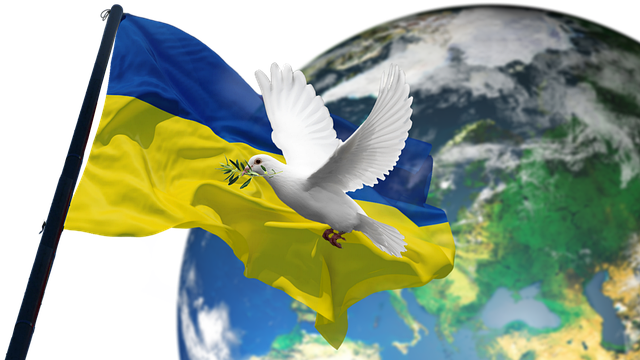
    Image by Wilfried Pohnke from Pixabay

    Renaldo Weekes, guest contributor

    On February 24th, 2022, President of the Russian Federation Vladimir Putin began a large scale invasion of Russia’s neighbour, Ukraine. Many Western governments have been warning of this invasion sometime before it took place and the world waited in anticipation to see if it would actually happen. Now, everyone’s worst fears have been realized. Of course, focus will be on the safety of Ukrainians and all other persons who were caught in the midst of the ongoing invasion. However, there are other effects of the invasion that can be economically damaging for the rest of the world and of course, the Caribbean. Those are: the price of oil, the diversion of aid away from the other parts of the world and potential sanctions.

    The price and supply of oil

    One of the major and most noticeable effects from Russian invasion of Ukraine is the substantial decrease in global oil supply and concomitant increase of the price of oil. This came about because Russia, being the second highest producer of oil in 2021, has not been able to supply the global markets due to many companies and countries protesting the Russian government’s decision to invade Ukraine. As such, there has been an embargo of sorts on Russian oil. With an effective decrease in oil supply on the global market, prices have risen. They’ve risen to above $100 USD per barrel with Brent crude trading at $140 USD at one point but it has since dropped below $100 USD.

    These increases in oil prices have had a significant impact on the prices of products and processes that heavily rely on oil. For example, gas has reached an all-time high of $4.43 per gallon in the United States (US) while here in the Caribbean, countries have seen increases to all-time highs such as $4.13 BBD per litre in the case of Barbados. The Barbados Light and Power Company announced that the price of electricity will also be increasing. These price increases have concomitant effects on normal everyday services that rely on gas such as food, taxi services and generally any service that requires gas and electricity. This can very much apply to almost services offered in the economy and effectively raises the cost of living at a time when many are still recovering from the pandemic and the Organization of the Petroleum Exporting Countries (OPEC) seems reluctant go against its plan to increase its output in phases.

    The rising of oil prices, however, presents opportunities to less advantaged oil producing countries with relatively poor populations. Namely, those in Africa and the Caribbean’s very own Guyana. These countries now have the opportunity to increase their economic fortunes and further develop their societies through social services, infrastructure and the like. Though the projected output of 340,000 barrels a day is nearly not enough to replace Russia’s, a piece of the pie can be considered better than none at all. This is especially likely against the backdrop of world leaders’ search for alternatives to Russian oil, especially those in Europe. For example, it is reported that Prime Minister of the United Kingdom, Boris Johnson has been trying to court the United Arab Emirates and Saudi Arabia in efforts to secure an oil deal though it seems that has not borne fruit thus far.

    The diversion of aid away from the other parts of the world

    Another considerable effect of the Russian-Ukrainian conflict is diversion of attention and funds away from the Caribbean and other regions that depend on aid from Europe and the US. Understandably, world powers are focused on ensuring the safety and protection of Ukrainians and other persons who are directly affected by the current invasion. However, this means that other parts of the world will be placed on the back burner; possibly for a while as these world powers to deal with the same issues of higher oil and gas prices. This is especially so in the face of what some fear could be the start of global conflict akin to a world war. From that perspective, it is difficult to imagine that world powers have the time, energy or resources to consider the rest of us.

    Potential Sanctions

    A third impact of the conflict is sanctions. Up to now, all sanctions have been placed mainly on Russian government officials and those close to them, and in some cases on ordinary Russian citizens. So far, Russian oligarchs that have made Europe their second home with the purchase of luxury homes and multimillion dollar yachts have had their assets seized and various companies have stopped offering their services to those still living in Russia. As a result, ordinary Russian citizens have been fleeing to Finland, which borders Russia, and many of the oligarchs who still had access to their yachts have been sailing off to other countries.

    Following this, there have been reports that the yacht of Russian oligarch Dmitry Rybolovlev was spotted in Antigua and Barbuda, and subsequently St. Vincent and the Grenadines. Rybololev has been named in the Putin Accountability Bill, a sanctions bill making its way through the United States Congress. Against the backdrop of world powers’ intent of punishing Russian powerholders, it follows that they would also punish anyone who is perceived as helping them. This line of thinking was alluded to in a press release for the US’ No Travel for Traffickers Bill which seeks to discourage Citizenship by Investment Programs which are fairly popular in the Caribbean. The release mentions that “Russia is one of the world’s worst offenders when it comes to using these golden passport schemes as a back door into other countries.” Though the Bill is not related to the current Russian invasion, the release shows that Russia is at the forefront of Congressmen’s minds.

    This also begs the begs the question of whether the consequences of visa restrictions resulting from the No Travel for Traffickers Bill could develop into other consequences if the islands do not comply or if they provide what may be deemed as aid to a Russian oligarch. Would simply be docking and being allowed to buy fuel for their yacht be seen as assistance that warrants action as was done in St. Vincent? Maybe not, but it does make one wonder if other oligarchs may make the Caribbean a temporary safe haven or a pit stop on their quest to escape western sanctions and whether allowing them to do such will impact Caribbean islands’ relations with the US and European Union, among others.

    Sanctions can also indirectly affect the Caribbean. Russia, as a result of direct sanctions on them, reportedly has been trying to build stronger ties with China, who has its own SWIFT equivalent called the Cross-Border Interbank Payment System or CIPS. Many theorize that Russia will try to join this system and use the Yuan as its reserve currency as a way to help counteract sanctions. Whether or not this is true, increased cooperation between Russia and any other country puts increased focus on the cooperating country and its own assets. As China has been making more investments throughout the world, especially the Caribbean, one has to wonder if this would have any real, potential impact on us. So far, there hasn’t been any real indication that these ties will hinder us but against the backdrop of increasing hypersensitivity to Russia’s actions, Caribbean leaders too must be hypervigilant to the danger that may lurk around the corner, especially as we are considered America’s backyard.

    Conclusion

    All of these things taken together are concerning considering many are still trying to recover from the pandemic, the Caribbean heavily relies on imports and the general hypersensitivity surrounding the invasion. Though both the Russian and Ukrainian sides have begun peace talks, it doesn’t appear as though those peace talks have resulted in any real ceasefire as yet. With this conflict set to continue for the foreseeable future, leaders must be cognizant of the current and future effects of the conflict as it goes on and what decisions have to be made to ensure the safety and longevity of the region.

    Renaldo Weekes is a holder of a BSc. (Sociology and Law) who observes international affairs from his humble, small island home. He has keen interest in how countries try to maneuver across the international political and legal stage.

    The views and opinions expressed herein are solely those of the guest author and are not necessarily representative of those of the Caribbean Trade Law & Development Blog.

  • Guyana undergoes fourth WTO Trade Policy Review

    Guyana undergoes fourth WTO Trade Policy Review

    Alicia Nicholls

    On March 2 and 4, Guyana underwent its fourth trade policy review at the World Trade Organization (WTO). The trade policy review mechanism (TPRM) is an important component of the WTO’s work to ensure transparency in the rules-based multilateral trading system. Under the TPRM, all WTO members’ trade policies and practices are reviewed at regular intervals. The frequency of a member’s review depends on the member’s share of world trade. Guyana’s previous review was in 2015.

    The WTO’s full membership, meeting in its capacity as the Trade Policy Review Body (TPRB), discusses both the WTO Secretariat report and a policy statement by the government of the member under review which form the basis of the review. Guyana’s delegation was headed by the Honourable Mr. Deodat Indar, Minister within the Ministry of Public Works.

    The Chairperson’s concluding remarks at the end of Guyana’s TPR provide useful insights on some of the issues and comments raised by members during the review process. According to the Chairperson’s remarks, “Guyana received 162 written questions from 10 Members, and has already responded to the majority of them”. 

    Members commended Guyana for its impressive economic growth buoyed by recent oil discoveries, while also acknowledging the on-going challenges such as those posed by the COVID-19 pandemic. Members also applauded Guyana’s active participation in, and contribution to, the work of the multilateral trading system, the country’s commitment to improving its business environment, combatting illegal logging and strengthening forest governance and efforts towards good governance and inclusive and sustainable development. Members also expressed interest in Guyana’s new copyright legislation and its plans to modernize intellectual property laws.

    Members outlined some areas for greater improvement, such as its business environment, increasing transparency in its government procurement practices, engaging in regulatory reforms for improving its service sector and the longstanding situation where some applied tariff rates exceeded their corresponding bound rates. Questions were also raised about Guyana’s recent local content law and how the framework might affect existing joint ventures and create additional barriers to foreign investment.

    The documents from Guyana’s review may be accessed here.

    Alicia Nicholls, B.Sc., M.Sc., LL.B. is a trade and development specialist and founder of the CaribbeanTradeLaw blog http://www.caribbeantradelaw.com.

  • Caribbean Trade and Development News Digest – February 28 – March 5, 2022

    Caribbean Trade and Development News Digest – February 28 – March 5, 2022

    Welcome to our Caribbean Trade and Development News Digest covering the week of February 28-March 5, 2022! We are pleased to bring you the major trade and development news headlines and analysis from across the Caribbean Region and the world from the past week. We do hope you enjoy this week’s edition!

    THIS WEEK’S HIGHLIGHTS

    As the unprovoked Russian invasion of Ukraine intensifies, western countries have stepped up their economic and financial sanctions of Russia. Canada suspended MFN treatment of imports from Russia and its ally Belarus, while the EU announced it is considering similar actions against Russia. Additionally, as Bloomberg’s Bryce Baschuk tweeted, “the US and EU suspended Russia from participating in activities of the developed countries coordinating group”. The invasion and the concomitant sanctions are already having ripple effects. IMF First Deputy Managing Director Gita Gopinath noted “cost of living is expected to rise sharply in many countries as energy and food prices skyrocket”. Read here.

    The WTO’s fourth review of Guyana’s trade policies and practices took place on 2 and 4 March 2022. The basis for the review is a report by the WTO Secretariat and a report by the Government of Guyana. Read more here.

    Caribbean Community (CARICOM) Heads of Government held their 33rd Inter-sessional meeting in Belize this week. The communique from the meeting may be accessed here. The Caribbean Court of Justice (CCJ) also dismissed an application by Rock Hard Cement challenging Trinidad & Tobago’s decision to raise the price of imported cement.

    My latest article “Do Caribbean countries International Investment Agreements help or hurt their climate action” was published in the Caribbean Studies Association (CSA) newsletter. Read it here.

    REGIONAL NEWS

    CARICOM leaders agree to review decision-making process

    Stabroek: With CARICOM long accused of moving too slowly in implementing the Single Market and Economy (CSME), regional leaders have now agreed to modify the way decisions are taken in an effort to be more proactive. Read more

    CARICOM Heads concerned about UK backed Inquiry into the BVI

    Jamaica Observer: Caribbean Community (Caricom) leaders have expressed “deep concern” with the United Kingdom-backed Commission of Inquiry into allegations of corruption in the British Virgin Islands (BVI), listing among their concerns the “lack of transparency.” Read more

    CARICOM SG wants improved intra-regional trade by 2025

    BarbadosToday: Caribbean Community (CARICOM) Secretary General, Dr. Carla Barnett has called on regional countries to improve intra-regional trade by 25 per cent by 2025 as she urged regional leaders to ensure that the CARICOM Single Market and Economy (CSME) functions for the benefit of the people of the Caribbean. Read more

    ‘No threat to Guyana’s local content law’ – Pres. Ali

    Newsroom Guyana: Heads of Government of the Caribbean Community (CARICOM) will discuss acceptable local content provisions, particularly for new industries, but President Dr. Irfaan Ali is certain that these discussions pose no threat to Guyana’s historic Local Content law. Read more

    CARICOM to review and examine local content issue in relation to CSME

    News Source Guyana: When the Government of Guyana took the local content legislation to the National Assembly for debate and passage, the Opposition while supporting the legislation, raised concern about whether some sections of the legislation went against the CARICOM Treaty of Chaguaramas which provides for the free movement of goods, labour, capital and the rights of establishment in the CARICOM Single Market. Read more

    SVG signs MOU with Caribbean private sector organisation to boost investments in agriculture

    Searchlight: The CARICOM Private Sector Organization (CPSO) and this country’s Ministry of Agriculture, have entered a Memorandum of Understanding (MOU) that establishes a formal, structured mechanism for substantive and effective cooperation between the Government of St. Vincent and the Grenadines (SVG) and the CPSO for mobilising and facilitating private sector investments in strategic sectors of SVG. Read more

    INTERNATIONAL NEWS

    WTO to host Global Supply Chains Forum to explore ways of easing disruptions to trade

    WTO: The WTO will bring together on 21 March stakeholders from every part of global supply chains to share perspectives on the causes of continued supply chain disruptions and to work together on ways to mitigate their impact on global trade and post-pandemic economic recovery. The forum will be opened by Director-General Ngozi Okonjo-Iweala and will be attended by WTO members and representatives from shipping, trading and logistics companies. It will be held virtually, with livestreaming available on the WTO website. Read more

    Canada cuts Russia and Belarus from Most-Favoured-Nation Tariff treatment

    Canada.ca: Russia’s invasion of Ukraine, supported by Belarus, is a violation of international law and threat to the rules-based international order. Canada is taking further action to ensure those who do not support the rules-based international order cannot benefit from it. Read more

    EU considers suspending equal treatment for Russia at the WTO

    Reuters: The European Union said it waslooking into suspending ‘most-favoured nation’ (MFN) treatment for Russia at the World Trade Organization over Moscow’s invasion of Ukraine, meaning the bloc would be able to hike tariffs or set quotas on Russian imports. Read more

    Ukraine introduces export licenses for key agricultural commodities

    Financial Post: Ukraine has introduced export licenses for agriculture commodities wheat, corn and sunflower oil, Interfax Ukraine news agency quoted a government resolution as saying on Sunday. Read more

    Africa: China-Africa Trade Reaches All-Time High in 2021 … Showing Resilience Amid Pandemic

    AllAfrica: China-Africa trade has bucked the global economic downward trendand analysts believe it has contributed to the African economy’s resilience in the face of COVID-19 challenges. Read more

    Under-reporting of AfCFTA detrimental to investments – report

    Business Day (Nigeria): Despite the opportunities the African Continental Free Trade Area(AfCFTA) presents, its coverage in terms of business news and analysis is under-reported and this is detrimental to investments, the latest Business in Africa Narrative Report says. Read more

    UK considers using Brexit ‘freedom’ to allow pesticides banned in EU on food

    Independent (UK): The government is considering using its new Brexit regulatory freedom to allow pesticides banned in the EU on food imported to the UK. Read more

    NEW ON THE CTLD BLOG

    The Caribbean Trade & Development Digest is a weekly trade news digest produced and published by the Caribbean Trade Law & Development Blog. Liked this issue? To read past issues, please visit here. To receive these mailings directly to your inbox, please subscribe to our Blog below:

    ← Back

    Thank you for your response. ✨