
Welcome to the Caribbean Trade & Development News Digest for the week of May 12-18, 2019! We are happy to bring you the major trade and development headlines and analysis from across the Caribbean Region and the world from the past week.
THIS WEEK’S HIGHLIGHTS
It has been a busy week in trade news! This week, Ministers and High Level officials from 23 developing countries, including Barbados and Jamaica, met in New Delhi, India, on 13 and 14 May 2019 at a WTO Informal Ministerial Meeting of Developing Countries, to discuss recent developments at the WTO and to find solutions. The declaration from the meeting may be read here. APEC Trade Ministers also met this week. Read their Joint Statement here.
The US has reached a deal with Canada and Mexico to remove retaliatory tariffs on steel and aluminum, eliminating a major hurdle for the ratification of the USMCA. Read Joint Statement by US and Canada and US and Mexico here.
The USITC held its hearings for its upcoming 24th Report of the Caribbean Basin Economic Recovery Act: Impact on U.S. Industries and Consumers and on Beneficiary Countries. Testimony may be found here.
Regionally, CARICOM foreign ministers and high level officials attended the Twenty-Second Meeting of the Council for Foreign and Community Relations (COFCOR) convened in St. George’s, Grenada on the 13-14 May 2019, under the Chairmanship of the Honourable C. Peter David, Minister of Foreign Affairs and Labour of Grenada. Read the official communique here.
REGIONAL NEWS
Caribbean has stake in UNCITRAL Investor-State Dispute Settlement reform
St. Lucia News Now: Caribbean States must make their voices heard in the Investor-State Dispute Settlement (ISDS) reform discussions currently underway in the United Nations Commission on International Trade Law (UNCITRAL). This was the strong take-away message from the 5th SRC Lunch Time Chat held by the Shridath Ramphal Centre for International Trade Law, Policy & Services (SRC) of the University of the West Indies (UWI), Cave Hill Campus on Tuesday, May 14, 2019 at the SRC’s Conference Room, CARICOM Research Building, the UWI. Read more
Barbados removes visa restrictions for some countries
Nation News: No longer will visas be required for nationals of the following African countries to enter Barbados: Cameroon, Ethiopia, Ghana, Liberia, Morocco, Senegal, Rwanda and Burkina Faso. Visa waivers have also been granted to the Gulf States of Bahrain, Jordan, Oman and Qatar as well as the Asian countries of Indonesia, Vietnam, Thailand and India. In addition, Barbados has an honorary consul present in Monaco and visa requirements have also been lifted for that nation. Read more
Jamaica Trade Information Portal Launched
JIS News: The country’s trade environment and procedures have been significantly enhanced with the launch of the Jamaica Trade Information Portal (JTIP). The portal provides a single authoritative source for trade information relating to import-export regulations, requirements and processes, which businesses can easily access at any time. Read more
Jamaica government developing system to measure sport
Jamaica Observer: The Government is working to develop a system to effectively measure the contribution of sport to national development. Read more
Trump Move Could Affect Cuba-Jamaica Trade – Ambassador Says Businesses Could Feel Pinch If US Fully Imposes Title Three Of Helms-Burton Act
Jamaica Gleaner: Inés Fors Fernández, Cuban ambassador to Jamaica, says that it is a foregone conclusion that her country will be massively affected should the United States go ahead with full implementation of the Title Three provision of the Helms-Burton Act. Read more
Legislation Passed to Make it Easier to Do Business in Guyana
Caribbean360: People and businesses involved in trade and transport can expect an improved “ease of doing business” in Guyana. This follows yesterday’s passage of the Customs and Trade Single Window System Bill 2019 which provides for a single submission of documents electronically for fees, levies, duties, and taxes due to the government on goods which are imported or exported. Read more
CARICOM and Colombia relations get a boost
Breaking Belize News: On Thursday, May 16, 2019, the revival of the relationship between the Caribbean Community (CARICOM) and Colombia was given a boost with discussions between CARICOM Secretary-General Ambassador, Irwin LaRocque, and Colombia’s Foreign Minister H.E. Carlos Homes Trujillo Gracia. Read more
CARICOM Denounces New US Moves Against Cuba
Jamaica Gleaner: In a statement issued following the two-day CARICOM Council for Foreign and Community Relations (COFCOR) meeting, CARICOM said it “concerned by the new measures under Title III of the Helms-Burton Act announced by the Government of the United States of America which would strengthen the US economic, commercial and financial embargo against Cuba. Read more
Tourism Minister Issues Challenge To Rum Producers
The Voice (St Lucia): Caribbean rum producers have been challenged to fully exploit the potential of the regional tourism industry to boost their brands. Read more
CARICOM seeking to strengthen partnership with US
Stabroek: CARICOM regional foreign ministers, at the 22nd Meeting of the Council for Foreign and Community Relations (COFCOR), reaffirmed the community’s need to strengthen partnerships with traditional partners, and forge relationships with new ones. Read more
There Is A Growing Market For Nutraceuticals In Integrated Cancer Treatment in the Caribbean
Forbes: Cancer is the second leading cause of death due to non-communicable diseases in the English-speaking Caribbean. This has created a growing demand for the integration of Caribbean plants and herbs with well-documented medicinal properties as an adjunct to the conventional cancer protocol. Read more
Diplomat urges US to seek extension of WTO waiver for the Caribbean
Antigua Observer: Antigua and Barbuda’s Ambassador to the United States has urged the US government to seek an extension of a waiver that allows Caribbean countries to continue to benefit from the Caribbean Basin Economic Recovery Act (CBERA). Read more
INTERNATIONAL NEWS
China submits proposal on WTO reform
CGTN: China on Monday submitted a proposal on the World Trade Organization (WTO) amid a rise in unilateralism and protectionism that are challenging the authority and efficacy of the intergovernmental organization. Read more
Challenges of 7.3 billion people in developing countries should be considered during global trade negotiations: Suresh Prabhu
Zee News: More than 7.3 billion people living in developing countries should not be deprived of the benefits of growth, said Union civil aviation minister Suresh Prabhu said at World Trade Organization’s ministerial meeting of developing countries which concluded in New Delhi on Tuesday. Read more
Developing nations call for strengthening ‘special and differential’ provisions at WTO
Hindu Business Line: Seventeen developing and least developed countries, representing about 100 members of the World Trade Organization (WTO), have called for strengthening of the special & differential treatment (S&DT) mechanism that entitles them to concessions and flexibilities and strengthening of the multilateral trading system. Read more
Need to breathe life back into WTO
Hindu Business Line: These are challenging times for developing countries at the WTO. Ministers and officials of 23 Developing and Least Developed Countries (LDCs) will bear the brunt of the Delhi heat on May 13-14 to brainstorm trade issues of long-term consequences. India is hosting this informal ministerial of select WTO members. Read more
72% of African CEOs think the AfCFTA will have a positive impact on intra-regional trade (OBG)
ECOFIN: The African Continental Free Trade Area (AfCFTA) will have a positive impact on intra-regional trade, 72 % of African CEOs think. This is the outcome of a survey published on May 9, 2019, by the Oxford Business Group (OBG). Read more
Toward Union in Africa
Havard Politics: Harvard’s Belfer Center for Science and International Affairs estimated in 2015 that only 12 percent of Africa’s trade takes place between nations on the continent, compared with 70 percent within the European Union. The AfCFTA aims to close that gap, and the United Nations Economic Commission for Africa projects that, if fully implemented, the plan can increase intracontinental trade by over 52 percent. Read more
EU-ACP Cotonou successor faces one year delay
Euractiv: A joint ministerial council next week had been earmarked as the moment for formally concluding the successor to the Cotonou Agreement, which expires in January. But there are now doubts that it will be finalised before the end of the year. Read more
British Steel seeks government loan for ‘Brexit issues’
BBC: British Steel has said it is seeking further financial support from the government to help it address “Brexit-related issues”. It follows reports the company needs a loan of up to £75m to keep trading in the coming months. Read more
Japan Drags India To WTO Over Excess Import Duty To Boost Make-In-India Prospects
Inc42: Japan has complained against India’s excess import duties for smartphones to the World Trade Organisation, the trade body’s filings showed on Tuesday (May 14, 2019). Read more
On Huawei and Autos, Trump aligns trade with US security
Bloomberg: President Donald Trump is taking his trade wars into a new realm likely to both extend them and make them harder to resolve. Read more
It’s not just China: Trump’s trade war is raging on several fronts
CNBC: President Donald Trump’s trade war with China is not the only conflict with a major trading partner raging ahead of his reelection bid. Read more
EU welcomes auto tariff delay and says ready to negotiate deal
Reuters: The European Commission welcomed on Friday the delay to U.S. President Donald Trump’s decision on whether to impose tariffs on imported cars and said it was prepared to negotiate a transatlantic trade accord that included automobiles. Read more
Energy Charter Treaty modernisation: European Commission presents draft negotiating directives
EU: The European Commission today adopted a proposal for a Council Decision authorising negotiations to modernise the Energy Charter Treaty (ECT), to which the EU is part. These negotiations aim to revise the provisions of the ECT so that they reflect modern investment standards, such as the EU’s reformed approach on investment protection. Read more
Singapore Minister Chan Chun Sing calls for deeper regional economic integration during Apec meeting
Strait Times: Singapore Trade and Industry Minister Chan Chun Sing has urged Apec economies to step up on deepening regional economic integration and advance discussions on next generation trade and investment issues, including the digital economy, during a bloc meeting in Vina del Mar, Santiago. Read more
What’s China’s proposal on WTO reform?
CGTN: On May 13, 2019, China’s delegation to the World Trade Organization (WTO) submitted a long-awaited proposal on WTO reform. Due to the U.S.’ block of the appointment of judges of the WTO’s Appellate Body (AB), the AB will cease to function at the end of 2019, thus paralyzing the dispute settlement mechanism, which lies at the heart of the world trading system and is hailed as the crown of pearl of the WTO. Read more
Boeing, aerospace group urge limits to U.S. tariffs over EU subsidies
Reuters: Senior officials from Boeing Co and a U.S. aerospace trade group on Wednesday urged the U.S. government to narrowly tailor any tariffs imposed on the European Union over illegal aircraft subsidies to avoid harming American manufacturers. Read more
US reaches deal to lift steel and aluminum tariffs on Canada and Mexico
CNBC: The United States has reached a deal to lift steel and aluminum tariffs on Canada and Mexico, removing one key obstacle to passing updates to the North American Free Trade Agreement. Read more
Farmers are losing patience with Trump’s trade war
Vox: Farmers in the Midwest are losing a lot of sleep these days. A recent flare-up in the US-China trade war has them panicking that much of their crops may rot for a second year in a row. Some are even worried they may lose their farms if the international spat continues much longer. Read more
EU, Japan Reprieve From Trump Car Tariffs May Be Short-Lived
Bloomberg: The sighs of relief for European and Japanese carmakers after Donald Trump’s expected decision to delay imposing punitive tariffs may prove premature. Read more
China says U.S. policies are causing existential damage to the WTO
Reuters: China said on Monday U.S. policies are threatening the existence of the World Trade Organization, setting out a string of grievances in a WTO “reform proposal” published by the WTO on its website. Read more
Brexit: Theresa May plans ‘bold offer’ to get support for deal
BBC: Theresa May says she intends to make a “bold offer” to MPs in a final attempt to get them to approve her Brexit deal in the next few weeks. Extra protections for workers are expected to be among the proposals, with Mrs May trying to win over the support of some Labour MPs. Read more
WTO NEWS
Introductory Trade Policy Course for Least Developed Countries concludes in Geneva
Twenty-nine government officials from 12 WTO members attended the latest Introductory Trade Policy Course for Least Developed Countries (LDCs), which took place at WTO headquarters from 29 April to 17 May. The course was closed with remarks from Dr Maarten Smeets, Chief of Technical Assistance Coordination, Partnership & Internship Programmes in the WTO’s Institute for Training and Technical Cooperation. Read more
DDG Wolff: The trading system is about fairness and predictability
Speaking at an event organized by the World Economic Forum in Geneva on 15 May, Deputy Director-General Alan Wolff said: “Providing fairness, providing decent rules for international competition, is the central purpose of the WTO.” This is vitally important for all sectors of industry but as the world economy undergoes a technological revolution, “the rules of international trade need to be updated, and the existing WTO machinery needs to be scrutinized to assure that it is sufficient to meet new challenges”. Read more
Panama launches safeguard investigation on certain swine meat
On 14 May 2019, Panama notified the WTO’s Committee on Safeguards that it had decided to initiate on 3 May 2019 a safeguard investigation on certain fresh, chilled or frozen meat of swine. Read more
Japan initiates WTO dispute complaint against Indian tech tariffs
Japan has requested dispute consultations with India regarding duties imposed by India on imports of certain information and communications technology (ITC) products. The request was circulated to WTO members on 14 May. Read more
DDG Wolff highlights role of WTO in facilitating agri-food chains
The WTO’s rules-based framework benefits farmers and other participants in nascent and developing agri-food value chains by facilitating their daily operations and encouraging regulatory cooperation among governments, WTO Deputy Director-General Alan Wolff told the G-20 Agricultural Summit in Niigata, Japan on 11 May. “All stakeholders in agri-food value chains, and all countries at every stage of economic development, stand to benefit from fully participating in a strengthened and dynamic multilateral trading system,” he said. Read more
DG Azevêdo at India’s ministerial meeting: ‘Make your voices heard’ on reform issues
Participating in an Informal WTO Ministerial Meeting organised by the Indian government in New Delhi on 13 May, Director-General Roberto Azevêdo outlined the current discussions regarding WTO reform and told those attending that “this is your organization … make your voices heard in this debate.” The meeting was hosted by Mr Suresh Prabhu, Commerce and Industry Minister of India, and was attended by a number of developing country ministers. Read more
The Caribbean Trade & Development Digest is a weekly trade news digest published by the Caribbean Trade Law & Development Blog. Liked this issue? To read past issues, please visit here. To receive these mailings directly to your inbox, please follow our blog.
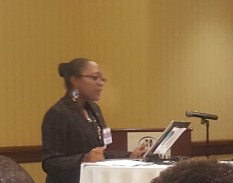 This week I presented a paper at the
 Caribbean Trade Law and Development
You must be logged in to post a comment.