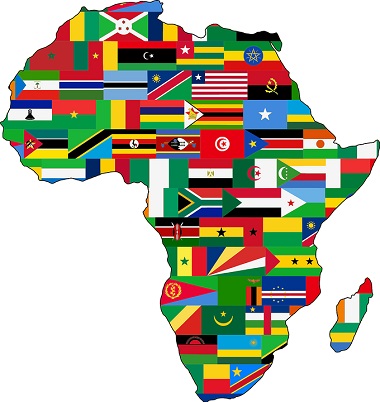
Tag: africa

  • Caribbean-African Trade: The Unfinished Bridge

    Caribbean-African Trade: The Unfinished Bridge

    Ashley Williams, Guest Contributor

    The Premise

    History left a fracture where a bridge should have been. The Caribbean and Africa—two regions tethered by blood, yet disconnected by trade.
    For centuries, we have exchanged culture, music, and resilience, but not commerce at scale. That was by design.

    Today, we are positioned to correct that. Not as an afterthought, not as a side conversation, but as a deliberate economic force.
    The Caribbean and Africa are two sides of the same coin—one rich in resources, the other rich in financial infrastructure and global access.

    The question is not if this bridge will be built. The question is who will control its foundation.

    The Case for Reconnection

    For decades, Caribbean nations have been locked into trade cycles dictated by former colonial powers.  Our largest exports still head to North America and Europe.
    Our tourism models remain dependent on Western economies. Even our food supply is largely imported from outside the region.

    Africa, too, has been locked into extractive economic relationships—its vast resources flowing outward, while financial control remains offshore.
    China, the EU, and the U.S. have embedded themselves as dominant players in African trade. Yet, the Caribbean is absent. Why?

    Because we have not yet moved as a collective force. But when we do, the system changes.


    Strategic Synergies: What We Bring, What They Bring

    Caribbean economies are small but agile. We are financial architects. We design offshore structures, manage global wealth, and maneuver regulatory frameworks like second nature.
    Africa, on the other hand, is  a sleeping giant—a landmass of opportunity, with raw materials, energy potential, and scale.

    The synergy is undeniable. The Caribbean is the financial brain, Africa is the industrial body.


    1. Financial Infrastructure & Alternative Investment 


    The Bahamas is a financial powerhouse—one of the world’s most recognized offshore banking hubs. Africa is experiencing a fintech revolution, leapfrogging traditional banking systems.

    – Caribbean Strength: We control regulatory frameworks, offshore finance, and structured investment models. 
    – African Strength: Digital banking, mobile finance, and large-scale investment needs. 
    – Opportunity: A Caribbean-African sovereign wealth fund that structures investments in real estate, energy, and infrastructure across both regions. 

    2. Renewable Energy & Power Independence
    Both regions suffer from high energy costs and dependency on fossil fuels. Africa has solar farms the size of cities, untapped hydroelectric power, and access to rare minerals needed for battery storage. 

    – Caribbean Strength: Expertise in solar-powered desalination, grid management, and sustainable energy policies. 
    – African Strength: Raw materials, large-scale renewable energy projects, and battery storage potential. 
    – Opportunity: Co-owned energy companies** that provide off-grid power solutions for both regions—drastically reducing reliance on external energy suppliers. 

    3. Food Security & Agricultural Trade 
    The Caribbean imports **80% of its food.  That is a liability. Africa has the land and the output to close this gap. 

    – Caribbean Strength: Trade logistics, duty-free zones, and financial structuring. 
    – African Strength: Large-scale agricultural production, natural farming conditions. 
    – Opportunity: A direct agricultural pipeline, moving fresh, organic African produce into the Caribbean food supply chain. 

    4. Real Estate & Infrastructure Development 
    Both regions have a real estate boom, but capital access remains a challenge. The Bahamas understands luxury development and foreign direct investment. Africa needs urban expansion and commercial real estate projects. 

    – Caribbean Strength: Investment-friendly real estate laws, residency incentives, and luxury market expertise. 
    – African Strength: High demand for commercial and residential expansion. 
    – Opportunity: A Caribbean-African Real Estate Fund that funnels investment capital from both regions into large-scale developments.


    Breaking the Barriers: The Playbook 

    This is not a matter of potential, but of execution. The barriers are not structural; they are psychological and logistical.

    1. Trade Agreements & Economic Alignment 
    The African Continental Free Trade Area (AfCFTA) exists. CARICOM exists. The link between the two is missing. 
    Bilateral agreements must eliminate tariffs, streamline import/export regulations, and incentivize direct Caribbean-African trade flows.

    2. Direct Shipping & Air Cargo Routes 
    Right now, Caribbean-Africa trade requires detours through Europe or the U.S. That is not sustainable. We need dedicated trade hubs in The Bahamas, Barbados, and Jamaica to serve as logistical entry points for African goods. 

    3. Digital Trade & Blockchain Integration 
    Africa leads in mobile banking. The Bahamas leads in blockchain-friendly regulation. Smart contracts, blockchain-based supply chain verification, and digital trade platforms can bypass traditional barriers and create frictionless commerce. 

    The Bahamas as the Financial Bridge 

    The Bahamas is uniquely positioned to be the Caribbean-African trade epicenter. It is one of the world’s most respected financial jurisdictions, a tax-neutral hub, and a global player in wealth management and fintech.

    What must happen next? A formalized Caribbean-African Investment Forum. A platform that: 

    – Connects investors with African-Caribbean projects.
    – Structures investment vehicles for real estate, energy, and agriculture. 
    – Expands digital banking solutions to enable smooth financial transactions. 

    The Bahamas can lead this movement. Not by asking permission, but by building the infrastructure.

    Conclusion: The Shift is Inevitable 

    This is not just about trade. This is about rewiring the economic power flow. 
    For too long, both regions have been extraction zones—raw materials, cheap labor, offshore finance—flowing outward, never cycling back. 

    The cycle ends here.

    This is about control. Control of capital, control of supply chains, control of our economic future. 

    Africa is rising. The Caribbean is evolving. And when these two forces align, the game resets. 

    The only question that remains is: Who moves first?

    Ashley Williams is an attorney, strategic visionary, and key figure in the rise of The Bahamas and the founder of WilliamsAdvise.
  • BCCI/KNCCI Virtual Dialogue Series 1: Demystifying the Barbadian and Kenyan Markets

    BCCI/KNCCI Virtual Dialogue Series 1: Demystifying the Barbadian and Kenyan Markets

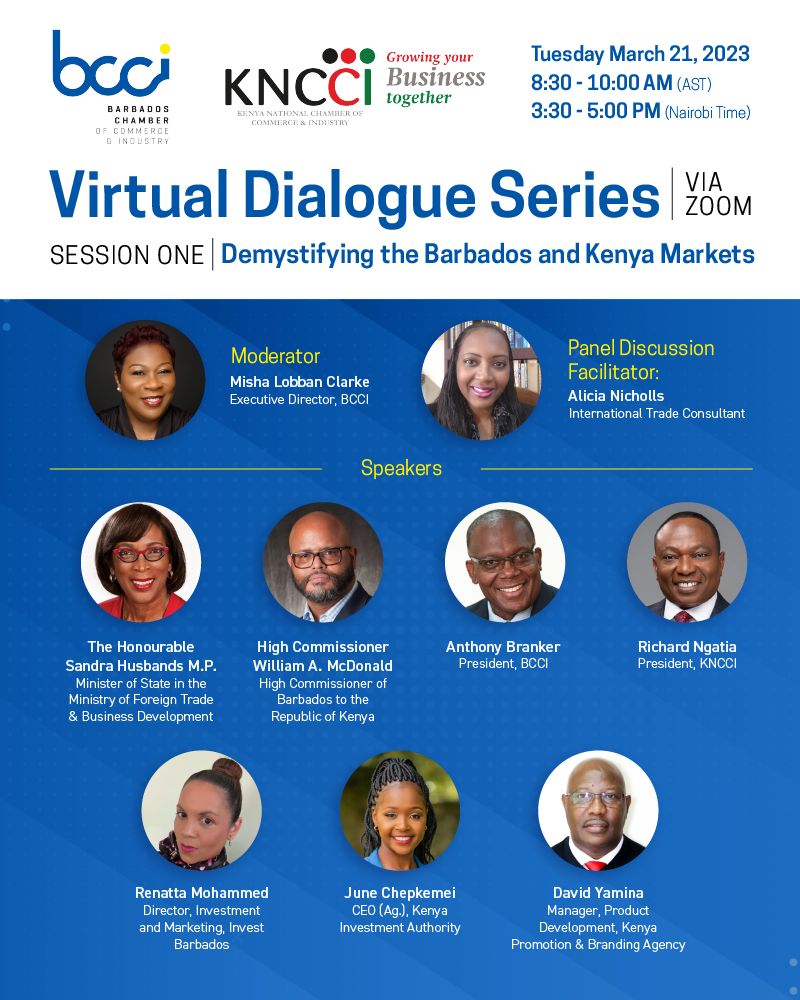
    I am pleased to be facilitating this upcoming panel at the first session of the Barbados Chamber of Commerce and Industry (BCCI) and Kenya National Chamber of Commerce and Industry (KNCCI) Virtual Dialogue Series carded for Tuesday, March 21st at 8:30-10:00 am (Atlantic Standard Time).

    This first session will be on Demystifying the Barbados and Kenya markets and features an all-star panel. If you’re an exporter, investor, businessperson, or are just generally interested in Africa-Caribbean trade, please register here:
    https://lnkd.in/eefaiPQx

    See the flyer for further details!

  • Exciting times for Africa-Caribbean trade relations

    Exciting times for Africa-Caribbean trade relations

    Alicia Nicholls

    Africa-Caribbean relations are seeing some exciting times. Doubt me? Think about the fact that Nigerian Afrobeats superstar Burna Boy was the headline act at Tipsy, a major fete on the calendar of Crop Over, Barbados’ biggest festival which had been suspended for two years due to the COVID-19 pandemic. The Grammy Award winner’s performance in Barbados on July 17 was the first leg of his 2022 Love, Damini Summer Tour. From all reports the much-anticipated event attracted patrons not just from Barbados but across the Caribbean and beyond. But this is just the ‘tip’ of the iceberg in what has been a deepening of Africa-Caribbean engagement and not just at the political level.

    As I explained in several previous articles on this subject, total volumes of Africa-Caribbean trade and foreign direct investment are quite small for now. While a few African and Caribbean countries have tax and investment treaties with each other and bilateral cooperation agreements in various areas, there are no free trade agreements (FTAs) between Caribbean countries and African countries. However, the low trade volumes could likely change. Though efforts to expand Africa-Caribbean economic relations predate the COVID-19 pandemic, the economic fall-out has accelerated our countries’ need to diversify our trading partners and tourism source markets as part of their post-COVID economic recovery. Amplifying trade and investment ties with African countries is at the forefront of many Caribbean countries’ diversification efforts.

    Collaboration in the creative industries

    Burna Boy’s headlining of Tipsy introduced the Barbadian audience to Afrobeats, a genre with which many Barbadians might not have been previously familiar. Of course, his headlining of Tipsy’s 2022 All White Party is not the first African-Caribbean ‘collaboration’ in the creative industries. For example, a couple years ago two of my favourite artistes, Trinidadian soca star Machel and Nigerian star Timaya collaborated on several soca songs and remixes, like “Shake ya bum bum” and “Better than them”.

    Many musical genres in the Caribbean and the African continent share similar DNA. Given the current explosion of interest in each other’s cultures, one can only ponder the many future collaborations between Caribbean and African creatives. I am sure many of us would enjoy attending an Africa-Caribbean Music Festival of some sorts featuring popular and emerging acts from both regions. Indeed, as many Barbadians are Nollywood movie aficionados, an Africa-Caribbean Film Festival would also be an exciting prospect, featuring films from our countries and even the opportunity for African and Caribbean film makers to meet and discuss possible co-productions.  

    Other areas of collaboration

    African Fintech companies are also taking an increased interest in the Caribbean. A Nigerian company has also expressed interest in purchasing the struggling Caribbean regional airline, LIAT. This proposal has elicited a mixed reaction but it is indicative of what anecdotally appears to be a burgeoning interest of African investors in the Caribbean market. The business interest has not been one-way either. For instance, Barbadian fintech company Bitt Inc was contracted by the Central Bank of Nigeria to develop the digital version of the Nigerian Naira, called the eNaira, which is Africa’s first Central Bank Digital Currency (CBDC).

    There are also promising prospects for Africa-Caribbean trade in educational services, such as through increased student and faculty exchanges and joint course offerings. Scope also exists for continued and greater joint research between African and Caribbean academics and academic institutions on areas of mutual interests. Indeed, last year I had the pleasure and honour of co-convening with Dr. Ohio Omiunu, a well-respected legal scholar, a symposium on the AfronomicsLaw Blog on the topic “Prospects for Deepening Africa-Caribbean Economic Relations”. Recognising that Africa-Caribbean economic relations was an understudied area in the academic literature, the Blog Symposium featured essays authored by established African and Caribbean scholars and practitioners on deepening the African-Caribbean relationship from a variety of perspectives.

    There is growing interest among Caribbean people of African ancestry in tracing their genealogy which means genealogy tourism could be a significant, though not the only driver, of Africa-Caribbean tourism in the future. I like many Barbadians was intrigued to learn that Barbados possesses  the largest archive of slave records outside of the United Kingdom. The Government of Barbados announced it will be establishing a geneaology research centre at the historic Newton Slave Burial Ground where those records will be held. This could make Barbados a hub for researchers from the Caribbean, Africa and further afield.

    Creating the enabling environment

    Naturally, there are trade, cultural, linguistic and other barriers which need to be addressed. With some exceptions, most Caribbean countries lack direct air and sea links to the African continent despite the two continents being a hive of connectivity during the 300 years of the Trans-Atlantic Slave Trade. If those links could have existed during that barbaric period, surely we must make all efforts to build sea and air bridges for a more noble purpose, that of expanding understanding, connectivity and trade between our peoples. Thankfully, serious efforts are being made by Caribbean governments to establish scheduled direct air links with the continent, particularly with airlines from Ghana and Kenya and which would facilitate Africa-Caribbean travel for recreation and business.

    Barbados has also been expanding its network of tax and investment treaties with African countries which would make the island an attractive hub for African investors to expand into other markets by leveraging Barbados’ treaty network. It was recently announced that an investment agreement was signed between Barbados and Rwanda and it is hoped that the text of this agreement will soon be made available.

    Moreover, exporting is an expensive venture and access to finance is one of the major barriers firms face when seeking to export. Therefore, the agreement in principle by the African Export Import Bank to establish an Africa-Caribbean Trade and Investment Financing Facility with an initial injection of US $250 million is a commendable step in helping to create the enabling environment for enhanced Africa-Caribbean trade and investment by providing access to trade finance.

    Future looks bright

    To be sure, the prospects for deepening Africa-Caribbean trade are promising. I eagerly look forward to the upcoming inaugural AfriCaribbean Trade and Investment Forum which will be held in September in Barbados. For African and Caribbean firms and professionals, this forum should be the perfect opportunity for deepening and expanding relations and knowledge about the opportunities in each other’s markets. Without doubt, these are indeed exciting times for Africa-Caribbean trade relations. One cannot be anything but enthused for what the future holds!

    Alicia Nicholls, B.Sc., M.Sc, LL.B. is an international trade specialist and founder of the Caribbean Trade Law and Development blog http://www.caribbeantradelaw.com.

  • Introduction to Afronomics Blog Symposium – ‘Prospects for Deepening Africa-Caribbean Economic Relations’

    Introduction to Afronomics Blog Symposium – ‘Prospects for Deepening Africa-Caribbean Economic Relations’

    I am pleased to share that the Afronomics Law Blog Symposium entitled “Prospects for Deepening Africa-Caribbean Economic Relations”, which I am co-convening with the brilliant Dr. Ohio Omiunu, commences today Monday, September 6!

    To view the introduction to the Symposium authored by my co-convenor Dr. Ohio Omiunu and myself as well as the essays which will be posted daily, please click here.