Tag: Barbados

  • Barbados’ Debt-for-Climate Resilience Swap: A Blueprint for Sustainable Development

    Barbados’ Debt-for-Climate Resilience Swap: A Blueprint for Sustainable Development

    Ainsley Brown (Guest contributor)

    Barbados has once again positioned itself as a global trailblazer, completing what it calls the world’s first debt-for-climate resilience swap, a groundbreaking financial arrangement that frees up USD$165 million for critical investments in water infrastructure, food security, and environmental protection. This bold move not only addresses urgent climate adaptation needs but also underscores Barbados’ commitment to sustainable development and ESG (Environment, Social, and Governance) principles.

    This initiative is a watershed moment for small island developing states (SIDS) and other climate-vulnerable nations facing the triple crises of high debt, climate change, and biodiversity loss. But what does this deal mean in the broader context of global sustainability, and can it serve as a template for other countries grappling with similar challenges?

    What Is a Debt-for-Climate Resilience Swap?

    In essence, a debt-for-climate resilience swap involves a country negotiating with its creditors to restructure or reduce its sovereign debt in exchange for commitments to invest in climate resilience or biodiversity conservation. In Barbados’ case, the funds will be channeled into:

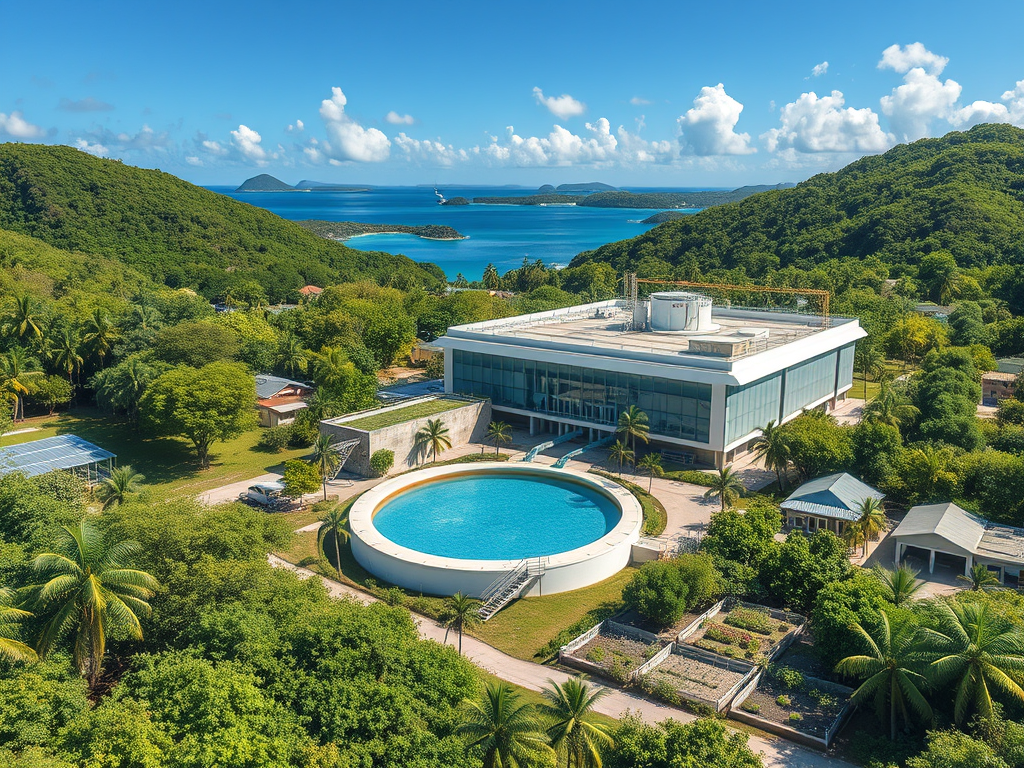
    • Water infrastructure projects: Including the construction of a new South Coast Water Reclamation and Reuse Facility to more than double water availability by 2050.
    • Environmental protection: Investments in mangrove conservation and water restoration.
    • Agricultural resilience: Enhancing food security amidst rising climate pressures.

    This model allows governments to reallocate resources from debt servicing to vital climate adaptation measures. For creditors, it’s an opportunity to support global public goods like biodiversity conservation while safeguarding their financial interests.

    Why Debt Swaps Matter for SIDS and Climate-Vulnerable Countries

    Barbados’ Prime Minister Mia Mottley aptly describes this transaction as a model for other vulnerable states. Small island nations like Barbados are the “canaries in the coal mine” of climate change, grappling with rising sea levels, more frequent hurricanes, and dwindling freshwater resources.

    Water Scarcity in Barbados

    Barbados is one of the most water-scarce nations in the world. Climate change exacerbates this scarcity, threatening not just daily life but also economic activities like agriculture. The New South Coast Water Facility, financed through the swap, aims to alleviate these challenges by increasing water availability and reducing pollution in the Caribbean.

    The Debt Crisis

    Debt burdens severely limit the ability of developing nations to invest in climate resilience. According to the UN Conference on Trade and Development (UNCTAD), global sovereign debt reached a staggering USD$92 trillion in 2022. More than 50 of the poorest countries are on the brink of default, with some spending more on interest payments than on health or education.

    Barbados’ debt restructuring initiative is part of a broader effort to reduce its debt-to-GDP ratio from 105% to 60% by 2036.

    Global Examples and Lessons Learned

    Barbados is not alone in leveraging debt swaps to address climate challenges:

    • Belize: A 2021 debt-for-nature deal reduced its debt by 12% of GDP and unlocked USD$180 million in long-term conservation funding, helping protect the Western Hemisphere’s longest coral reef.
    • Ecuador: Converted USD$1.6 billion of debt into USD$12 million annually for Galápagos Islands conservation, under the world’s largest debt-for-nature deal.
    • Seychelles: Pioneered marine debt-for-nature swaps, safeguarding its ocean territory while alleviating fiscal pressures.

    These examples illustrate how debt swaps can provide fiscal relief, protect biodiversity, and attract new actors and financing mechanisms into the climate action space.

    The Bridgetown Initiative: Reimagining Global Finance

    Barbados’ efforts are closely tied to the Bridgetown Initiative, a global movement led by Prime Minister Mottley to reform the international financial architecture. Key proposals include:

    1. Redefining loan terms: Preventing nations from spiraling into debt crises after climate disasters.
    2. Mobilizing USD$1 trillion for climate resilience: Through development banks and discounted lending for vulnerable countries.
    3. Establishing a global reconstruction mechanism: Backed by private-sector investment to fund post-disaster recovery.

    The initiative recognizes that the current financial system, designed in a post-World War II era, is ill-equipped to address today’s challenges, including systemic inequality and climate change.

    Challenges and Limitations of Debt Swaps

    Despite their promise, debt-for-nature and debt-for-climate swaps are not panaceas. Critics highlight several challenges, which include:

    • Limited scale: While impactful, the financial relief from debt swaps is often small relative to the scale of global adaptation needs, estimated at USD$359 billion annually by the United Nations.
    • Complexity: These transactions require extensive negotiations, partnerships, and upfront financing, which can deter broader adoption.
    • Dependency on grants and private investment: Debt swaps cannot replace the need for concessional financing, grants, or private sector participation.

    A recent IMF report underscores that while debt swaps are valuable, they must complement—not replace—comprehensive debt restructuring and other financial tools.

    A Blueprint for the Future?

    Barbados’ leadership sets an example of how innovative finance can align debt management with sustainable development goals. The country’s latest debt swap, bolstered by guarantees from institutions like the European Investment Bank and Inter-American Development Bank, illustrates the power of partnerships. This approach also offers co-benefits, such as potential credit rating upgrades, as seen in Belize, which can lower borrowing costs and unlock further investment opportunities. For countries in the Global South, debt swaps could:

    • Enhance fiscal space: Freeing up resources for health, education, and climate action.
    • Attract international support: By demonstrating strong commitments to ESG principles.
    • Foster resilience: By addressing both immediate adaptation needs and long-term sustainability.

    Conclusion

    Barbados’ debt-for-climate resilience swap is not just a financial transaction; it’s a bold declaration that climate action and fiscal responsibility can—and must—go hand in hand. As more countries explore similar arrangements, the potential for scaling up global climate finance becomes evident. However, achieving transformative change requires systemic reform, including:

    1. Expanding access to concessional financing for vulnerable nations.
    1. Enhancing the efficiency and scope of global financial institutions.
    2. Prioritizing sustainable development in creditor-debtor negotiations.

    Barbados has provided a roadmap for others to follow. The question is no longer whether debt swaps are feasible but how quickly and effectively they can be scaled to meet the global challenges of our time. As Prime Minister Mottley aptly said, this is not just about Barbados—it’s about creating a future where “people and the planet” take precedence over profit and debt burdens. Let this serve as a call to action for governments, financial institutions, and global citizens to rally behind innovative solutions for a more sustainable world.

    By pioneering this debt-for-climate resilience swap, Barbados has turned an economic challenge into an opportunity for leadership. The world would do well to take notice—and to act.

    Ainsley Brown is a global expert in economic development and special economic zones, passionate about aligning finance with climate action to create resilient futures.
  • GSCF Day 4 – Gender Equality Plenary and Closing Ceremony

    GSCF Day 4 – Gender Equality Plenary and Closing Ceremony

    Alicia Nicholls

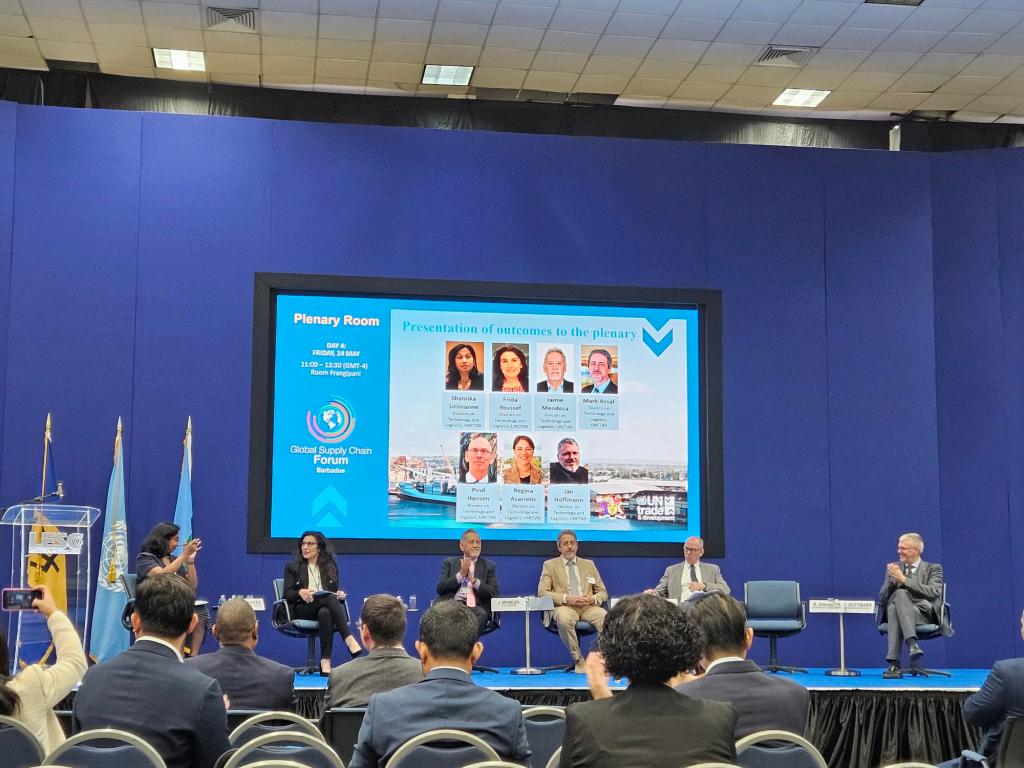
    Ladies and gentlemen, it is a wrap! The curtains have come down on the inaugural Global Supply Chain Forum, jointly hosted by UN Trade and Development (UNCTAD) and the Government of Barbados here in beautiful Barbados, May 21-24. Barbados is no stranger to hosting high-level conferences. But it gives me such pride as a Barbadian to see my country not just propose but host this important forum. Some 1,200 persons reportedly attended the Forum, of which 900 attended in person!

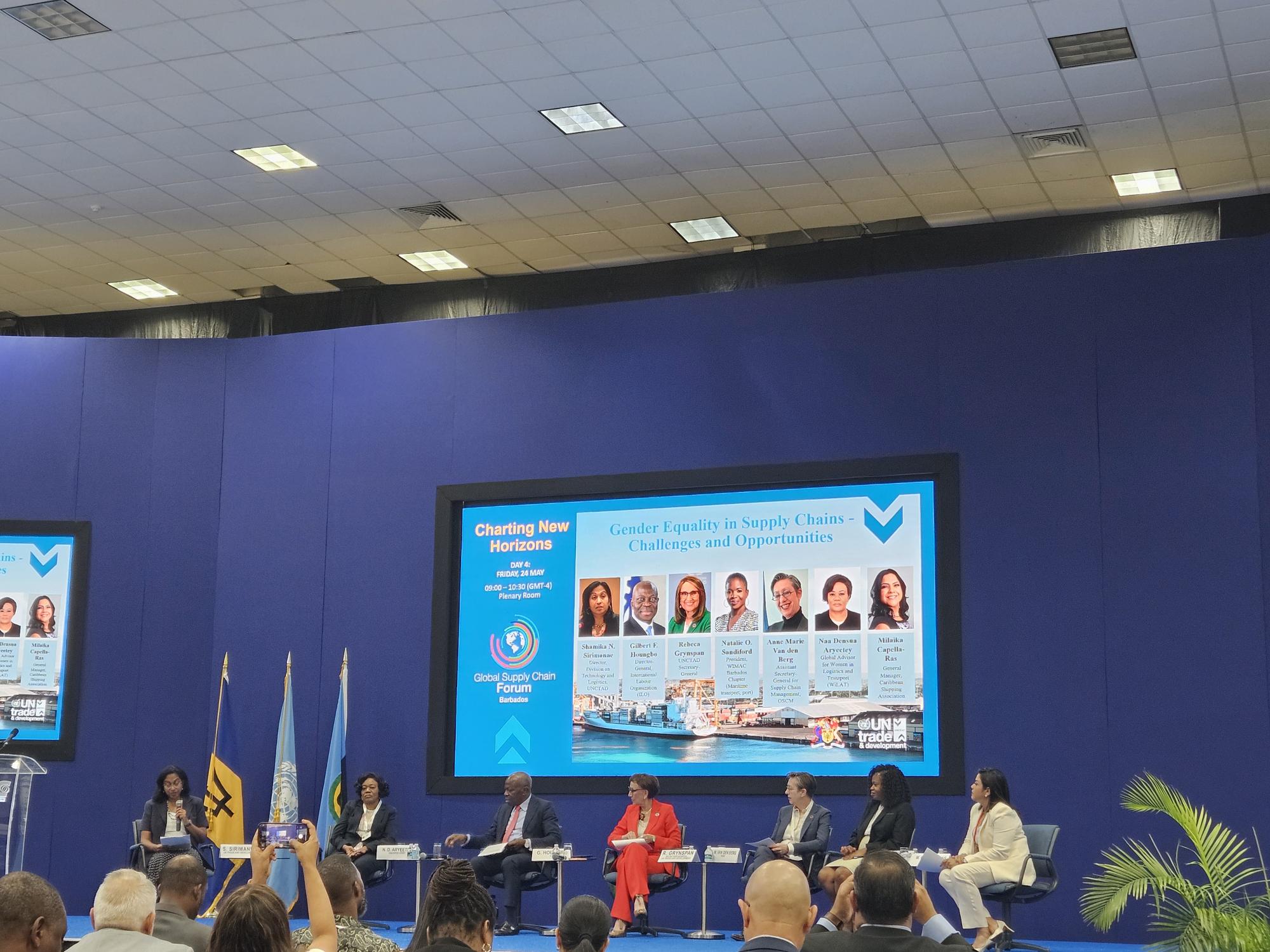
    Today’s proceedings commenced with the final plenary which touched on the important theme of gender equality in global supply chains. A key takeaway from the International Labour Organisation (ILO)’s Director General Gilbert Houngbo’s introductory remarks on the panel was that while women now make up a large part of this sector, they still only occupy a small percentage of the higher-level jobs and continue to face several challenges, including poor working conditions, discrimination on the basis of gender and sexual harassment/violence. It was also enlightening to hear from each of the outstanding women on the panel, including the UN Trade and Development SG Rebeca Grynspan, on their own trailblazing journeys and some of the ways their respective organisations are seeking to support and increase women’s participation in this sector.

    The closing ceremony featured reflections on the week’s events, key takeaways and some next steps for 2026 in Saudi Arabia. The Forum’s main outcome, the SIDS Ministerial Declaration, was signed by the ministers present and will be one of the inputs into the SIDS 4 conference taking place next week in Antigua.

    The Forum was a resounding success! Heartfelt kudos to all involved, including Carlos Wharton, Ambassador Matthew Wilson and their teams and all other members of Team Barbados, as well as the UNCTAD team, including Jan Hoffmann and Pamela Ugaz!

    I will be heading to Antigua for SIDS4. Follow us for our updates there!

  • Interview with Honorary Consul Rhoda Green – Barbados and the Carolinas Connection

    Interview with Honorary Consul Rhoda Green – Barbados and the Carolinas Connection

    Alicia Nicholls

    A couple weeks ago I had the honour and pleasure of interviewing Barbados’ Honorary Consul to the US State of South Carolina and President of the Barbados and the Carolinas Legacy Foundation, Ms. Rhoda Green. I had met Ms. Rhoda during a trade mission in which I had participated in April 2023 organised by Invest Barbados and the Barbados Consulate in Miami. She had kindly consented to sitting with me for an interview.

    During the nearly hour-long interview we touch on what drives her passion for raising awareness of the historical relationship between Barbados and the Carolinas, her foundation’s work, her role as Honorary Consul and finally how this historical relationship could be leveraged for expanding trade between Barbados and the US State of South Carolina.

    If you have any interest in the Barbados and the Carolinas relationship, please check out the website of the Barbados and the Carolinas Legacy Foundation which is a rich source of information: www.barbadoscarolinas.org.

    The audio of the full interview may be accessed by clicking below:

    Video Credits:

    Music: Song “Caribbean Calypso” by Dominic Ashworth and Derek Nash

    Photo of Ms Rhoda: Barbados and the Carolinas Legacy Foundation

  • Barbados and South Carolina: Building on Shared History to Expand Trade

    Barbados and South Carolina: Building on Shared History to Expand Trade

    This week I had the pleasure of joining, in a personal and unofficial capacity, a Barbados business delegation organised by Invest Barbados and the Barbados Consulate to Miami to the beautiful city of Charleston in the southern United States (US) state of South Carolina. For many years I have heard of the rich history between Barbados and the Carolinas. History tells us that it was in the 17th century that British planters from Barbados and their enslaved Africans established a “colony of a colony” in the Carolinas, the area now roughly North and South Carolina. A vibrant underground trade existed between the colonies of Barbados and the Carolinas during the colonial era but current Barbados-South Carolina trade is quite small.

    This three-day trade mission afforded me the opportunity not just to learn much more about this history, but more germane to my profession, consider how these historical ties could be leveraged to expand on the currently miniscule trading relationship between Barbados and the ‘Palmetto State’. In this article, I share my initial reflections coming out of this visit.

    Sweet Home Carolina?

    One of the first things which struck me upon arrival to Charleston, the State’s largest city, was the warmth of the people I met. Like my visit to Charlotte, North Carolina a couple years ago, this visit felt almost like coming back home. Charleston is a coastal city of roughly 150,000 people but feels, in many ways, like a small town. Its colourful architecture, tree-lined streets and southern charm were immediately alluring to me.  

    The Barbados-South Carolina connection has its historical genesis in the evils of colonialism and the blood, sweat and tears of our enslaved ancestors. However, because of that unfortunate historical connection, there is much about Charleston that feels familiar to a Barbadian. People would pass you on the street and say good morning, which is something I am used to in Barbados but not in the US! While trying to get from the airport to my hotel, a complete stranger kindly offered me his phone to call my hotel and made sure I was covered with transportation before he left. That kind gesture took me pleasantly by surprise but I later learnt this was all part of the Charlestonian way. Besides the warmth of the people, many of the customs, the architecture and the food reminded me of home, as well as the uncanny similarity between the Gullah language and our Bajan dialect.

    But what does all of this have to do with trade? All business, including international trade, is built on relationships. One of the key benefits of participating in trade missions is the ability for businesses to establish relationships with officials and potential business partners, gather preliminary on the ground market intelligence and learn a bit about the culture, business climate and opportunities in the potential target market.

    This mission was just one of several efforts over the years at expanding people-to-people and business links between Barbados and South Carolina. Charleston and Speightstown, which share a historical relationship, have been twin cities since the 1990s. Significant credit behind many of these Barbados-Carolinas initiatives goes to Barbados’ Honorary Consul to South Carolina and CEO/Founder of the Barbados and the Carolinas Legacy Foundation, Miss Rhoda Green, a Barbadian based in the US. ‘Miss Rhoda’, as she is affectionately called, has been a tour de force in educating Barbadians and Carolinians about the Barbados-Carolinas connection and her bubbly spirit and passion are instantly charming. She had also written the foreword to the canonical book “The Barbados-Carolina Connection” by Warren Alleyne and Henry Fraser, which is definitely recommended reading for anyone interested in this historical relationship.

    In October 2022, Charleston’s Mayor John Tecklenburg, himself a businessman, led a large business delegation to Barbados. In his address on the first day of the current delegation, Mayor Tecklenburg emphasized the importance of the Barbados-Carolinas connection and noted his hope that these business delegations would be an ongoing exchange. Indeed, a South Carolinian business delegation will be coming back to Barbados in October of this year. Similarly, Barbados’ Consul General to Miami, Rudy Grant, which also has responsibility for eleven US states (South Carolina included), reiterated the importance of commercial diplomacy to helping expand Barbados-South Carolina trade ties.

    Much of Barbados’ trade with the US is concentrated with the US State of Florida. Two-way merchandise trade between Barbados and South Carolina is very small and concentrated in only a narrow range of goods. South Carolina enjoys a trade surplus with Barbados. Similarly, South Carolina mainly trades with North America and Asia. Barbados does not rank within its top markets. Addressing us in front of the soon-to-be-opened International African American Museum, South Carolina State Senator Marlon Kimpson, who was recently appointed to President Joe Biden’s Trade Advisory Council, remarked on this limited trading relationship and stated his willingness to work with Barbados on expanding it.

    Areas of Opportunity

    One of the things that became clearer to me coming out of this mission was that there are many areas of opportunity for expanding and diversifying our trade with South Carolina. One area is tourism, particularly niche areas like heritage, culinary, genealogical, medicinal, educational tourism, among others. There is much for a Barbadian tourist to see in Charleston. On the first day, Miss Rhoda provided us a stirring tour of the Charleston Landing’s museum showcasing the Barbados-Carolinas history. This is also definitely an attraction many Barbadians will likely enjoy. Certainly, I did! On the second day, the delegation was graciously provided with a sneak preview of the International African American Museum by its dynamic and insightful President and CEO Dr. Tonya Matthews. The museum is built on the site of a former slave port, a fact driven home by the hunched sculptures representing our enslaved ancestors awaiting their fate. The exhibits offer a raw and powerful look into the lived realities of the African-American experience from historical times to the present-day. The histories narrated share not just the travails and triumphs of those of black descent in America but also weave in the stories of persons from Latin America and the Caribbean, again reiterating that shared history between us.

    Additionally, there is much opportunity for collaborative research, business and investment in the areas of renewable energy and the blue and economy between Barbados and South Carolina. Of interest is that the Sea Turtle Care Center at the South Carolina Aquarium, another must-see attraction, is the largest turtle hospital on the US eastern seaboard. Its CEO Mr. Kevin Mills shared that South Carolina is dealing with some of the same issues we have in Barbados regarding turtle conservation, such as turtles and their hatchlings being injured by manmade hazards. Like all cities, Charleston has its share of problems as does Barbados. But like Barbados is in the Caribbean, Charleston is one of the most attractive markets for business in the US. The city also has one of the lowest unemployment rates in the US. With South Carolina’s ‘low country’ being vulnerable to the effects of climate change, the state is not unfamiliar with the imperative to pivot after a major disaster. Hurricane Hugo in 1989 had caused significant devastation and has made resilience a key consideration for them, similar to Barbados.

    Charleston’s proximity to Miami makes getting to the city relatively easy for both business and leisure travel for Barbadians. Moreover, most Barbadian goods exports to the US benefit from duty free treatment in the US under the Caribbean Basin Initiative, a one-way trade preferences scheme implemented by the US Government since the 1980s.

    In turn, the Barbados delegation, comprising mainly delegates from Invest Barbados, the National Cultural Foundation (NCF), the Barbados Tourism Marketing Inc (BTMI) and the Barbados Chamber of Commerce and Industry (BCCI) and private individuals, did a fabulous job of selling Barbados as a place for work, play and investment. The team highlighted not just the shared connection, but Barbados’ political and economic stability, openness to investment, stable business climate, and its network of trade, tax and investment agreements. Invest Barbados also shared its Blue Book of investment projects for interested investors.

    The response and enthusiasm from the South Carolinian business community and their interest in learning about trading and investment opportunities with Barbados reiterated to me that there is much to be gained from this relationship. The South Carolinian businesses represented included manufacturing, renewable energy, higher education, real estate, financial services and logistics, among others. The budding relationship between the Barbados Chamber of Commerce and Industry (BCCI) and the Charleston Metro Chamber, both the oldest chambers in their respective markets, also bodes well for members of both chambers.

    I wish to thank Invest Barbados for the opportunity to join this delegation. I also thank my fellow delegates for a wonderful time of both work and play. I also wish to thank the people of Charleston for their impeccable hospitality, including the Barbados-Carolinas Legacy Foundation. I look forward to seeing this Barbados-Carolinas trade connection grow and flourish.  May the levels of trade between us one day be as rich as the history we share!

    Alicia Nicholls, B.Sc., M.Sc., LL.B. is an international trade consultant and founder of the Caribbean Trade Law and Development Blog: Caribbeantradelaw.com. She was part of the Barbados delegation to Charleston, South Carolina in a personal and unofficial capacity.

    Correction: The number of States for which the Barbados Miami consulate has responsibility has been corrected to eleven.