Tag: Caribbean

  • Jamaica remains easiest place in CARICOM to do business, according to World Bank Doing Business Report 2019

    Jamaica remains easiest place in CARICOM to do business, according to World Bank Doing Business Report 2019

    Alicia Nicholls

    Jamaica has maintained its spot as the easiest place to do business in the Caribbean Community (CARICOM) in the just released World Bank Doing Business Report 2019.  This is the 16th edition of this flagship World Bank publication which objectively ranks 190 economies globally on their ease of doing business based on a number of indicators. The theme of this year’s report is Training for Reform.

    Jamaica has an overall ranking of 75 out of the 190 economies ranked. Of note is that overall, Jamaica also ranked as the 6th easiest place to start a business and 12th in the ease of getting credit. With respect to significant business reforms, the World Bank highlighted Jamaica’s improved access to credit information by distributing data from utility companies.

    No Caribbean country has made the top 50. The rankings of the other Caricom countries are as follows: St. Lucia (93), Dominica (103), Trinidad & Tobago (105), Antigua and Barbuda (112), The Bahamas (118), Belize (125), Barbados (129), St Vincent and the Grenadines (130), Guyana (134), St Kitts and Nevis (140), Grenada (147), Suriname (165) and Haiti (182).

    The Dominican Republic, which is not a CARICOM country but is part of CARIFORUM, has a ranking of 102. Puerto Rico, a Commonwealth of the US, is the Caribbean region’s easiest place to do business, with a ranking of 64.

    Globally, New Zealand was ranked the easiest place to do business (1), while Somalia was ranked as the least (190). Turning to small States, Singapore was ranked second, while Mauritius continued its upward climb, with a current rank of 20th.

    The World Bank reported a record 314 regulatory reforms between June 2, 2017 and May 1, 2018. Some 128 economies introduced ‘substantial regulatory improvements’ which made doing business easier in all areas measured. The following economies internationally were singled out as having made the most improvement: Afghanistan, Djibouti, China, Azerbaijan, India, Togo, Kenya, Cote D’Ivoire, Turkey and Rwanda.  

    The full World Bank Doing Business Report 2019 may be accessed here.

    Alicia Nicholls, B.Sc., M.Sc., LL.B., is an international trade and development consultant with a keen interest in sustainable development, international law and trade. You can also read more of her commentaries and follow her on Twitter @LicyLaw.

  • Could Promoting Bilingualism Give Caribbean Countries a Trade and Investment Advantage?

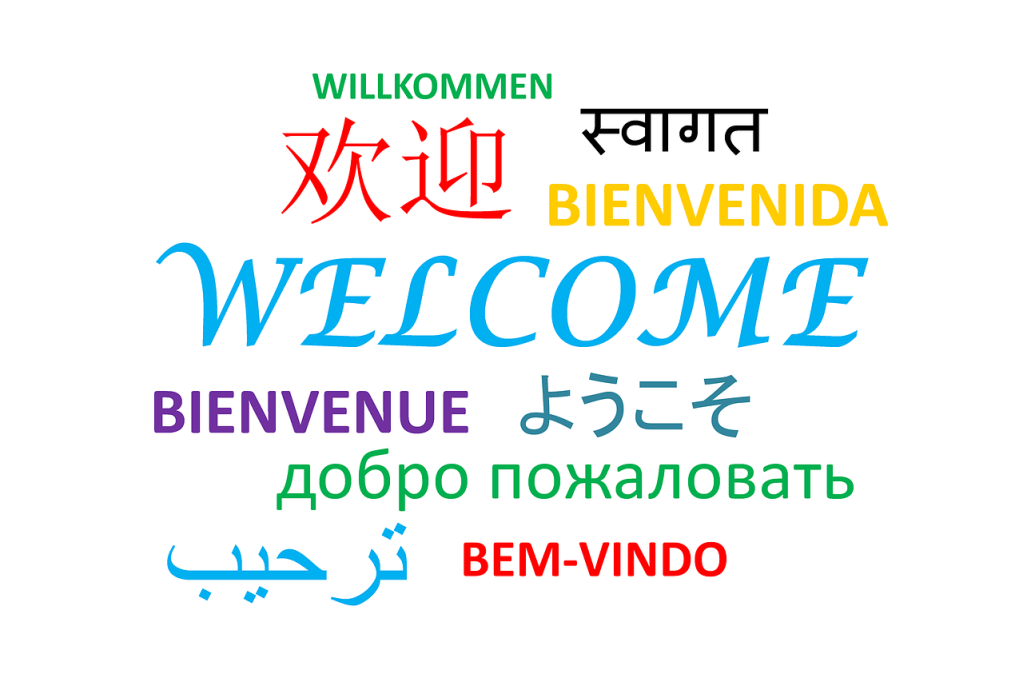
    Could Promoting Bilingualism Give Caribbean Countries a Trade and Investment Advantage?

    Alicia Nicholls

    What do Mauritius, Malaysia, and Singapore have in common? Besides being examples of highly competitive emerging economies, these countries have multilingual populations which they proudly count as part of their country’s competitive advantage.

    Prime Minister of Jamaica, the Most Honourable Andrew Holness, recently announced his government’s hope to adopt Spanish as a second language given the longstanding and growing importance of foreign direct investment (FDI) from Spain to Jamaica’s economy. Spanish chains are a growing presence in Jamaica’s tourism, wellness and construction  sectors and have injected US$1.7 billion in Jamaica’s tourist industry, according to the Prime Minister in his speech.

    Similar statements on the need for improving our populations’ language competencies have also been made by current and previous Commonwealth Caribbean governments. Could the promotion of bilingualism give our hitherto monolingual Commonwealth Caribbean countries a trade and investment edge in an increasingly interconnected global marketplace?

     ‘Everyone speaks English!” Or do they?

    I am not aware of any data on the rates of bilingualism (that is, proficiency in two or more languages) in the Commonwealth Caribbean. However, anecdotal evidence suggests that aside from local dialects, anglophone Caribbean countries have mostly monolingual (one language) populations.

    It is not uncommon to hear some persons strongly proclaim “everyone speaks English, so why must I learn another language?”. Though English is currently the most learnt second language internationally, this chart from the World Economic Forum shows that English is actually the third most spoken mother tongue in the world, with 372 million first-language speakers in 2017. The second most spoken language was Spanish, with 437 million speakers. But the most spoken was Chinese (Mandarin) with 1,284 million speakers, which is not surprising given the population of China.

    While the English language has been the global lingua franca since the 20th century, it has not always been, and it may not always be either given China’s growing economic dominance and promotion of its culture and language.  In recognition of this fact, China Daily has reported that there is growing interest in western countries for learning Mandarin. In Russia, for example, the number of Chinese language learners has reportedly increased from 17,000 in 2007 to 56,000 in 2017 and Mandarin is now an elective language in that country’s national college entrance examination.

    That aside, the Commonwealth Caribbean is surrounded not only by its Spanish, French and Dutch speaking Caribbean island neighbors, but also Spanish-speaking Latin American countries and Portuguese-speaking Brazil, which present still largely undertapped export and tourist markets.

    Bilingualism enhances labour force quality

    There is a corpus of research highlighting the cognitive, psychological and social advantages to human beings learning a second language. These include sharpened memory, improved decision-making skills, multi-tasking capability, problem-solving and mental dexterity. Knowledge of another language also increases a person’s employability, cultural sensitivity, earning potential and labour market opportunities. As a multilingual person, I can personally attest to the doors which knowledge of other languages have opened for me professionally.

    Internationally, employers’ demand for bilingual persons has increased not only as trade with other countries has increased, but because of the recognition by firms of the benefits to their export strategies of employing bilingual persons. A report of March 2017 by New American Economy found that demand for bilingual workers in the US is growing at both the higher and lower ends of the employment spectrum. This is further supported by a report by the Economic Intelligence Unit, which surveyed 572 executives globally and found that organisations with international ambitions were increasingly expecting prospective employees to be fluent in key foreign languages.

    Taken as a whole, improving a population’s language competency makes for a more attractive labour force to international investors. This advantage has not gone unrecognized by some countries. Mauritius, whose population speaks French, English and French Creole, proudly touts its bilingual population as one of its unique selling points as a place for international business. In Switzerland, which has four national languages, a report from 2008 estimated that country’s linguistic advantage as equivalent to about 9% of its GDP.

    In an increasingly interconnected world, I believe monolingualism will put our human resource, which is our greatest resource, at a distinct disadvantage in attracting international investment and tourism.

    Bilingualism/Biculturalism as Business Advantages in Cross-Border Transactions

    Effective communication is essential to the success of cross-border deals, which means that linguistic and cultural differences are frequent barriers to cross-border trade and investment. The previously mentioned report by the Economic Intelligence Unit found that “misunderstandings rooted in cultural differences present the greatest obstacle to productive cross-border collaboration”. For instance, a handshake or kiss on the cheek may be perfectly acceptable in one culture, but may cause offense in another.

    A UK-based report also found that “over time the trade cost to the UK resulting from language barriers has varied in magnitude, but has been consistently large.”  While I am unaware of similar research conducted in the Commonwealth Caribbean, anecdotal evidence shows that this may also be the case here as well.

    It is not uncommon for some businesses seeking to export to feel that it is not necessary to invest in developing a multilingual strategy or capacity given the increasing availability and accuracy, for example, of online translation services. However, online translation services miss subtle cultural nuances, which may be fatal when engaging in cross-border business negotiations, especially with enterprises from ‘high context cultures’. ‘High context’ is the term used in international business to describe those cultures which place greater emphasis on context, non-verbal cues and on interpersonal relations when conducting business. Examples would be most African, Middle Eastern and Asian countries. ‘Low context’ cultures usually rely mainly on verbal cues, and interpersonal relationships have less importance in the business context. These cultures include many Western European countries, the US and Canada.

    In the Commonwealth Caribbean most of our international trade is currently with low context cultures with which we share cultural, linguistic and historical ties. But, as our firms seek to diversify, and as China (a high context culture) expands its economic footprint in the region, there will be need for greater understanding of the Chinese language and culture.

    Prior knowledge of the language and cultural norms of a target export market is also invaluable when conducting market research into the business, legal and regulatory environment of that potential export market.

    Bilingualism can foster wider Caribbean integration

    Promoting bilingualism can foster closer Caribbean integration. By accident of geography, the Caribbean Region is divided by water. By accident of history, these divisions are furthered by language. However, greater linguistic and cultural awareness among our islands can bridge these divisions.

    As an example, the French-speaking island of Martinique is one of the top tourist source markets for St. Lucia, its neighbor just 40 miles to the south.  Its tourist and business ties with Martinique are facilitated not just by geography and reliable transportation links, but also the mutual intelligibility of the Martinican and St. Lucian creoles and some shared cultural similarities. St. Lucia, nicknamed Helen of the West, changed colonial hands fourteen times between France and England, giving the island a unique culture and patois which is a mélange of its French and English colonial roots.

    A new programme called the Trade Enhancement for the Eastern Caribbean (TEECA) programme seeks to promote trade and investment between Member States of the Organisation of Eastern Caribbean States (OECS) and Martinique, which became an OECS associate member in 2015. The success of this programme will undoubtedly hinge on OECS firms seeking to create or expand business with those in Martinique having an understanding of the Martinican cultural, business and legal context and knowledge of the French language.

    Building a Bilingual Advantage

    Promoting greater language competency among our populations could bring trade and investment advantages to Caribbean countries which rely disproportionately on their human resource. While not a panacea, it can provide for a more employable and attractive labour force, facilitate our export market diversification efforts, strengthen integration with the non-anglophone Caribbean and improve trade and investment ties with the wider LAC region

    Of course, creating a bilingual society cannot happen overnight. First of all, we need to determine what language competencies our Governments will seek to promote. Spanish and French are increasingly being taught in Commonwealth Caribbean secondary schools, but should Mandarin also be included on the curriculum?

    Moreover, expanding language instruction at the primary school level would be key, as well as promoting greater cultural exchanges. Languages should not be seen  solely as subjects for study, but as a door to further business opportunities, creating an edge for our people in an increasingly interconnected and competitive global environment.

    As it is firms which trade and not countries, it is incumbent on regional firms to increase their in-house language capacity by employing persons with the linguistic skills and cultural knowledge of their export target markets, and also, where appropriate, invest in developing the language proficiency of their existing staff.

    Alicia Nicholls, B.Sc., M.Sc., LL.B., is an international trade and development consultant with a keen interest in sustainable development, international law and trade. You can also read more of her commentaries and follow her on Twitter @LicyLaw.

  • Human Rights in the context of the International Climate Change Agenda

    Stefan Newton, Guest Contributor

    snewton
    Stefan Newton

    In her address to the 73rd Session of the United Nations General Assembly (UNGA), Prime Minister of Barbados, the Hon. Mia Mottley, abandoned a scripted speech and made a passionate appeal to United Nations (UN) Member states to make good on their commitments to climate change under the United Nations Framework on Climate Change (UNFCCC). She urged States to accelerate mobilizing the necessary funding for climate adaptation and mitigation under The Green Climate Fund.

    In thinly veiled remarks, she criticized the current position of the United States of America (USA) by refusing to acknowledge the reality of climate change, noting “For us it is about saving lives. For others it is about saving profits”. It is well known by now that the USA has regrettably withdrawn from the Paris Climate Agreement: which builds upon the UNFCCC and for the first time brings all nations into a common cause to undertake ambitious efforts to combat climate change and adapt to its effects, with enhanced support to assist developing countries to do so.

    Moreover, the Prime Minister pointed to the need for UN Member States to recognize that “mighty or small we must protect each other in this world”. In closing her speech, she appealed to the international community to exercise empathy and care for those States and their citizens who are most vulnerable to the effects of climate change. I humbly submit that this is perhaps the most significant speech given by a Barbadian leader to the United Nations, as it impinges on Barbados’ very survival as a nation State. Indeed, if climate change ambitions are not met, Barbados and its citizens will face very certain demise due to the effects of climate change.

    Climate Change is a Human Rights Problem

    While climate change is most often viewed as an environmental problem, it is also very much a human rights problem. Mary Robinson, the former president of Ireland and former High Commissioner for Human Rights, has described climate change as “probably the greatest human rights challenge of the 21st century”.

    Explicit mention of human rights is now being made in international climate agreements. The Preamble to the Paris Agreement to the UNFCCC calls for all States, when acting to address climate change, to “respect, promote and consider their respective obligations on human rights”. The World Bank Report on Human Rights and Climate Change highlights the relevancy of international human rights law to climate change by linking particular social and human impacts of climate change to special human rights standards under international human rights treaties, thereby confirming human rights impacts. For example, the right to life is the most fundamental human right and well enshrined in the Universal Declaration on Human Rights and International Covenant on Civil and Political Rights.

    A number of observed and projected effects of climate change will pose direct and indirect threats to the human right to life. The Intergovernmental Panel on Climate Change (IPCC) projects with high confidence an increase in people suffering from death, disease and injury from heat waves, floods, storms etc. Equally, climate change will affect the right to life through an increase in malnutrition, cardio- respiratory morbidity and mortality related climate change effects.

    Despite the clear human rights implications of failure to act to combat climate change, the international community is not “grasping the baton firmly” enough through decisive policy actions to reach the ambitions of the climate change agenda. The USA- Trump led administration seems to be a lost cause with its view that climate change is a fiction. Heeding Prime Minister Mottley’s call to climate action will most likely be viewed by them as a mere courtesy, not an obligation. However, it can be soundly argued that Prime Minister Mottley’s urging of States to protect each other from the effects of climate change, are not merely aspirational or appeals to international consciousness, but are linked to and grounded in legally binding international human rights principles.

    Legal Link between Human Rights and Climate Change

    The Office of the High Commissioner for Human Rights (OHCHR) has set out the essentials of the legal dimensions link between Human Rights and Climate Change. International Human Rights principles to respect, protect and fulfill the human rights of all people without discrimination gives rise to a wide range of duties for State in acting on climate change. I will touch on three.

    First, under these principles is the duty to mitigate climate change and to prevent its negative human rights impacts. Failure to take affirmative action to prevent human rights harms caused by climate change, including foreseeable long-term harms, breaches this obligation. Second is the duty to ensure that all persons have the necessary capacity to adapt to climate change. Falling under this duty States must ensure that appropriate adaptation measures are taken to protect and fulfil the rights of all persons, particularly those most endangered by the negative impacts of climate change e.g. small islands, riparian and low-lying coastal zones. Third, under core human rights treaties, States acting individually or collectively are obliged to mobilize and allocate the maximum available resources for the progressive realization of economic, social and cultural rights, as well as the advancement of civil and political rights and the right to development. The failure to adopt reasonable measures to mobilize available resources to prevent foreseeable climate change harm breaches this obligation.

    Incorporating Human Rights into Climate Change Policy Discussions

    Besides recognizing the legal implications of international human rights law as it pertains to climate change, Caribbean policy makers should also recognize the value added of incorporating human rights into discussions around climate change policy.

    Among other things, a focus on human rights law may serve to locate policy within the framework of internationally agreed obligations and acceptance of certain goods, interests or goals as rights. This has the effect of establishing a hierarchy of importance among policy goals, helping to ensure that human rights are not traded off among interests lacking that status. Simply put, human rights place people before profits. This is critical as more firms and investors enter the Caribbean market whose activities may have climate and environmental impacts.

    Additionally, human rights offer a normative and institutional framework for strengthened accountability and international co-operation for those responsible for adverse impacts of climate change. It may be argued that states should be encouraged to take climate action on this basis and do more in their capacity to assist and contribute to the financing of climate adaptation programs. This might be a useful bargaining chip in the realm of international relations and negotiations. For small developing states, such accountability can be used as a tool of moral suasion against large carbon emitting States like the USA which have retreated from global actions on climate change, or to spur States who are already implementing climate action targets to redouble their efforts.

    Diagonal Environmental Rights

    Further to policy, human rights law has an incredible potential to fill in a missing legal gap present in the international legal framework addressing climate change. The carbon emissions from large industrial States have a disproportionate impact on small lesser emitting States. Citizens of small developing States are thus marginalized and face aggravated vulnerability to human rights impacts from climate change. Yet currently there exists no formal legal mechanism for citizens to claim climate justice against large states responsible for impacting on and violating their human rights. This is referred to a Diagonal Environmental Rights; a term coined by John Knox the United Nations Independent on Human Rights relating to a safe, healthy and sustainable environment. Without going into the theory of a State’s extra-territorial human rights obligations, and proving causation, I submit that the ability to claim climate justice is well founded in the principles of international law.

    As previously stated, no formal international diagonal environmental rights legal mechanism exists. Given the state of geo- political madness that has taken hold of multilateralism, I also do not see one being created and implemented by UN Member States. As the experience of the Paris Agreement has shown, it is a challenge just to get a critical mass of countries- let alone all countries- to participate in an international environmental agreement.

    Therefore, the greatest hope is that existing international human rights mechanisms, such as the Inter-American Court on Human Rights (IACHR), and domestic courts are flexible enough to accommodate climate change litigation. There has been jurisprudence emerging from domestic courts that successfully incorporates rights-based arguments to climate change e.g. Pakistan in the case of Leghari v Federation of Pakistan.

    Albeit these claims were made in the context of litigation by citizens against their own State for failing to respond to climate change. Nevertheless, such cases do much to add shape and contour to this emerging body of climate justice jurisprudence. They set precedents on which international, and broader litigation may find success.

    Stefan Newton is a graduate of the University of the West Indies Faculty of Law.  The views reflected here are entirely his own.

  • US-China Trade Tensions: What may these mean for the Caribbean?

    US-China Trade Tensions: What may these mean for the Caribbean?

    Alicia Nicholls

    On-going trade tensions between the United States of America (US) and China reached a new low point last week. Beijing cancelled upcoming trade talks with Washington in the wake of US President Donald Trump’s announcement of tariffs on a further $200 billion dollars’ worth of Chinese imports, starting September 24th. The Chinese government announced that it will retaliate with tariffs on a further US$60 billion dollars’ worth of US imports.

    US-China relations have had turbulent periods throughout the years, but the Trump Presidency has taken a markedly more aggressive stance to Beijing’s purported unfair trade practices which the US President blames for China’s large merchandise trade surplus with the US, estimated to be US$375 billion in 2017.

    With the US as the Caribbean region’s main trading partner and China, a growing economic presence in the region, will the Caribbean be caught in the middle of this spat between the world’s two largest economic superpowers? And is there anyway in which the region could possibly benefit?

    China-Caribbean Relations

    It must first be noted that Caribbean countries’ policy towards the recognition of either the People’s Republic of China (PRC) or the Republic of China (ROC – Taiwan) is fragmented. Five (Belize, Haiti, St. Kitts & Nevis, St. Vincent & the Grenadines and St. Lucia) out of fifteen Caribbean Community (CARICOM) member States still recognise Taiwan as a sovereign State. Moreover, it was only this week that China opened an embassy in the Dominican Republic after that country severed ties with Taiwan earlier. As such, not all Caribbean countries have diplomatic or economic ties with the PRC, but the majority do.

    In the midst of declining US presence in the Caribbean, Beijing has sought to fill the void through mainly bilateral engagement with individual Caribbean governments. China has become an increasingly important source of foreign direct investment, government loans, and development aid and cooperation. A growing number of infrastructure projects throughout the region have been built with Chinese funding and labour. The Chinese Government has also long provided generous government scholarships to Caribbean nationals whose countries recognize the PRC.

    China-Caribbean trade flows have increased and China has widened its trade surplus with the region. According to Ambassador Dr. Richard L. Bernal in his insightful book “Dragon in the Caribbean”, while Caribbean countries’ imports from China have grown “substantially and rapidly”, Caribbean exports to China have increased, but not nearly in as robust a manner. The Chinese Ambassador to Barbados has been reported as stating last week that in “the first six months of this year trade volume between Bridgetown and Beijing reached US$79.8 million”, a rapid increase.

    US-Caribbean Relations

    While China’s deepened economic engagement with the Caribbean is relatively recent, US-Caribbean relations with the region it considers its “backyard” or “third border” are longstanding, dating back to colonial times. The US is not just the region’s largest trading partner, but since the late 1980s many Caribbean countries have benefited from duty-free, quota-free access for most goods to the US market under the Caribbean Basin Initiative, a non-reciprocal goods-only preferences programme.

    The US is the major source market for Caribbean tourist arrivals, with the Caribbean Tourism Organisation reporting an estimated 14.9 million US arrivals to the region in 2017. US-Caribbean ties also manifest through the relatively large Caribbean-American diaspora which numbers approximately four million. The US is also a major (though declining) provider of foreign assistance to the Caribbean, and the Trump Administration has sought to scale back its assistance even further.

    However, the Caribbean region’s geopolitical significance to Washington has diminished since the end of the Cold War, and so has the level of development assistance in recent years. The US-Caribbean Strategic Engagement Act, which had bi-partisan congressional support, was passed in 2016 and signed into law under the then Obama administration as Washington’s attempt to re-engage with the Region. A multi-year Strategy, as required under the Act, was published in 2017.

    So, what may US-China trade tensions mean for the Caribbean?

    It is still too early to tell whether there will or has been any economic fall-out from the US-China tariff war so far on Caribbean economies. Most Caribbean countries are services-dependent making them generally more insulated from direct fall-out from the tariff hikes on global goods supply chains. Commodities-based economies, however, might suffer from softening commodities prices due to reduced Chinese demand.

    President Trump’s calculation may be that a trade war would be more damaging to China’s economy than to the US since it exports more to the US than viceversa. This gives Beijing less American imports on which it could levy tariffs. An already slowing Chinese economy would be further weakened by reduced American demand for its products.

    One possible negative consequence of any severe downturn in the Chinese economy may be a reduction in Beijing’s economic largesse in the region. But, the US economy may not be immune either. Though the US economy grew 4.2% in the last quarter and unemployment is low, these fortunes could be reversed due to Washington’s erratic trade policy and recent tax cuts. American farmers in key states are already warning about the possible impact of the tariff hikes. A downturn in the US economy could have a ripple effect on Caribbean economies, especially those dependent on US tourist arrivals. It is also worth pointing out that China is the US’ largest creditor, with a stockpile of over US$1 trillion worth of US Treasury securities. Beijing may see this as a source of leverage in this economic war, but a mass sell-off by China of its US debt could also backfire.

    Another possible channel of impact for Caribbean countries could be in the financial markets. Spooked by these trade tensions, investors may revert to less risky investment options, which may make bonds issued by emerging economies, like those in the Caribbean, less attractive, and also affect currency markets. Additionally, any downturn in the global economy precipitated by softening global demand due to the rising trade tensions and reduced investor confidence could have a ripple effect on the small open economies of the Caribbean. In its recently released Interim Economic outlook, the OECD warned that new restrictive trade measures were already impacting global trade flows, resulting in a slowdown in global trade volume growth in the first half of 2018.

    An upside to the US-China trade tensions, and this may already be playing out, is that Chinese exporters, faced with these high tariffs in the US market, will be looking at alternative markets for their goods. In light of Washington’s anti-China stance, Chinese firms may also seek out more investment-friendly climates in which to invest. In this case, the Caribbean also hypothetically stands to benefit.

    It should be noted as well that China increasingly sees itself as having similar interests to the Caribbean, and also as an ally to the region in multilateral fora. This week the Chinese government noted that it plans to step up its multilateral cooperation with the Caribbean Community (CARICOM), to help protect the integrity of multilateral institutions which have been increasingly under attack from the current unilateral stance taken by the Trump administration. WTO reform is one area in which China and the Caribbean could potentially collaborate, although China’s status as a developing country is one of the sore points for some WTO members, including the US.

    There may also be greater opportunities for Caribbean countries to meaningfully increase exports to China. However, this is easier said than done. Caribbean firms looking to export to, or invest in China, will need to overcome barriers to market access and penetration, which are not just legal/regulatory in the form of non-tariff barriers, but also linguistic and cultural.

    One way in which these barriers may be mitigated is by tapping into those persons who have knowledge of the Chinese market and culture. A growing number of Caribbean nationals have benefited from Chinese government scholarships. These persons not only speak the language, but know the culture and may have built up lasting contacts there. They could be employed as trade and investment liaisons in their countries’ diplomatic missions in China and their expertise used during trade shows to China. Local chambers of commerce, trade and investment promotion agencies, and individual firms looking to scope out the Chinese market, should also view these persons as useful sources of insights on the Chinese market and sources of contacts for exploring possible joint ventures and partnerships as market entry strategies.

    Notwithstanding, it is still too early to state definitively what impact the current US-China trade tensions will have for the Caribbean region. As such, Caribbean leaders and the business community should continue to monitor the situation closely, looking for ways to mitigate any possible channels of impact, but also areas where opportunities may arise.

    Alicia Nicholls, B.Sc., M.Sc., LL.B., is an international trade and development consultant with a keen interest in sustainable development, international law and trade. You can also read more of her commentaries and follow her on Twitter @LicyLaw.