Tag: Caribbean

  • Mexico and CARICOM agree new areas for technical cooperation

    Mexico and CARICOM agree new areas for technical cooperation

    Photo credit: Pixabay

    Alicia Nicholls

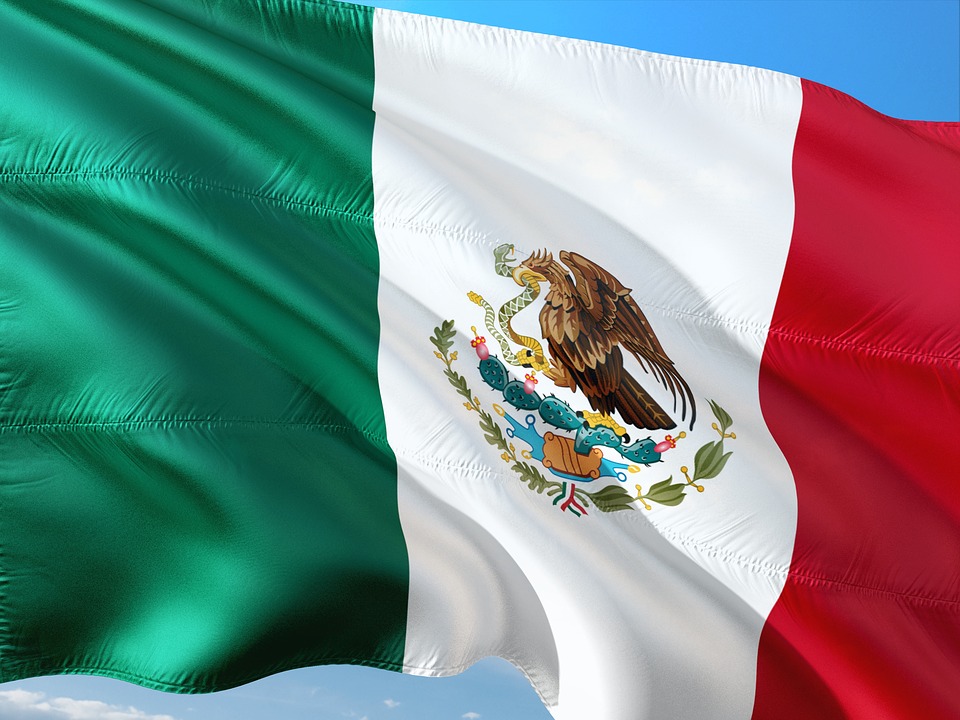
    Caribbean Community (CARICOM) countries and the Government of Mexico have approved the seventh Mexico-CARICOM Technical Cooperation Programme (2017-2019). This was one of the main outcomes of the Fourth CARICOM-Mexico Summit held this week on October 25, in Belize City, Belize. Hailed as “a new paradigm” in cooperation between CARICOM and the Government of Mexico, the new programme will include both existing and new priority areas for development cooperation which align with those identified in the CARICOM Strategic Plan 2015-2019 and the global development agenda.

    Mexico and CARICOM have enjoyed four decades of diplomatic cooperation and friendship.  At the Third Mexico-CARICOM Summit in 2014 President of Mexico, His Excellency Enrique Pena Nieto had pledged his Government’s desire to build on and deepen those ties.

    The discussions at  Wednesday’s summit touched on several areas of cooperation, including trade and investment, public health, education, cultural cooperation, technical assistance, and cooperation on the global development agenda. A member country of the Organisation for Economic Co-operation and Development (OECD), Mexico has the world’s eleventh largest economy according to International Monetary Fund (IMF) forecast data for 2017. This makes Mexico a potentially powerful voice and ally on international issues of interest to the Caribbean, including climate action,  de-risking and the need for multilateral financial institutions to revisit graduation criteria for official development assistance.

    Disaster risk management was a major focus of the talks, as CARICOM countries and Mexico have both suffered significantly at the hands of natural disasters this year. Powerful hurricanes Irma and Maria caused major loss of life and damage in several Caribbean Islands, most tragically in Barbuda and Dominica. In September as well, Mexico was struck by Hurricane Katia around the same time that it was reeling from two devastatingly strong earthquakes within a two week span which claimed over 200 lives.

    In addition to pledging their continued support for the Paris Climate Change Agreement, the CARICOM and Mexico heads of government/State agreed to a Mexico-CARICOM Strategy for Comprehensive Disaster Risk Management which, according to the summit’s official declaration, will comprise the following three main lines of work:

    1. strengthening initiatives already in place
    2. developing a complementary cooperation agenda, such as early warning, awareness raising, emergency response, among others
    3. joint action in multilateral fora and international mobilization to further strengthen and support Caribbean institutional capabilities for disaster risk management

    The Mexican Government also made a US14 million grant to the Caribbean Catastrophe Risk Insurance Facility (CCRIF SPC), a regional catastrophe fund formed in 2007 and which has had to pay out about US$50.7 million since the start of the 2017 Atlantic hurricane season alone!

    They have also agreed to support the establishment of a hydrometeorological monitoring centre for the Caribbean region and to collaborate to ensure  the success of the CARICOM-hosted International Donor Conference planned for November 21, 2017 at the UN Headquarters, New York. This conference will seek to mobilise assistance for those hurricane-struck Caribbean islands.

    The Government of Mexico has also offered 150 scholarships for training Caribbean teachers of Spanish as a second language. This would assist in reducing the language barrier which would be one of the impediments for CARICOM exporters seeking to enter the Mexican market. According to data quoted in the CARICOM press release before the meeting, “between 2012 and 2016, imports from Mexico to CARICOM exceeded exports from CARICOM to Mexico, with Jamaica, Trinidad and Tobago, Belize, Barbados and Guyana being the main importing countries, accounting for 95 % of imports from Mexico between 2014 and 2016”.

    The Joint Declaration of the CARICOM-Mexico Summit may be accessed here.

    Alicia Nicholls, B.Sc., M.Sc., LL.B., is a trade and development consultant with a keen interest in sustainable development, international law and trade. You can also read more of her commentaries and follow her on Twitter @LicyLaw.

  • ACP Trade Ministers demand ‘concrete outcomes’ at upcoming WTO MC11

    ACP Trade Ministers demand ‘concrete outcomes’ at upcoming WTO MC11

    Alicia Nicholls

    Trade ministers and other representatives from the 79-member Africa, Caribbean and Pacific (ACP) countries added their voices to demands for ‘concrete outcomes’ at the upcoming World Trade Organisation’s Eleventh Ministerial Conference (WTO MC11). Preparations for the upcoming WTO MC11 was one of several topics discussed by ACP trade representatives at their 20th ACP Ministerial Trade Committee meeting held in Brussels on 18-19 October last week.

    According to the press release from the meeting, the ACP representatives  reiterated the need for a development-friendly and robust MC11 work programme which recognized differences between developed, developing and least developed countries and whose outcomes were aligned with the Sustainable Development Goals (SDGs).

    Reaffirming their commitment to the multilateral trading system, they also called for “inclusiveness, consensus and transparency in all WTO decision-making processes, as well as careful framing of any reform evaluation of the WTO to ensure that the interests of all countries are protected”. Guyana was chosen to be the spokesperson for the ACP Group at the Ministerial which will take place in Buenos Aires December 10-13, 2017.

    In a speech delivered at the ACP meeting, the WTO’s Director General, Roberto Azevedo, acknowledged the important role ACP countries have played in shaping the WTO’s work.

    Mr. Azevedo gave a brief status report on the WTO’s preparatory work for the upcoming Ministerial Conference, lauding the ACP countries for being at the “forefront” of these discussions. He noted that although there were some positive signs, the many gaps to bridge meant that there was still much work ahead with respect to the negotiations.  He further reiterated that in order to achieve concrete results in Buenos Aires, “more focused engagement and negotiation will be required to quickly identify areas of convergence”.

    In the meeting which was chaired by the Hon. Carl Greenidge, Vice President and Minister of Foreign Affairs of the Cooperative Republic of Guyana, ACP trade representatives also focused on several  other topics of importance to ACP countries’ trade, including enhancing trade among ACP countries and trade issues with the European Union (EU).

    The ACP press release also notes that ACP representatives have committed to “increased integration, unity and solidarity” among ACP countries, including taking more “joint ACP approaches to trade and development”.

    The press release from the ACP can be read here.

    The WTO Director-General’s full speech can be read here.

    Alicia Nicholls, B.Sc., M.Sc., LL.B., is a trade and development consultant with a keen interest in sustainable development, international law and trade. You can also read more of her commentaries and follow her on Twitter @LicyLaw.

  • Caribbean leaders place spotlight on climate change at UNGA

    Caribbean leaders place spotlight on climate change at UNGA

    “To deny climate change is to deny a truth we have just lived” – The Honourable Roosevelt Skerrit, Prime Minister of the Commonwealth of Dominica

    Alicia Nicholls

    These powerful words uttered by Prime Minister of Dominica, The Honourable Roosevelt Skerrit were perhaps the most memorable from the United Nations’ General Assembly (UNGA) seventy-second session. It was against the tragic backdrop of the devastation inflicted by Hurricanes Irma and Maria on several Caribbean islands that successive Caribbean leaders made their addresses during the UNGA general debate, highlighting the urgency of the need to address climate change in a meaningful way.

    There were many moving addresses, but the most impactful  was the address by Mr Skerrit, whose country was severely battered by the Category 5 power of Hurricane Maria just days before. Reiterating that he was “coming from the front line of the war on climate change”, Mr. Skerrit reminded participants of the horror which Tropical Storm Erika had inflicted on the island back in 2015 and the tragedy currently unfolding due to Hurricane Maria where the confirmed death toll is 27 and several other persons remain missing.

    In the space of a couple of hours, Dominica’s iconic mountains, once resplendent in coats of green and through which flowed clear rivers, had turned brown with mud and rubble. Some 95% of homes have reportedly lost their roofs in some places. Every one of the Nature Isle’s 70,000 inhabitants has been affected in some way.

    Proclaiming that “Eden is broken”, he declared that Dominica was faced with “an international humanitarian emergency”. A fortnight before Maria hit Dominica, Barbuda, the smaller of the two main islands of the country of Antigua & Barbuda, was hit by Category 5 Hurricane Irma, leading to a complete evacuation of the entire island after the crisis. Hurricane Irma also did not spare Cuba or the island of St. Martin, split between the Kingdom of the Netherlands and the Republic of France.

    But besides the human and infrastructural losses, the economic toll will be equally enduring for those countries affected. A recent report estimates that Hurricane Irma caused $45 billion in damage in the Caribbean, with at least $30 billion in Puerto Rico.   With Maria, this toll will be expected to rise. A rapid damage and assessment had found that Tropical Storm Erika in 2015 had inflicted loss and damage on Dominica of US$483 million, equivalent to 90% of the island’s GDP. Hurricane Maria was much worse.

    While climate change is not the cause of hurricanes, warmer waters in the Atlantic is believed by scientists to be the cause of stronger, more powerful hurricanes during this hurricane season. Hurricane Irma and Maria both rapidly developed into Category 5 hurricanes and the back to back pummeling of several Caribbean islands by two Category 5 hurricanes in such a short space of time is certainly not an everyday occurence, but one which may become a more frequent reality as global temperatures increase.

    It is these realities which led Caribbean countries and other Small Island Developing States (SIDS) to be at the forefront of climate change negotiations which eventually led to the historic Paris Agreement being signed in December, 2015. It is why the decision by US President Donald Trump to declare that the US, the world’s largest polluter, would be pulling out of the Paris Agreement was extremely unfortunate.

    As Hurricane Harvey and Irma potently showed in the US states of Texas and Florida, wealthy nations like the US are not immune to the more deadly effects of climate change. However, Caribbean countries, like all SIDS, are poorly equipped, both geographically and economically, to confront these disasters. Their fragile economies are dependent on industries which are among the first economic victims of storm devastation, tourism being the clearest example.

    Moreover, their generally high  GDP per capita and “middle income” designation makes most concessionary loans and certain types of development aid beyond their reach due to outdated notions that GDP per capita is a good measure of wealth for countries. This point was raised in the address by Minister of Foreign Affairs and Foreign Trade of Barbados, Senator the Honourable Maxine McClean. Barbados was spared the devastation of both Hurricanes Irma and Maria and has been among the forefront of relief efforts in Dominica.

    As was eloquently put in a recent World Bank blog, hurricanes can seriously turn back the developmental clock. This is certainly the case with Dominica which was still in many ways recovering from Tropical Storm Erika and will face a much longer recovery following Hurricane Maria. It is also the case with the US territories of Puerto Rico and the US Virgin Islands which are also facing tremendous human suffering after being pounded by both Irma and Maria. Puerto Rico’s economy was already fragile due to the huge debt crisis being faced and is now faced with many places without drinking water or electricity.

    Platitudes and best endeavour promises do little to allay the reality that there is little time left to reverse the damage which has been done and reverse course towards more severe temperature increases. The Paris Agreement was an important step but there needs to be stronger commitment, ambition and meaningful action by all nations, especially those which are the most responsible for atmospheric pollution, to take steps to meet and go beyond the greenhouse gas emission reduction targets they set for themselves.

    There also needs to be greater support for SIDS which bear a disproportionate brunt of the consequences. The issue of climate finance was raised by Prime Minister Gaston Browne of Antigua & Barbuda, who mentioned debt swaps as a possible option, and the need for greater finance for building resilience, as well as reminded participants of the economic vulnerability of countries which were faced with high debt, large trade deficits and small, undeveloped financial markets.

    As Prime Minister of Dominica, Mr. Skerrit rightly stated, “we need action and we need it now”.

    Mr. Skerrit’s full speech may be viewed here.

    The CTLD Blog extends our heartfelt sympathy to all our Caribbean brothers and sisters affected by the devastation caused by Hurricane Irma and Maria.

    Alicia Nicholls, B.Sc., M.Sc., LL.B., is a trade and development consultant with a keen interest in sustainable development, international law and trade. You can also read more of her commentaries and follow her on Twitter @LicyLaw.

     

  • Why the proposed US fee on remittance outflows to LAC makes no sense

    Why the proposed US fee on remittance outflows to LAC makes no sense

    Photo credit: Pixabay

    Alicia Nicholls

    The cost of sending remittances from the US to some Latin American and Caribbean countries and dependencies will increase should HR 1813 introduced in the United States (US) House of Representatives on March 30, 2017, be passed. The proposed Bill entitled the “Border Wall Funding Act of 2017”, would amend the Electronic Fund Transfer Act by imposing a two percent fee on the US dollar value of remittances (before any remittance transfer fees) on the countries listed. The bill is sponsored by Representative Mike Rogers, a Republican from Alabama’s third district.

    One of President Donald Trump’s most controversial campaign promises was to build a wall along the US’ southern border, which he claimed would be paid for by the Government of Mexico, to deter illegal immigration. The Government of Mexico has consistently and strongly denied that its taxpayers would be paying for the wall. As a result Republican lawmakers have been seeking ways to fund the wall without relying on the US taxpayer. Instead, should this bill become law, it will raise money for the wall on the backs of hardworking Caribbean and Latin American immigrants living in the US, some of which are actually US citizens.

    Here are some few reasons why I, respectfully, believe the proposed fee makes no sense:

    1. The wall will still be paid for by some US taxpayers

    The two percent fee is to be imposed on the sender of any remittances sent to recipients in the countries identified. Ironically, it would still be funded by some US taxpayers as some remittance senders are either US-born or have acquired US citizenship or have greencard status. Data from the 2015 American Community Survey show that there are an estimated 4 million Caribbean-born immigrants living in the US. Some 58.4% of those became naturalised US citizens, while 41.6% are not yet US citizens according to US Census Bureau 2016 data.

    2. The list of ‘foreign countries’ excludes some of the largest sources of illegal immigrants to the US

    The affected  countries would be: Mexico, Guatemala, Belize, Cuba, the Cayman Islands, Haiti, the Dominican Republic, the Bahamas, Turks and Caicos, Jamaica, El Salvador, Honduras, Nicaragua, Costa Rica, Panama, Colombia, Venezuela, Aruba, Curacao, the British Virgin Islands, Anguilla, Antigua and Barbuda, Saint Kitts and Nevis, Montserrat, Guadeloupe, Dominica, Martinique, Saint Lucia, Saint Vincent and the Grenadines, Barbados, Grenada, Guyana, Suriname, French Guiana, Ecuador, Peru, Brazil, Bolivia, Chile, Paraguay, Uruguay, and Argentina.

    This arbitrarily drawn up list raises two main questions. (1) Why were Caribbean countries included in this list? The Caribbean sub-region as a whole only accounts for 2% of the illegal immigrant population in the US, according to Migration Policy Institute analyses. (2) Why were only countries from the Americas targeted when several Asian countries, like China for example, rank among the top sources of illegal immigrants to the US?

    3. It is unlikely to raise enough money to pay for the border wall

    It is unlikely that the two percent fee will raise enough money to pay for a wall which is estimated by a leaked memo from the US Department of Homeland Security to cost some 21.6 billion dollars, particularly if the monies will be raised mainly on the back of remittances sent to small Central American and Caribbean countries. Moreover, despite the threat of penalties, people will inevitably find ways to evade the fee by increasing their use of informal channels for sending remittances.

    4. It could destabilise the US’ backyard which is contrary to US strategic homeland security interests.

    With many of the region’s economies already threatened by de-risking, elevated debt levels and high unemployment, this proposed Bill is another worrying development. Although I do not believe the fee will stop the US-based Caribbean diaspora from remitting money to their loved ones, it may make it more difficult for them to do so as frequently as they normally do, which could have social and economic implications for the most remittance-dependent economies.

    The Caribbean diaspora community in the US is an important source of remittance flows to the Region. According to a World Bank Migration and Development Brief released this month, stronger US job growth and a stronger US dollar were major reasons why the LAC Region was the only region to register an increase (6.9 percent) in remittance flows, with a total of $73 billion inflows in 2016. This is in contrast to the global landscape where remittances to developing countries in 2016 declined for the second consecutive year in a row.

    Haiti and Honduras are the two most remittance dependent countries in the LAC Region and rank among the most remittance-dependent economies in the world, among countries for which data are available. Data provided in the previously mentioned World Bank Report show that in 2016 remittance inflows were equivalent to 27.8% of GDP for Haiti, 18.4% of GDP for Honduras, 17.6% of GDP for Jamaica, 17.2% of GDP for El Salvador,  and 8.6% of GDP for Guyana. For Belize it was 5% and Dominica, 4.6% of GDP.

    A 2010 Report released by the Bank of Jamaica entitled “Remittances to Jamaica: Findings from a National Survey of Remittance Recipients” revealed that “more than half of the remittances sent back to Jamaica come from the US” and found that “remittances are an essential source of financing to many Jamaican recipients, which is used to supplement household income for necessities such as food, utilities and education”.

    Successive US administrations have generally recognised that an economically and socially stable Caribbean region was in the US’ strategic homeland security interests. This is why the US government through its various economic and military aid programmes has poured millions of dollars into assisting Caribbean countries on issues such as crime, border security, among other things.

    Besides the hardship that could be caused at the micro-level, a reduction in remittance inflows due to higher costs could have poverty alleviation and crime reduction implications and could have a destabilising effect on those economies and societies which are the most dependent on them. The same Bank of Jamaica report noted that “remittances to Jamaica have become an important source of foreign exchange and balance of payments support”.

    Due to the paucity of official remittance data for many Caribbean countries, the importance of remittances to LAC economies is still underestimated and its micro and macro-economic importance to Caribbean economies is likely higher than currently measured.

    How should we respond?

    The bill has been referred to the House Subcommittee on Crime, Terrorism, Homeland Security and Investigations on April 21, 2017 and will need to be debated and passed by both chambers of Congress before being sent to the President for signature into law.

    Latin American and Caribbean governments, along with their diplomatic representatives and the diaspora, should lobby against the passage of this bill by engaging in discussions with Congressional and other officials on the serious economic and social impact any potentially significant decline in remittance inflows could have on remittance-dependent countries in the Region, and the spin-off negative effect this could have on the US homeland.

    To view the text of the proposed Bill, please see here.

    Alicia Nicholls, B.Sc., M.Sc., LL.B., is a trade and development consultant with a keen interest in sustainable development, international law and trade. You can also read more of her commentaries and follow her on Twitter @LicyLaw.