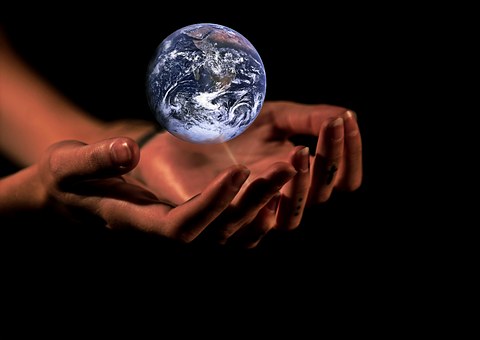
Photo credit: Pixabay
Alicia Nicholls
Much of the attention on United States’ President Donald Trump’s chaotic first week in office has been on his temporary, but draconian ban on all refugees and on immigrants and nationals from seven predominantly Muslim countries. However, his actions against the environment are just as concerning, particularly for Caribbean small island developing states (SIDS) which are suffering from the adverse effects of climate change. Lest one mistakenly thinks this is a Caribbean or SIDS problem alone, President Trump’s anti-climate action stance further endangers those communities in the US which are already being threatened by climate change.
In this article I outline some of President Trump’s anti-environmental actions taken within his first full week in office, and argue that Caribbean countries have a good case to make for why it is in the US’ vital national interests for the Trump administration to reverse its potentially disastrous anti-climate action course before it is too late. I also posit that the newly signed US-Caribbean Strategic Engagement Act of 2016 (HR4939) provides a possible mechanism for US-Caribbean climate change action and that the omission of climate change as an identified priority for US-Caribbean cooperation would be inimical to the objectives of the Act.
President Trump’s Anti-Environmental Actions thus far
President Trump sees an inherent incongruity between promoting climate action and fomenting US job creation and energy independence. As warned by a Sierra Club report released during the presidential campaign, the former businessman would be (and currently is) the only world leader to deny the science and seriousness of climate change.
Mr. Trump had even tweeted in November 2012 that the global warming concept was a “hoax invented by the Chinese” to make US manufacturing noncompetitive. While he later claimed the tweet had been a joke, what is not a joke, however, are the several executive actions Mr. Trump has signed just in a week to reverse the climate action policies of his predecessor, now former President Barack Obama. In the US’ Intended Nationally Determined Contribution (INDC) submitted in 2015, President Obama had pledged to cut US emissions by 2025 by 26-28 Percent from 2005 Levels.
During the presidential campaign Mr. Trump had clearly stated his intention to withdraw the US from the Paris Climate Agreement, in which parties aim, inter alia, to “keep a global temperature rise well below 2 degrees Celsius above pre-industrial levels” and (at the insistence of SIDS) to “pursue efforts to limit the temperature increase even further to 1.5 degrees Celsius”. As at the time of writing this article, news reports are stating that Mr. Trump will shortly sign an executive order formally withdrawing the US from the Agreement, which President Obama had ratified in 2016 through executive action.
While withdrawing his country from the Agreement will not be as straightforward as one may think, there are three ways in which Mr. Trump can basically undermine the Agreement’s objectives. Firstly, he can refuse to honour the emissions’ targets set by President Obama by cutting environmental regulations such as mileage and emissions standards for cars, and increasing US domestic fossil fuels drilling. Second, he can refuse to participate in any international climate action through, among other things, avoiding participation in future climate talks and refusing to honour global climate finance commitments made by the previous administration. Thirdly, he can direct that funding be cut for climate research and undermine the work of the Environmental Protection Agency (EPA) in other ways. As the US is the world’s largest greenhouse gas emitter, these actions would be a significant blow to global climate action efforts.
President Trump’s nominee for Energy Secretary, former Texas Governor, Rick Perry, and for EPA Administrator, Scott Pruitt are both climate change deniers. In fact, Mr. Pruitt, had filed 14 law suits against the EPA while serving as Oklahoma’s Attorney-general, while Mr. Perry had once vowed to abolish the same agency he will now lead.
Mr. Obama’s Climate Action Plan had focused, inter alia, on deploying clean energy, cutting US emissions, cutting energy waste in homes and businesses, preparing the US for the impacts of climate change, and leading international action on climate change.Mr. Trump’s America First Energy Plan, which has replaced the Climate Change page on the Whitehouse.gov website, speaks of eliminating President Obama’s Climate Action Plan and Waters of the US Rule, reviving the US’ coal industry, and increasing fossil fuel drilling.
Within the first week of taking office, President Trump has signed executive orders which will make the once considered dead and buried Keystone XL Pipeline and the Dakoka Access Pipeline (DAPL) once more realities, to the chagrin of environmental activists. Mr. Trump has signed presidential memoranda streamlining, permitting and reducing regulatory burdens for domestic manufacturing and also signed an executive order expediting environmental reviews and approvals for high priority infrastructure projects.
Upon his taking office, the climate change page from the Whitehouse.gov website was unceremoniously scrubbed. References to climate change on various other US government sites have been erased. Perhaps more worryingly are the gag orders reportedly placed on employees in various government agencies, including the EPA, from engaging with the Press or the public. A report by the Guardian further states that the Trump administration is now requiring studies or data from EPA scientists to undergo review by political appointees before they can be made public. It has been reported that some scientists have been backing up climate data. US agencies are among some of the most important sources of climate-related data, which are critical for monitoring climate patterns and for formulating evidence-based climate action policies.
Previous US-Caribbean Climate Change Cooperation
Caribbean countries are now faced with a climate-sceptic US president (for the next four years at least) at a time when the window for limiting the global temperature increase to less than 2 degrees Celsius above pre-industrial levels is closing. While there are legitimate criticisms that can be levelled at the Obama Administration over things like its treatment of Caribbean offshore financial centres and its failure to compensate Antigua in its long-running US-Antigua Gambling World Trade Organisation (WTO) dispute, that administration was undoubtedly an important friend for Caribbean countries in the global fight against climate change because the Obama administration understood that the US and the entire planet was at risk.
Not only had US cooperation been crucial in the lead up to, and during the COP21 negotiations, but President Obama’s early ratification of the Paris Agreement by executive action had paved the way for the historic Agreement’s early entry into force. President Obama had also pledged $3 billion to the Green Climate Fund set up by developed countries in 2010 to assist developing countries with their adaptation and mitigation efforts, and from which Caribbean countries also would benefit. He had transferred $500 million last year and transferred an additional $500 million installment ahead of schedule just three days before leaving office. President Trump is unlikely to honour the remaining $2 billion promised.
Caribbean countries also benefited from USAID funding for climate change adaptation projects. The future of such aid is doubtful under President Trump. Indeed, my own personal search of the USAID website, while conducting research for this article, showed that some of the pages on that agency’s climate change funding initiatives have been deleted.
Why should the Trump Administration care about climate change?
President Trump sees climate change action as inimical to US national economic and security interests, but this is not the case for the reasons outlined below:
(a) Climate Change is affecting US communities
The US itself has not been spared the ravages of climate change and Mr. Trump’s inaction on this issue will destroy the very American businesses, jobs and lives he claims he wishes to protect. Many of the US’ major coastal cities, whether it is New York, Miami or Los Angeles, would be ravaged by sea-level rise and by more intense storms. The devastation of Hurricane Katrina (2005) and Super Storm Sandy (2012), for example, caused billions of dollars in damage, destroying lives and infrastructure. There has also been an increase in heat waves, tornadoes and other extreme weather events.
A New York Times article reports on findings of a study which showed that 31 coastal communities in Alaska were at an “imminent risk of destruction”, some of which will be uninhabitable by 2050. It is why some US states, regardless of what is happening at the federal level, have formulated their own climate action plans. California, the most populous and second largest state by land area in the Union, announced that it would “cut emissions 40 percent below 1990 levels by 2030”, an ambitious target.
(b) US losing out on renewable energy and environmental goods market
Moreover, despite Mr. Trump’s predilection for fossil fuels drilling, renewable energy is the way that the world is going. If the stated goal of the Trump administration is “America first” and to promote American jobs and manufacturing, then he should be concerned that the US will be missing out on a growing billion dollar industry. A Bloomberg report notes that not only is solar the fast growing energy sector, but China has overtaken the US and Germany in 2015 as world leader in solar generation. There are also opportunities in trade in environmentally-friendly goods and services, which the US will be missing out on.
(c)Climate Change threatens Stability of US Third Border
Successive US administrations have recognised that a secure and politically and economically stable Caribbean (a region which President George W. Bush had called the US’ ‘Third Border’) serves US national security and geostrategic interests. The impacts of climate change strike at the heart of Caribbean countries’ stability and security, given their vulnerability to weather-related shocks.
The economic effects of climate change on the Caribbean have already been competently outlined by various studies, including a study by Sebastian Acevedo Mejia and published by the International Monetary Fund (IMF) entitled Gone with the Wind which found that “that hurricane damages [in the Caribbean] are considerably underreported…with average damages potentially being three times as large as the reported average of 1.6 percent of GDP per year”. One only needs to recall the devastation inflicted by Hurricane Ivan on Grenada (2004), Tropical Storm Erika on Dominica (2015) or Hurricane Matthew on Haiti (2016) to see that the human and economic toll of climate change is not textbook theory but lived reality.
Suffice it to say, all of the major industries upon which Caribbean economies are based, whether it is tourism, agriculture or manufacturing, are being affected, by climate change in some manner. Therefore, if it is recognised that an economically and socially strong “Third Border” is vital to US national security interests, it will be against the Trump administration’s interests to be aloof to the impact of climate change in the region.
(d) Climate Change Refugees
As someone who has railed against immigration, President Trump should be cognisant that climate change-related disruption, whether through sea level rise or storm devastation, will increase the flow of immigrants to US borders. Concern about the possibility of increased climate refugees was recognised by the Obama administration back in 2016.
The capitals (and economic centres) of most Caribbean countries are coastal cities and towns, while the majority of the populations of many of the small island states is located within 2 miles of the coast. Displacement of these populations as sea levels rise is likely. Caribbean people have long seen the US as a land of opportunity and it is not implausible to think that ‘the land of the free’ will be one of the main destinations for any Caribbean climate refugees.
US-Caribbean Strategic Engagement – HR4939
Fortuitously, thanks to a bipartisan effort in Congress and quick signature by former President Obama, there is a mechanism under which US-Caribbean climate change cooperation may be effected. Recognising that strong US-Caribbean relations are key to US security and other interests, the US-Caribbean Strategic Engagement Act of 2016 (HR4939) declares that it is the policy of the US to increase engagement with the Caribbean through four prongs: Caribbean governments, the Caribbean diaspora community, the private sector and civil society. The Act’s scope is limited to those Caribbean countries which are beneficiaries of the Caribbean Basin Security Initiative.
The Act’s objectives are multifocal and include enhancing diplomatic relations, increasing economic cooperation, supporting regional economic, political and security integration efforts, inter alia. I would submit that for the reasons stated above, any attempt at promoting economic cooperation and development and increasing security in the Caribbean would be incomplete without including climate change as one of the priority areas.
One of the most critical aspects of the Act is that it provides concrete timelines for follow-up action, which is important as there was no indication that the US-Caribbean relationship is a priority for the Trump administration. It mandates the incoming Secretary of State, in coordination with the Administrator of USAID, to submit not later than 180 days after the date of the Act’s enactment a multi-year strategy for US engagement to support interested Caribbean nations. It outlines broad guidelines which must be included in the strategy and I believe Caribbean countries should proactively engage the administration on what they believe to be priorities.
The incoming Secretary of State will be mandated to annually brief the appropriate congressional committees on Department of State on efforts to implement the strategy. President Trump will also be required to submit a report on progress made toward implementing the strategy to the appropriate congressional committees no later than 2 years after the strategy has been submitted.
Naturally, this Act just outlines the broad framework and it will be up to the stakeholders I just mentioned to ensure that the Act achieves its objectives.
Conclusion
US-Caribbean Climate Change Action cooperation is a mutually important imperative and the US-Caribbean Strategic Engagement Act of 2016 provides an opportunity through which to do so. Caribbean leaders, our diplomatic representatives and other allies in Washington DC should consistently make the case that continued US-Caribbean climate change action is key to US-Caribbean strategic re-engagement, and further, that climate change inaction undermines the security and threatens the economic, social and even political stability of the US’ third border, which has national security implications for the US homeland.
The Caribbean diaspora community in the US, one of the four partners recognised under the Act, will be important partners in making this case as many would have been witnesses (whether firsthand or through family members back in the region) of the devastation climate change is having on the region. The Caribbean also has other allies in this fight such as those companies which have made a niche out of renewables and other environmentally-friendly goods and services, and those states like California which recognise the need for continued climate action by the federal government for their own survival.
By no means am I suggesting that convincing the Trump administration that climate change is a threat to be taken seriously will be an easy feat. However, I do believe that both the US and the Caribbean have too much to lose from any climate change inaction for the effort not to be made.
Alicia Nicholls, B.Sc., M.Sc., LL.B., is a trade and development consultant with a keen interest in sustainable development, international law and trade. You can also read more of her commentaries and follow her on Twitter @LicyLaw.


 Caribbean Trade Law and Development