Tag: Caribbean

  • Caribbean Trade and Development News Digest – May 9-15, 2021

    Caribbean Trade and Development News Digest – May 9-15, 2021

    Welcome to the Caribbean Trade and Development News Digest for the week of May 9-15 2021! We are pleased to bring you the major trade and development news headlines and analysis from across the Caribbean Region and the world from the past week.

    THIS WEEK’S HIGHLIGHTS

    The Caribbean Community (CARICOM) will have its first female Secretary General as of August 15, 2021. This week, Heads of Government unanimously selected Belizean Dr. Carla Barnett to be the incoming SG. Read more about what awaits the new SG here.

    Jamaica is exploring once again the possibility of creating an Economic Residency Programme. Read more here.

    According to the World Trade Organization (WTO), Bolivia has notified  its need to utilise the flexibility under the TRIPS  2017 amendmentRead more

    United States Trade Representative (USTR) Ambassador Katherine Tai testified this week at a Senate Finance Committee Hearing on the President’s Trade Agenda. Read her remarks here.

    Afronomicslaw Symposium: Prospects for Deepening Africa-Caribbean Economic Relations – Call for Blogs (Extended Deadline: June 4)

    Given the limited but promising trade and investment relationship between both regions, there is a dearth of scholarly analysis on the Africa-Caribbean economic relationship. This Symposium aims to address this gap in international economic relations scholarship through considered analytical pieces exploring aspects of this understudied relationship. We invite authors to submit blog contributions which critically analyze and examine this relationship from a variety of perspectives. Read the full Call for Blogs here.

    REGIONAL NEWS

    Regional integration and the CSME to be taught in CARICOM classrooms

    Loop News Caribbean: Starting on Monday, around the region, the teaching of regional integration and the Caribbean Community (CARICOM) Single Market and Economy (CSME) will be done in classrooms as part of a new indicative by the CARICOM Secretariat. Read more

    CARICOM launches regional integration and CSME pilot programme

    Searchlight: The Caribbean Community (CARICOM) Secretariat is continuing efforts to increase the teaching of regional integration and the CARICOM Single Market and Economy (CSME) in CARICOM classrooms via a new initiative that was due to start yesterday, Monday May 10, 2021. Read more

    More Protection For Condensed Milk And Clinker In CARICOM

    JIS: Minister of Industry, Investment and Commerce, Hon. Audley Shaw, has informed that condensed milk and clinker (used in cement production) supplied within the Caribbean Community (CARICOM) “have [now] been afforded an additional layer of protection”. Read more

    State Entities That Facilitate Imports And Exports To Be Digitised

    JIS: Some 20 State entities that facilitate imports and exports are earmarked for digitisation under the Jamaica Electronic Single Window for Trade (JSWIFT) initiative. Read more

    Barbados AG: UK listing disappointing, but not surprising

    Nation News: Statement from Attorney General Dale Marshall on the UK Government’s listing of Barbados as a High-Risk Third Country. Read more

    Barbados, Dominica collaborating on resilience investment

    Barbados Today: Barbados is engaging the services of the International Financial Corporation (IFC) in association with Dominica, as the two countries seek to embark on a pilot project to spur private sector investment in resilience. Read more

    St Kitts PM makes global appeal for regional vaccine availability

    NYCaribNews: Prime Minister Dr. Timothy Harris Friday called on the United States and other vaccine producing countries to ensure the equitable distribution of the vaccine needed to curb the spread of the coronavirus (COVID-19) that has killed thousands of people in the Caribbean Community (Caricom) grouping. Read more

    CARICOM states ‘lack green energy drive’ despite ‘ambition

    Barbados Today: Warning that it will take upwards of $40 billion (US$20 billion) in investment for CARICOM to reach the goal of 100 per cent renewable energy use and energy efficiency, a senior regional civil servant has expressed disappointment at the slow pace of some member states in going green. Read more

    BTMI relaunches Barbados tourism brand

    Nation News: The Barbados Tourism Marketing Inc. (BTMI) virtually relaunched Barbados’ tourism brand to the world earlier today, unveiling the new brand theme “Little Island; Big Barbados”. Read more

    BTMI chief introduces National Tourism Marketing Committee

    Barbados Today: A new National Tourism Marketing Committee (NTMC) has been established under the Barbados Tourism Marketing Inc. (BTMI) to focus on the strategic marketing of niche tourism product offerings, the state tourism agency said Friday. Read more

    Barbados exports down

    Barbados Advocate: According to the data, overall domestic exports brought in income of $102.8 million, compared to $117.2 million a year earlier and $135 million in the same three-month period in 2019. Read more

    Increase trade in services – EU delegation

    Jamaica Gleaner: Head of the European Union (EU) Delegation to Jamaica, Marianne Van Steen, is encouraging Jamaica to increase trade in services to better exploit opportunities within the 27-member trade bloc. Read more

    Government of Belize Reconstitutes a National Trade Negotiating Commission

    LoveFM: Distance, language, tariffs, and import quotas are barriers that often put small and medium-sized economies at great trading disadvantages. But with the formation of the National Trade Negotiating Commission, Belize is hoping to even the playing field. Read more

    Bahamas ambassador promotes Caribbean priorities for EU partnership agreement

    EyeWitnessNews: Maria O’Brien, ambassador extraordinaire and plenipotentiary of The Bahamas to the Kingdom of Belgium and head of mission to the European Union, recently represented The Bahamas at an official ceremony to finalize a new partnership agreement between the Organisation of African, Caribbean and Pacific States (OACPS) and the European Union. Read more

    Trinidad & Tobago Trade Ministry promotes opportunities in the UK market

    Trinidad Express: As the Government of Trinidad and Tobago continues to actively increase the country’s exports to extra-regional markets, the Ministry of Trade and Industry in collaboration with exporTT Limited recently hosted a Virtual Awareness Session on the CARIFORUM-United Kingdom (UK) Economic Partnership Agreement (EPA). Read more

    Trade Minister meets with TT Chamber’s new Head

    Trinidad Express: Senator the Honourable Paula Gopee-Scoon, Minister of Trade and Industry held a virtual meeting earlier today with the newly installed President of the Trinidad and Tobago Chamber of Industry and Commerce (TTCIC), Mr. Charles Pashley. During the meeting several matters related to supporting the growth and expansion of the local private sector were discussed. Read more

    Use of The Bahamas’ vast ocean resources — Bahamas Development Bank looks at the potential and offers grants for training

    EyeWitness News: The recent Blue Economy Think Tank hosted by the Strategic Development and Initiatives Unit of the Bahamas Development Bank (BDB) attracted over 340 registered participants and 20 panelists from The Bahamas and abroad, who examined ways in which Bahamians can benefit from sustainable use of the country’s vast ocean resources. Read more

    IDB urges Caribbean countries to do more to meet their Paris Agreement commitments

    Jamaica Observer: The Inter-American Development Bank (IDB) says Latin America and the Caribbean countries must include finance and planning perspectives to their climate policies and commitments in their nationally determined contributions (NDCs) if they expect to deliver on their Paris Agreement objectives and promote a sustainable recovery. Read more

    INTERNATIONAL NEWS

    WTO DG fixes July ministerial meeting on over-fishing rules

    Reuters: The head of the World Trade Organization plans to host a ministerial meeting on July 15 where she hopes an agreement can be reached on cutting fisheries subsidies after 20 years of talks, a document showed on Monday. Read more

    WTO Aims for Agreement on Fisheries Subsidies in July 2021

    IISD: World Trade Organization (WTO) members reviewed work undertaken in March and April to advance negotiations on an agreement to curb harmful fisheries subsidies. WTO members are aiming to reach an agreement in July 2021. Read more

    How global trade can save lives and livelihoods – and help protect the planet

    WEForum: Global trade has a role to play in saving lives in the COVID-19 pandemic, creating jobs and sustainable development that mitigates against climate change. This was the view of the panellists at the World Economic Forum’s latest Agenda Dialogues session on the Global Trade Outlook. Read more

    Piyush Goyal, US Trade Representative discuss COVID-19 vaccine production, TRIPS waiver

    Business Today: During a meeting with Commerce and Industry Minister Piyush Goyal, United States Trade Representative (USTR), Katherine Tai, reaffirmed the commitment of the US to help India. Read more

    China, WTO need to upgrade overdue digital trade rules

    Hellenic Shipping News: Over the years, the digital economy has developed greatly throughout the world. But World Trade Organization (WTO) digital trade rules have stagnated. Since the new Director-General Ngozi Okonjo-Iweala took office in February, reforms regarding digital trade rules are facing greater challenges and opportunities. Read more

    ‘Hostile environment’: After Brexit, some EU citizens in the UK are worried about their future

    CNBC: Many EU citizens who are still living in the U.K. after Brexit have said they do not feel treated equally to British citizens and feel worried about their rights, a new survey has found. Read more

    After India-EU Summit, Is a Free Trade Agreement on the Cards?

    News18: Even as the European Union has got politically weakened by Brexit, internal tensions between western European countries and eastern ones, notably Hungary and Poland, over issues of democracy and European values, problems of migration, Islamism, terrorism and rise of right-wing forces, and, in addition, economically enfeebled by the still-uncontrolled COVID crisis, India has decided to draw closer to it, driven by its own political and economic challenges. Read more

    EAC Secretary General promises to increase intra-regional trade from 20% to 50% in the next five years

    EAC: The EAC Secretary General, Hon (Dr.) Peter Mathuki has promised the business community in the region that he will do everything within his power to address the vice of Non-Tariff Barriers to trade and trade wars, and work towards raising the volume of intra-regional trade from the current level of below 20% to more than 50% over the next five years. Read more

    Cotonou 2.0: A bad trade deal for Africa?

    DW: The new EU-OACPS Partnership Agreement is only a few weeks old, but already many in Africa are calling for an update. What are the reasons for the dissatisfaction? Read more

    Impact of COVID-19 on financing of free trade in Africa assessed

    ESI Africa: African Export-Import Bank, the UN Economic Commission for Africa, the African Development Bank and Making Finance Work for Africa Partnership have released a special African Trade Finance Survey Report assessing the impact of the COVID-19 pandemic on trade finance in Africa. Read more

    Kazungula Bridge to boost regional trade and commerce

    AllAfrica: The recently constructed 923-metre-long rail and road Kazungula bridge, linking Zambia and Botswana, was inaugurated on Monday in an effort to boost bilateral and regional trade. The bridge across the Zambezi River, co-financed by the two governments, is expected to boost trade and commerce between the two countries as well as increase economic activities and prospects of other Southern African Development Community (SADC) countries, including Namibia, Zimbabwe, Malawi, DRC and Mozambique. Read more

    Belarus, South Africa to strengthen business contacts

    BELTA: Belarus and South Africa plan to strengthen business contacts. The matter was discussed during the online meeting of the representatives of the Belarusian Chamber of Commerce and Industry (BelCCI) with President of the South African Chamber of Commerce Mtho Xulu, BelTA learned from the BelCCI website. Read more

    STRAIGHT FROM THE WTO

    NEW ON THE CTLD BLOG

    SUBSCRIBE TO OUR MAILING LIST

    The Caribbean Trade & Development Digest is a weekly trade news digest produced and published by the Caribbean Trade Law & Development Blog. Liked this issue? To read past issues, please visit here. To receive these mailings directly to your inbox, please subscribe to our Blog below:
  • Closer Africa-Caribbean Relations: A COVID ‘legacy good’?

    Closer Africa-Caribbean Relations: A COVID ‘legacy good’?

    Alicia Nicholls

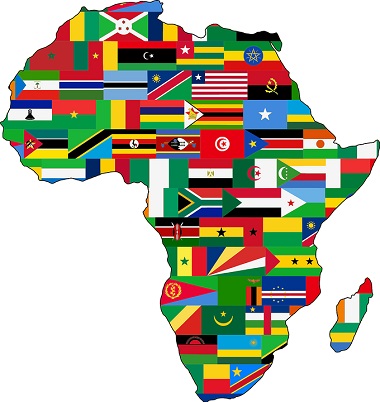
    Without doubt, if one considers the significant loss of life, human suffering and economic hardship inflicted by the novel coronavirus disease (COVID-19) since December 2019, the negatives far outweigh the positives. But as the saying goes, when ‘life gives you lemons, make lemonade’. For those unfamiliar with this phrase, it is an entreaty to make some good out of a less than ideal situation, no matter how bad it is. In this article, I argue that deeper south-south cooperation, and in particular closer Africa-Caribbean cooperation, appears to be one potential COVID-19 ‘legacy good’.

    First, let me state from the outset that bilateral and regional initiatives towards deepening Africa-Caribbean ties predate COVID-19. For instance, the African Union (AU) has for some time now recognized the African diaspora (including that in the Caribbean) as its sixth region. In 2019, the leaders of two African countries, Ghana and Kenya, respectively, made separate high-level visits to the region. Jamaica has its Africa-Caribbean Institute of Jamaica. An AU-CARICOM forum was planned for July 2020 but had to be unfortunately postponed due to the COVID-19 pandemic. CARICOM also announced the creation of a joint embassy to be housed in Nairobi, Kenya. Moreover, African and Caribbean countries participate and cooperate in various multilateral and other fora, such as the World Trade Organization (WTO), the United Nations (UN), Organisation of Africa, Caribbean and Pacific States (OACPS), the Commonwealth of Nations, as examples.

    However, it could be argued that the exigencies of the COVID-19 crisis have intensified the need for deeper Africa-Caribbean collaboration on areas of mutual interest in multilateral fora and at the regional and bilateral levels. As many western countries turned inward to focus on bringing the crisis under control in their countries, Caribbean countries were forced to turn to newer non-traditional partners for assistance in accessing vaccines. For instance, to use another South-South example, India’s generous donation of vaccines to Barbados and Dominica were critical to the start of Barbados’ vaccine programme which to date has vaccinated over 70,000 Barbadians, or nearly a third of the population. As such, it is heartbreaking to watch what is happening in India at the moment as it undergoes a deadly second-wave. I continue to keep our Indian brothers and sisters in my prayers.

    Turning back to Africa, CARICOM was also granted access to the Africa Medical Supplies Platform, a procurement system for medical supplies. Jamaica became the first CARICOM Member State to receive vaccine supplies under that mechanism. In a COVID-19 environment, improved vaccine access for developing countries has been a unifying theme for Africa and Caribbean countries’ multilateral cooperation, including at the sub-regional level. Both regions have condemned vaccine nationalism, particularly the hoarding of vaccines and imposition of export controls on needed medical supplies by some developed countries.

    Another laudable recent development in Africa-Caribbean cooperation is the formation of the Africa-CARICOM Group (AfCAR), a geopolitical grouping of sixty-eight African and Caribbean countries in the UN in March this year. Their first act was to issue a joint statement in the UN General Assembly in commemoration of  the ‘International Day of Remembrance of Victims of Slavery and Transatlantic Slave Trade’.

    There are many other areas in which Africa-Caribbean cooperation already exist, such as climate change, debt relief, financing for development and repatriations for the Trans-Atlantic Slave Trade, for example. There has been some  high-level cooperation involving Caribbean, African and Pacific countries on raising awareness on the de-risking issue, manifested most acutely by the withdrawal or restriction by large Western banks of correspondent banking services to banks in developing countries. African and Caribbean countries are among the most affected by this practice which has implications for trade, investment attraction and financial inclusion. The upcoming UNCTAD XV Quadriennial Conference due to be hosted virtually and chaired by Barbados in October this year presents another opportunity for our regions to collaborate on placing these and other issues on the global trade and development agenda.

    Additionally, as tourism-dependent Caribbean economies hard-hit by the COVID-19 pandemic seek to step up diversification efforts, African countries are among those targeted for greater economic engagement. Barbados has announced the creation of embassies in Ghana and Kenya (part of the CARICOM joint effort), while Jamaica will establish diplomatic relations with Liberia and Togo. Both Barbados and Jamaica have indicated the deployment of enhanced economic diplomacy as part of their Post-COVID-19 recovery strategies. There are also promising areas for further regional and bilateral collaboration, such as agri-business and sustainable agriculture, renewable energy, the cultural industries, education and digital payments systems.

    Naturally, for this momentum of closer Africa-Caribbean ties to be sustained, it must transcend the political level and trickle down to greater business-to-business and people-to-people engagement. Banking relationships would also need to improve to faciliate greater trade between the two regions. Current political discussions on improving air and sea connectivity would help to bolster the still meagre tourism, trade and investment ties between the two regions. Africa-Caribbean goods trade volumes remain small, with CARICOM countries enjoying a trade surplus with the continent on a whole.

    At the bilateral level, December 2020 saw an inaugural direct flight between Montego Bay (Jamaica) and Lagos (Nigeria), in hopes of commencing a regularly scheduled and most overdue direct link between the African continent and the English-speaking Caribbean. The potential for strong Africa-Caribbean tourism exists as an increasing number of Afro-Caribbean persons are interested in tracing their genealogy, discovering their African roots and learning about the ‘Motherland’. Encouragingly, the region’s top tertiary institution, The University of the West Indies (UWI) has signed a memorandum of understanding (MOU) with the University of Ghana. This raises the possibility of enhanced student and faculty exchanges, other educational collaboration and meaningful academic research between our two regions.

    As I conclude, I concur with the sage words of Dr. Len Ishmael who noted in her 2019 study ‘Under-invested: The Caribbean-African Relationship‘:

    “The future of Caribbean-African relations is one ripe with potential and promise, but it requires
    the investments of time, attention and political will to transform the relationship into one fit for
    purpose and suitable for these modern times.”

    It would also be remiss of me if in concluding I fail to lament the dearth of scholarship on Africa-Caribbean relations. As such, Afronomics Law will be hosting a scholarly Blog Symposium examining the “Prospects for deepening Africa-Caribbean Economic Relations”. The deadline for submission of blog contributions is May 14. Learn more about the symposium and how to submit a blog piece here.

    Alicia Nicholls, B.Sc., M.Sc., LL.B. is a trade and development consultant with a keen interest in sustainable development, international law and trade. All views herein expressed are her personal views and should not be attributed to any institution with which she may from time to time be affiliated. You can read more of her commentaries and follow her on Twitter @LicyLaw.

  • A Conversation with Prime Minister of the Republic of Trinidad and Tobago and Chairman of CARICOM Keith Rowley

    A Conversation with Prime Minister of the Republic of Trinidad and Tobago and Chairman of CARICOM Keith Rowley

    Please join the Atlantic Council on Friday, February 26, from 10:00-10:30 a.m. EST / 11:00-11:30 a.m.  AST, for a conversation with Prime Minister of Trinidad and Tobago Keith Rowley, on “Re-Setting US-Caribbean Relations.”

    The Prime Minister will be speaking in his role as the current Chair of the Caribbean Community (CARICOM) which will have just concluded its intersessional Heads of Government Meeting. The conversation will launch the work of the Adrienne Arsht Latin America Center’s new Caribbean Initiative. 

    The programme is as follows:

    Dr the Honourable Keith Christopher Rowley
    Prime Minister of the Republic of Trinidad and Tobago
    &
    Chairman of the Caribbean Community (CARICOM)


    In conversation with
    ​​​​Jason Marczak
    Director, Adrienne Arsht Latin America Center
    Atlantic Council

    Introduction by

    Frederick Kempe
    President & CEO
    Atlantic Council

    Closing by

    Melanie Chen
    Board Director
    Atlantic Council

    COVID-19 has highlighted a new iteration of great power competition in vaccine distribution and commercialization. The pandemic brings to the forefront why the future of the Caribbean — with a population of almost 50 million – is critical for the United States. Tied together by geography and history, Prime Minister Keith Rowley will speak about the region’s global challenges and how resetting US-Caribbean relations can contribute to hemispheric security and prosperity.

    This live event is part of the Atlantic Council Front Page event series, our premier ideas platform spotlighting global leaders who are championing constructive solutions to global challenges. To participate, please register below. Once you have registered, you will receive a confirmation email with information on how to join via zoom.

    To participate in the Q&A with Prime Minister Rowley, please submit questions on twitter using the hashtag #ACFrontPage and following @AtlanticCouncil. To ask questions in advance, please email Wazim Mowla at wmowla@atlanticcouncil.org.

  • The need for a CARICOM Trade and Development Strategy

    The need for a CARICOM Trade and Development Strategy

    Alicia Nicholls

    Last week the European Union (EU), one of the Caribbean Community (CARICOM)’s largest and key trading partners, released a communication outlining what would be the elements of the EU’s new trade strategy over the medium term.

    This article discusses the elements of the new EU trade strategy, but does so as a backdrop to explain why a similar exercise by CARICOM, as well as a comprehensive review of CARICOM’s existing trade agreements, is long overdue.

    The elements of the new EU trade strategy

    The EU has indicated that in light of new internal and external challenges, which include its more sustainable growth model, it will be formulating a new trade policy. According to the Commission’s communication, the EU needs a new trade policy strategy which “will support achieving its domestic and external policy objectives and promote greater sustainability in line with its commitment of fully implementing the UN Sustainable Development Goals”.

    The new ‘open, sustainable and assertive’ trade policy would be based on what the Commission has termed ‘Open Strategic Autonomy’. This concept is defined in the EU communication as follows: “Open strategic autonomy emphasises the EU’s ability to make its own choices and shape the world around it through leadership and engagement, reflecting its strategic interests and values”.

    The communication outlines the core objectives of what will be the EU’s new trade policy for the medium term. These are (1) supporting the recovery and fundamental transformation of the EU economy in line with its green and digital objectives; (2) shaping global rules for a more sustainable and fairer globalization and (3) increasing the EU’s capacity to pursue its interests and enforce its rights, including autonomously where needed.

    While the document notes that multilateralism and open trade remain central tenets of the EU’s trade strategy, it strongly hints at the possibility of the EU taking unilateral action on enforcing its rights against what it terms ‘unfair trade practices’. It is likely this assertive tone is aimed at China and the US, in particular.

    To deliver on the objectives of its new trade strategy, the Commission has indicated that it would focus on several deliverables, including “reinforcing the EU’s focus on implementing and enforcing trade agreements, and ensuring a level playing field for EU businesses”.

    Considering the EU’s recognition that the majority of global growth is expected to take place outside of the EU in the coming years, it is not surprising that another deliverable for its new trade policy outlined in the communication is “deepening the EU’s partnerships with neighbouring, enlargement countries and Africa”. The Caribbean is not among the regions prioritized. While it could be argued that this is because of the longstanding relationship between the EU and CARIFORUM under the EU-ACP relationship, many African countries are part of the long-standing EU-ACP relationship as well.

    One of the things the African region has over the Caribbean and why so many countries, including China and now those in the Caribbean, are making greater overtures towards the African continent, is that Africa is clearly one of the new hotspots for global growth. Some African countries, like Rwanda for example, are becoming shining examples of post-conflict growth and development. Moreover, Africa’s growth prospects will be boosted with the African Continental Free Trade Agreement (AfCFTA) which came into effect January 1, 2021 and is currently being operationalized. Meanwhile in the Caribbean, with the exception of Guyana which has benefited from its new oil exporter status, growth among our countries remains lacklustre, beset by several shocks, with the COVID-19 pandemic being one of the latest.

    The need for a CARICOM trade and development strategy

    The EU’s announcement of its new trade strategy made me wonder, and not for the first time, does CARICOM have a trade and development strategy? After several inquiries, I am none the wiser as I am yet to see any public document which outlines a comprehensive CARICOM trade and development strategy.

    Some individual CARICOM Member States, for example Belize, Jamaica and Trinidad & Tobago, have clearly outlined and documented trade policy/strategy documents which can be easily found with a simple Google search. But there is a need for a comprehensive and clearly articulated region-wide strategy for trade and development. Why? Quite simply, we are stronger when we are unified. Among the objectives of the Community outlined under Article 6 of the Revised Treaty of Chaguaramas is the enhanced coordination of Member States’ foreign and foreign economic policies. Enhanced coordination does not mean a requirement to consolidate, but it stems from a recognition that the region is stronger on any given matter of a foreign policy or foreign economic policy nature when our approach is unified. In much the same way, a unified approach on a regional trade and development strategy would be beneficial to the region.

    There was a CARICOM Strategic Plan for the period 2015-2019, which was the first of its kind and which outlines a strategy for repositioning CARICOM, including its trade and investment relations. However, there is no publicly available information, as far as I am aware, on whether the goals under this plan have been achieved or whether its operation was even assessed. Will there be another five year strategic plan? One is certainly needed given the changing realities our countries confront.These are questions that should be easily answered by being able to look on CARICOM’s website.

    A comprehensive CARICOM trade and development strategy is especially important now that it is pellucidly clear that the overreliance on a single sector for economic activity, employment and foreign exchange, which is tourism for most of us, remains a perilous development strategy. It has long been recognised that there is a need to not only diversify our trade through higher value-added goods and services, but expand links with non-traditional partners, such as China, African countries, India and countries of the Middle East. How can our existing trade agreements with current major partners be leveraged to support our goals of export diversification and expansion? Do we need trade agreements with some of our newer partners? How can we better utilise economic diplomacy and our diasporas as part of our trade strategy?

    Any CARICOM trade strategy must be clearly undergirded by the region’s strategic development objectives, and logically linked to an industrial policy. It must complement and not be divorced from strategies to promote MSME growth and internationalization or diaspora engagement. Of course, formulating such a strategy would be an involved process and should involve extensive consultations with key stakeholders both at the regional and national levels, including the private sector, civil society and ordinary citizens. Much could be learned from the process of how the EU does its consultations.

    This brings me to another critique, the lack of transparency which remains a problem in our region. It is not good enough that those of us who follow trade know more about what goes on in other regions, especially the EU through its excellent website and other communications infrastructure, than what happens in CARICOM.

    Although CARICOM has introduced some commendable outputs like its use of social media, weekly video summary of what is happening in the Community and its summary of business news across the region, it would also be helpful to see more substantive information on what is discussed in COTED and COFCOR meetings. The issues discussed in these meetings have an impact on the ordinary CARICOM citizen and it is regrettable that often there are no communiques released after these meetings or where there are, the information usually appears generic with little substance.

    Need for review of CARICOM’s trade agreements

    Lastly, there is also the need for a comprehensive evaluation of the region’s trade agreements in much the same way as I called for a review of our existing bilateral investment treaties in a previous article. CARICOM has partial scope agreements with Colombia, Venezuela and Cuba. It has free trade agreements (FTAs) with the Dominican Republic and Costa Rica.  The CARIFORUM-EU Economic Partnership Agreement is CARICOM’s first FTA with a developed country partner, and the CARIFORUM-UK EPA rolls over the provisions of this agreement to cover CARIFORUM-UK trade now that the UK has exited the EU. Most CARICOM countries also benefit from non-reciprocal preferential market access for their goods to the Canadian market through CARIBCAN and to the United States (US) through the Caribbean Basin Initiative. Individual CARICOM countries also have partial scope agreements, often with neighbouring countries in South or Central America.

    Unfortunately, most of the data on the utilization of these agreements are via reports published by our partners, and not through our own publicly available independent studies. In the case of the Caribbean Basin Initiative, we have to rely on the biennial reports published by the United States International Trade Commission (USITC) for data on the operation of that programme.

    In the case of the CARIFORUM-EU EPA, it is through the review reports commissioned by the European Commission . The most recent European Commission report on the monitoring of the EPA, though noting some progress with implementation, highlights several remaining implementation deficits. It also shows that the Agreement remains underutilized and that in some cases, there is limited awareness by firms of the existence of the Agreement and the opportunities thereunder. This is despite the many sensitization workshops, seminars and literature conducted and disseminated on the EPA. Why is this? And how can it be fixed?

    An excellent study by McClean and Khadan of 2014, which was published by the Economic Commission for Latin America and the Caribbean (ECLAC), found that the situation of under-utilisation is endemic with all of the region’s trade agreements. A key paragraph from the study is deserving of particular attention:

    In spite of the various trade agreements negotiated, CARICOM export performance has not
    improved significantly and there has been little movement up the value chain, particularly since
    subregional economies have been unable to transform their production systems in order to take
    advantage of the market access opportunities provided by these trade arrangements. In addition,
    production and exports of Caribbean goods are extremely specialized and along with its services sectors
    have been declining in competitiveness. (McClean & Khadan 2014)

    Is it not time that CARICOM conduct its own public review of the operation of its trade agreements to empirically ascertain the reasons for the poor utilisation by regional firms of its trade agreements, but also whether these agreements are making any contribution to regional development? Larger countries and regions, like the EU and US, do periodic review of their agreements. I see no reason why we should not be doing the same. Moreover, any report from such a review should be made publicly available.

    In summary, the EU’s recognition of the need to rethink its trade strategy in light of changing economic and geopolitical developments and its more sustainable growth model reiterates why a similar exercise is long overdue in CARICOM.

    Alicia Nicholls, B.Sc., M.Sc., LL.B. is a trade and development consultant with a keen interest in sustainable development, international law and trade. All views herein expressed are her personal views and should not be attributed to any institution with which she may from time to time be affiliated. You can read more of her commentaries and follow her on Twitter @LicyLaw.