Tag: Coronavirus

  • Vaccinate now, vaccinate everyone: Vaccines, viruses and the war for immunological supremacy

    Vaccinate now, vaccinate everyone: Vaccines, viruses and the war for immunological supremacy

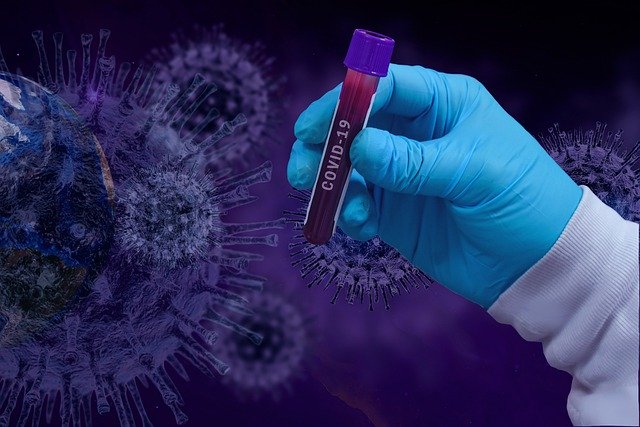
    Image by hakan german from Pixabay

    By Dr. Garrey Michael Dennie, Guest Contributor

    In the late 60’s and early 70’s the polio virus swept through St. Vincent in waves of fearsome fury. In Rose Place, it killed eight year old Sandra Culzac. As a child in Rose Place I still remember the fear as the invisible and lethal enemy stalked our homes, broke the bodies of children, permanently crippled their lives, and brought death to our doors. The virus was merciless. Chance and chance alone decided who lived, who died, who became crippled, and who escaped the deformities that polio inflicted on our young bodies.

    Today, no Vincentian child has to fear polio. Indeed with a few exceptions, the threat that polio posed to earlier generations of children all over the world is no more. And the reason for this is simple: mass vaccination campaigns have virtually eradicated polio from the world.

    In fact, what is true for polio is even more so for another killer virus: small pox. In the 20th century alone, small pox killed more than 300 million people worldwide. Indeed in 1492 when Columbus and the Spaniards who followed him arrived in the Americas, they brought with them small pox and a cocktail of other lethal viruses. But small pox was the single greatest instrument of conquest that destroyed indigenous civilizations. With no immunity to small pox, indigenous people died in the millions.

    Today, however, small pox is gone, utterly and completely eradicated from the face of the earth. Again, the reason is simple: mass vaccination campaigns removed from the planet a lethal virus that had slaughtered humanity for thousands of years.

    The Covid-19 pandemic that currently afflicts us certainly bears deep comparison to these great viral killers of the past. It has shattered economies, destroyed international flights, shuttered borders, infected more than 100 million people, and killed more than two million. In the face of such immense suffering some people have sought refuge in their faith. And faith indeed can provide comfort in times of great stress.

    Others, however, have sought to traffic and profit from legitimate human fears by promoting false cures to the fearful and the uninformed. And more dangerous still, some have embraced a Cult of Death, essentially declaring that our most treasured medical research institutions and our strongest scientific minds cannot be trusted to guide us through this medical crisis that currently engulfs the world. They would therefore have us do nothing as Covid-19 rages around us killing and maiming at will.

    However, we should be clear on this point: the defeat of SARS 2, the virus that causes Covid-19 is absolutely certain. We do not know the precise time when we would declare victory. But we do know the manner by which that defeat would be administered: the mass vaccination of the world’s population against the SARS 2 virus would immunize the vast majority of the people against contracting Covid-19.

    It is highly unlikely that every person on the planet would take the vaccine. But that is not necessary. The key concern is that the global population achieves what immunologists describe as herd immunity. In the instance of Covid-19 it simply means that if around 85 percent of the population in every country is vaccinated that would squeeze out the opportunity for the virus to replicate. Without the opportunity to replicate, the virus ultimately faces extinction.

    Vaccines defy viruses by denying them the capacity to seize our cells and transform them into viral replicators. They do this by a simple trick. They expose our bodies to a dead virus or a protein from the virus that cannot harm us. Our immune system interprets this as a dangerous assault against us and goes into full combat mode producing antibodies designed to destroy the invasive pathogen. And this is where the magic happens. Our immune system remembers this attack and the next time it meets the virus it is fully prepared to repel it from our system.

    Our scientists have known this for more than 200 years. We produced the first vaccines in the 1790s. And over the next 200 years we continued to perfect our capacity to make vaccines. We therefore stand today in a world of extraordinary medical, scientific, and engineering expertise without parallel in the past 200 years of medical history.

    The proof of this is staring us in the face. For whereas the virus has already killed more than two million people in just one year, in the USA alone, American health officials have administered more than 50 million vaccinations and not a single person has died from any vaccine. Indeed, in Israel, more than 700,000 people took the Pfizer and Modena vaccines and 99.95 percent of those vaccinated have failed to contract the virus. These numbers are simply incredible, a testament to the intellectual firepower we have brought to bear against the virus. In fact, what we do know is that although the vaccines vary in their capacity to prevent illness, every single one of them prevents an infected person from dying of Covid-19. These numbers clearly tell us that after a year of tears, the reign of Covid-19 should come to a swift end.

    Some caution, however, is due. The struggle to defeat this virus might take longer than it should because of scientific illiteracy. Anti-vaxxer communities proliferate on the Internet and they have used the Internet to propagate lies, scams, and deceit about the vaccines. Their ignorance of medical history guarantees that they will continue to direct their misinformation at the ranks of the uniformed.

    Quite frankly, anti-vaxxers lie, and people die. For the government of St Vincent and the Grenadines, however, whose first duty is to honour the scientific and historical truths in the fight against Covid-19, the way forward should be plain: vaccinate now, vaccinate everyone, and crush this virus. It is a war we must win.

    Dr. Garrey Michael Dennie is an Associate Professor of History at St. Mary’s College of Maryland.

    The views and opinions expressed herein are solely those of the guest author and are not necessarily representative of those of the Caribbean Trade Law & Development Blog.

  • COVID-19’s Impact on Micro, Small and Medium-Sized Enterprises (MSMEs)

    COVID-19’s Impact on Micro, Small and Medium-Sized Enterprises (MSMEs)

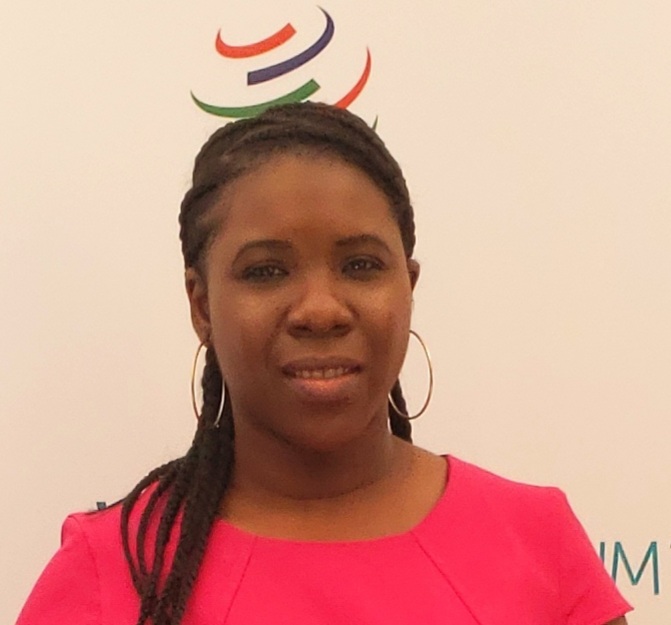
    Deah James, B.Sc., M.Sc.

    Deah James, Guest Contributor

    The World Health Organization (WHO) classified the COVID-19 outbreak as a global pandemic in March 2020. To date, there have been over 8 million persons infected and over 400, 000 deaths worldwide as a result of the virus. Despite it being a health crisis, COVID-19 has not only taken a toll on the persons it has infected but on businesses and economies on a whole.

    In St. Vincent and the Grenadines, the effects of the virus have been no different. Most of our businesses can be categorized as micro, small and medium enterprises. And it is these businesses that are said to have been hit the hardest by the fallout from the pandemic.

    Even though they can be agile in response to the changing world, MSMEs are also susceptible to shocks such as COVID-19. This is because these businesses are vulnerable by nature. Access to finance is a primary obstacle.   

    According to the World Trade Organization (WTO), many of these enterprises depend on international trade. This is because they either export their products through direct or indirect channels or because they import the inputs needed to manufacturer their products to sell on the local markets.

    These types of businesses also account for a large portion of the employment in a country and are a major employer of women and youth.

    With the disruptions in the supply chain caused by unprecedented lockdown measures enacted to contain the spread of COVID-19, MSMEs are finding it increasingly difficult to find new suppliers, deal with price increases that have occurred and also the massive drop in demand for products in most sectors.

    To help business owners, governments have created stimulus packages with the focus on assisting with the effects of COVID 19. One such initiative by the Government of St. Vincent and the Grenadines is the expansion of the existing Promoting Youth Micro-enterprises (PRYME) programme. In addition support for business include loan forbearance, utility bill moratorium, VAT and Tax waivers and extension on filing income tax returns and for payment of motor vehicle licenses and liquor licenses.

    To show the value placed on Micro, Small and Medium Enterprises, the United Nations in April of 2017 adopted resolution 71/279 which designated June 27 as Micro, Small and Medium- sized Enterprises Day. This was done to raise public awareness of their contribution to sustainable development and global economy.

    For this year’s celebrations, the International Trade Centre (ITC) will host a WebTV programme on Wednesday June 24th entitled COVID-19: The great lockdown and its impact on Small business.

    Deah James, B.Sc., M.Sc., is an international trade and development professional with keen interest and experience in the areas of trade facilitation, sustainable development, regional integration, aid for trade and financing for development.    

    Photo credit: Pixabay

  • Webinar: Recovering and Transforming our Economies – New Legal, Regulatory and Trading Imperatives

    Webinar: Recovering and Transforming our Economies – New Legal, Regulatory and Trading Imperatives

    Today I am pleased to be moderating Webinar III in the G.O. Lynch Consultancy Inc and Associates series entitled “Post-COVID 19 Recovery & Rebuilding in the Face of Natural and Manmade Disasters“.

    Join me and the all-star panel today, June 17th at 11:00 am (EST) for our panel entitled “Recovering and Transforming our Economies – New Legal, Regulatory and Trading Imperatives” where we explore the legal, regulatory and trading imperatives as we seek to rebuild Caribbean and other small island economies post-COVID and in the face of natural and manmade disasters.

    Registration

    Register at the link here:

  • COVID-19: The Push to Conflict

    COVID-19: The Push to Conflict

    Renaldo Weekes, Guest Contributor

    Renaldo Weekes

    The novel Coronavirus disease (COVID-19): a common threat that has united the world in unprecedented ways. As the pandemic rages on, however, some are getting anxious and want answers. United States (US) officials have accused China of mismanaging the coronavirus response and allege that it originated in a Chinese lab. China responded with allegations that the US military planted the virus in Wuhan. 

    The possibility for escalation is nigh as US President Donald Trump reportedly suggested that China may be punished for its alleged impropriety through new tariffs, sanctions and the lifting of sovereign immunity. As the US seeks to punish China, one wonders what the effects may be on the wider world.

    The Global Economy

    The tariffs being floated by the Trump administration as possible punishments will stifle the global economy since, being the world’s two largest economies, the US and China are very much intertwined in the global economy. Consideration must also be given to how China will retaliate to the tariffs.

    Tariffs, essentially being a tax on imported goods, will make goods more expensive at a time when many businesses and consumers cannot absorb such a cost. What little spending power exists will diminish, further pushing the economy downward. The global economy’s recovery rate will be restricted as supply chains will slowly regain traction amidst low numbers of buyers and sellers. Shocks will hit small open economies especially hard as they greatly depend on foreign production that travels through the US. It is still left to be seen if the US will follow through with such plans however.

    Sanctions have more versatility in the sense that they can be applied to certain businesses or individuals within the US banking system. This is effective because the US has a long reach in the world’s financial system. However, depending on where those sanctions are applied, there could be some disruption in the global supply chain because, as mentioned earlier, China is intertwined in the global system. Again, small open economies that regularly do business with China will be in trouble.

    The lifting of state sovereign immunity allows American citizens and the American Government to sue China for COVID-related issues. Removal of sovereign immunity may have at least two effects. First, it allows the US wants to fight China with its own rules by allowing lawsuits. Secondly, if state-owned or state-related Chinese businesses in US jurisdictions are entangled in lawsuits, China will have to decide if staying in the US is worth the retaliatory lawsuits or risk relocation which may cause disruptions in supply chains.

    Political

    Considering the implications of this clash to the wider world, both parties have been working to push their narrative to their partners for support. This puts a number of countries with mutual relationships in an awkward position as they must now play chess with their words and actions which, as seen through Australia and the European Union (EU), is quite difficult. 

    Australia has, just like the US, called for an investigation into the virus’s origins but has stopped short of saying the virus came from a lab. To China, not overtly opposing those claims is implicit support of the US’ claims and in response, Chinese Ambassador to Australia Cheng Jingye suggested a possible shift in trade relations between the two countries. Acting on those words, China has suspended beef imports from Australia. This underscores China’s willingness to use its economic might against countries politically opposed to it. Such tactics may hurt Australia as China accounts for 36 percent of Australia’s total annual exports. Though both countries claim that the issue is separate from the pandemic, it is hard to defend that point considering the veiled threat laid by the Chinese ambassador. One must ask whether it is possible to separate the two incidents or if it would have happened but for the call for an investigation.

    The EU has been under the spotlight for editing a report related to disinformation campaigns by China to appease China and for allowing China to censor an opinion piece written by the EU’s ambassador to China. The EU’s move is seen as bending more toward China by editing its report and allowing China to censor its piece. Added to this is reporting that the European External Action Service (EEAS), responsible for the bloc’s foreign policy, has been rife with problems related to each EU member state wanting to follow its own agenda. This suggests no real coordinated effort toward handling the issue and a weakening of the EU’s position as this may, theoretically, give China an opening to further cement this divide.

    Despite what may appear to be the case, EU member states have stood up to China. It is reported that China attempted to encourage German Government officials to make positive spins on how it has been handling the virus but it was quickly shot down. France hastily summoned its Chinese ambassador when a Chinese diplomat wrote a piece criticising Western countries on their treatment of the elderly. President of France Emmanuel Macron and German chancellor Angela Merkel have both called for investigations into the origins of the virus but, similar to Australia, have not claimed that the virus came from a lab. Joined with that is the EU’s support of the US’ push for an investigation into the coronavirus’s origins at the WHO general assembly. These examples show that the EU is not necessarily bowing to China. Considering the historically friendly relationship between the two, the EU would not have the same motivation as the US to immediately dismiss China.

    Even the World Health Organisation (WHO)?

    The WHO itself has been dragged into the fray by the US as the Washington has suspended its WHO funding due to accusations that that UN agency facilitated China’s hiding of coronavirus statistics. Such an accusation suggests that the WHO abdicated its duty in order to appease China. The US’ actions also serve to weaken the WHO’s ability to help the world at large; more so those who cannot help themselves. Allowing a spat to spill over into the UN agency for health during a pandemic is seen by many critics as a way for the Trump administration to deflect any blame it is receiving for its handling of the virus domestically; especially since a Presidential election is due this November.

    Conclusion

    COVID-19 has led to a pandemic that took the world by surprise. Most people did not think that a virus in China would spread to the world. Nevertheless it has and people’s magnanimity has shown through like never before. However, it has devolved into a blame game between the world’s most powerful countries about how the pandemic started, capturing many other countries in the fray. But for the pandemic, would the US and China be in this situation? Probably not, but here we are. The only real way for this situation to stop is if the US recants or if China admits fault. At this point, neither seems likely. One can only hope that the war of words between the two countries does not escalate to a point of no return that drags the rest of the world down as a result.

    Renaldo Weekes is a holder of a BSc. (Sociology and Law) who observes international affairs from his humble, small island home. He has keen interest in how countries try to maneuver across the international political and legal stage.