Tag: trade

  • President-Elect Trump’s Trade Policy Proposals: A Quick Look

    President-Elect Trump’s Trade Policy Proposals: A Quick Look

    Alicia Nicholls

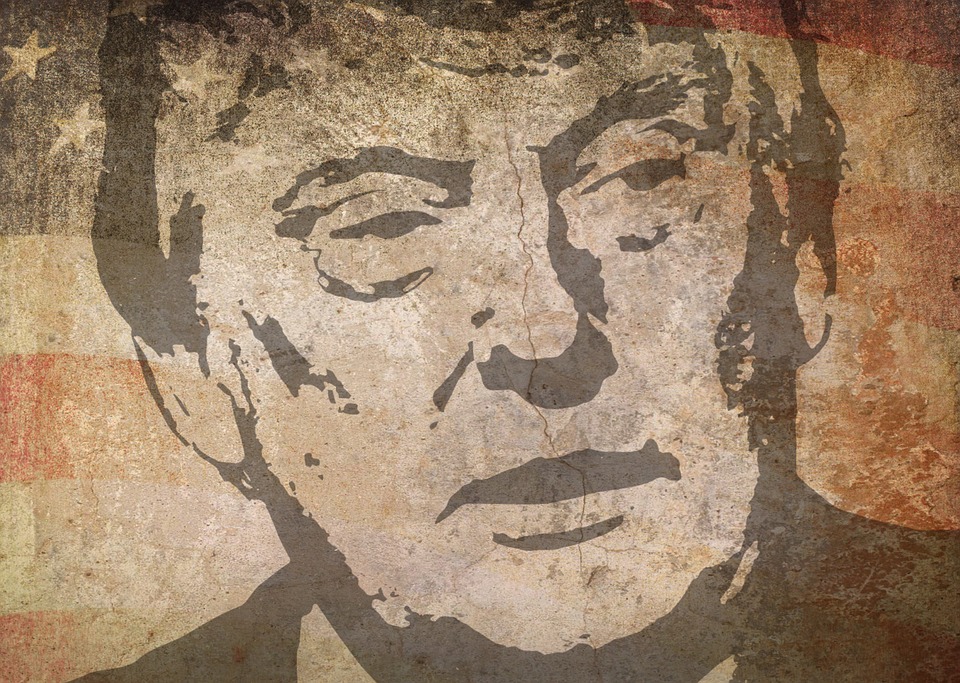
    Few other aspects of President-elect Donald Trump’s proposed policy platform have attracted as much attention and scrutiny as have his trade policy proposals. In often colourful language, Mr. Trump has charged that current United States (US) trade policy is disadvantageous to American workers and interests and that other countries are taking advantage of the land of the free.

    In October before the vote, Mr. Trump outlined his broad trade policy proposals in his first 100 days action plan to “Make America Great Again”. The guiding principle of Mr. Trump’s trade policy is to protect American workers and address the country’s trade deficit. The President-elect has proffered the plan as a contract between himself and the American voter. Many of these proposals he had previously outlined in his Trade Policy speech on June 28, 2016.

    Here are the broad policy guidelines of President-elect’s Trump trade policy according to his first 100-days plan in a nutshell:

    1.Renegotiate or Withdraw from NAFTA

    Mr. Trump has called the trilateral North American Free Trade Agreement (NAFTA), consisting of the US, Canada and Mexico “the single worst trade deal in history”. He has vowed to renegotiate it to make it better.

    Truth be told, NAFTA has been controversial from its inception. The Agreement was negotiated and signed under Republican president, George H.W. Bush, in 1992, but the task of pushing for congressional approval and signing it into US law was left to his successor, Democratic president, Bill Clinton in 1993. In 1992, even before the agreement came into effect, then independent presidential candidate Ross Perot made his famous “giant sucking sound going south” quotation by which he argued that NAFTA would result in the relocation of American companies (hence American jobs) to Mexico where labour is cheaper and there are less environmental and workers’ protections. Back in the 2008 presidential campaign then Senator Obama made a campaign pledge that he would renegotiate NAFTA.

    Views on NAFTA remain divided to this day. Besides its criticism as an American job killer, NAFTA’s Chapter 11 (Investment Chapter) has seen all three countries paying out large sums of money in compensation to investors who utilised the investor-state dispute settlement (ISDS) provisions.

    But has NAFTA been as bad for the US economy as Mr. Trump claims? A report by the Congressional Research Service in 2015 found it is not so simple:

    In reality, NAFTA did not cause the huge job losses feared by the critics or the large economic gains predicted by supporters. The net overall effect of NAFTA on the U.S. economy appears to have been relatively modest, primarily because trade with Canada and Mexico accounts for a small percentage of U.S. GDP.

    It is not yet clear what aspects of the Agreement Mr. Trump intends to re-negotiate or how he intends to go about this.

    Mr. Trump has also floated the option of withdrawing from NAFTA if Mexico and Canada do not agree to renegotiate. Under Article 2205 of the NAFTA Agreement, a State may withdraw from NAFTA six months upon giving written notice of same. It will be uncharted territory as no state has withdrawn from NAFTA before and it would mean that trade between the US and Canada and Mexico, its second and third largest bilateral trading partners (by merchandise trade) would be left in a state of uncertainty. This would be disadvantageous to American businesses which conduct trade with Canada and Mexico.

    2. Withdrawal from the Trans-Pacific Partnership

    Equating the Trans-Pacific Partnership with “rape” and calling it a “deathblow for American manufacturing“, Mr. Trump has stated that he will withdraw the US from the agreement.

    The TPP is a mega free trade agreement involving twelve Pacific Rim countries. The US signed the Agreement in February 2016 but ratification requires Congressional approval which it is yet to receive. After Mr. Trump’s election, President Obama announced he was suspending his efforts to win congressional approval of TPP before Mr. Trump assumes office. A significant amount of popular, political and civil society resistance to TPP has been against the secrecy in which it was negotiated and its ISDS and intellectual property provisions.

    Since the TPP has not been ratified by the US, it is probable that President Trump may simply not bother to let it be ratified, which means it will die a natural death as far as the US is concerned.

    3. Direct his Secretary of the Treasury to label China a currency manipulator

    According to US Census Bureau data as at September 2016,  China is now the US’ largest  bilateral trading partner in terms of the total volume of merchandise trade between the two countries. The US has a large trade deficit with China ($79.3 bn in exports to China versus $337 bn in imports year to date, according to US Census Bureau data), something which Mr. Trump has constantly criticised during the campaign.

    Another issue Mr. Trump has raised is “currency manipulation” by China. In a Wall Street Journal op-ed in November 2015, Mr. Trump wrote that “the worst of China’s sins is not its theft of intellectual property. It is the wanton manipulation of China’s currency, robbing Americans of billions of dollars of capital and millions of jobs”.

    So what is this currency manipulation business? China’s currency exchange rate policy uses a trading band, that is, the exchange rate  of the Renminbi (China’s official currency) is allowed by the People’s Bank of China to appreciate or depreciate only 2% against a basket of currencies, including the US dollar. It is not uncommon for governments to intervene to influence their exchange rates and it is a country’s sovereign right to determine its own exchange rate regime. The only possible WTO guidance on the subject is in the General Agreement on Tariffs and Trade (GATT), namely Article XV(4) which is  quite vague.

    The main argument made against China’s exchange rate regime by the US is that the Renminbi’s undervaluation gives China an unfair trade advantage as it makes Chinese exports more price competitive than American goods. Bear in mind that large bilateral trade deficit we discussed earlier. It should be noted that this concern is not unique to Mr.Trump as in the 2012 presidential election, former Massachusetts Governor Mitt Romney, the then Republican nominee, promised to label China a currency manipulator. Criticism of China’s intervention in the currency market by US administrations is not new, including under the Obama Administration.

    In highlighting the perceived injustices of China’s actions, Mr. Trump noted in the same op-ed that “[t]hrough manipulation of the yuan, the Chinese government has been able to tip the trade balance in their direction by imposing a de facto tariff on all imported goods.

    The President-elect has stated that he would impose a countervailing 45% tariff on Chinese imports because of China’s “currency manipulation. Many commentators have warned that such an action would likely trigger a trade war with the US’ most important bilateral trading partner, to which Mr. Trump promptly quipped that the US was already in a trade war with China.

    It should be noted that in its Article IV Report of 2015 the IMF noted that “our assessment now is that the substantial real effective appreciation over the past year has brought the exchange rate to a level that is no longer undervalued”, although in the 2016 report it noted “[a]fter appreciating 10 percent in real effective terms through mid-2015, the renminbi has depreciated some 4.5 percent since then and remains broadly in line with fundamentals”.

    4.Direct the Secretary of Commerce and U.S. Trade Representative to identify all foreign trading abuses

    Mr. Trump has promised that he will direct the Secretary of Commerce and the U.S. Trade Representative “to identify all foreign trading abuses that unfairly impact American workers and direct them to use every tool under American and international law to end those abuses immediately”.

    Defending her trade interests against perceived unfair trade practices by other states is an American tradition, including under the Obama administration, and would be nothing new. In the Caribbean we have had an unfortunate taste of this with the banana disputes successfully brought by the US and Latin American countries on behalf of big US banana producers against the European Union over its preferential import regime for bananas from African, Caribbean and Pacific (ACP) countries.

    Indeed, if one looks on the WTO’s website, one can see a long list of WTO disputes brought by the US as a complainant against other WTO members. More specifically, 19 of those cases the US has brought against China.

    5.Ending Offshoring by establishing tariffs

    Mr. Trump has promised to “discourage [American] companies from laying off their workers in order to relocate in other countries and ship their products back to the U.S. tax-free”. To this extent, he has indicated on several occasions his willingness to impose a 35% tariff on goods coming into the US which are produced by American companies which had moved offshore. This promise in particular appealed to blue collar workers in Rust belt states where manufacturing jobs have declined as some American manufacturers have either offshored or outsourced aspects of their production to more cost effective locales, including Mexico and Asian countries.

    Critics of Mr. Trump’s plan to place a tariff on those imports argue that the tariff will raise prices for American consumers and negatively impact the working class. Additionally, there appears to be some trend of reshoring, that is, relocation by American manufacturers of plants back to the US, although this Deloitte report notes that it is too early to tell whether this is a permanent trend.

    6. Other Trade Statements made on the Campaign Trail

    In his 7-point plan on trade, Mr. Trump also promised to “appoint tough and smart trade negotiators to fight on behalf of American workers” to ensure America signs deals which benefits American jobs. It is not clear what criteria will be used to select these negotiators. Mr. Trump also supports the continuation of the US’ long-standing trade and economic embargo against Cuba. Although only Congress can end the embargo, President Obama had through a series of executive orders loosened some of the restrictions since 2014 in hopes of a future normalisation in US-Cuba relations. It is likely that Mr. Trump will reverse those orders.

    Some of President-elect Trump’s trade policy proposals such as aggressively defending America’s interests against unfair trading practices and challenging China’s perceived currency manipulation are already mainstream to existing US policy. What is different, however, is his rhetoric against free trade agreements which he views as “job-killing” and his tariff-happy rhetoric. I have already discussed the implications of this for US-Caribbean relations in a previous post.

    His zero-sum approach to trade policy has been strongly criticised in many quarters as being protectionist and anti-growth. For instance, an empirical study by the Peterson Institute for International Economics had found that if implemented, Mr. Trump’s trade proposals “could unleash a trade war that would plunge the US economy into recession and cost more than 4 million private sector American jobs”.

    If he does decide to implement tariffs on countries deemed to be “unfair”, this is also likely to lead to more WTO trade disputes as countries may decide to take pre-emptive or retaliatory action against US goods in order to protect their own interests. Such an outcome from Mr. Trump’s proposals are particularly concerning in the context where global trade growth is sluggish and there are concerns about creeping protectionism, which has prompted some concern expressed by IMF and WTO officials.

    As evidenced by his electoral win, Mr. Trump’s protectionist promises successfully appealed to blue collar workers  in the “Rustbelt” states and is symptomatic of the anti-trade populism which has been sweeping through western countries. However, the implementation of some of his more controversial proposals might not be as simple as one might think. Needless to say, some of these proposals, if implemented, will likely be judicially challenged in the domestic courts by American businesses which are adversely affected, in the WTO dispute settlement system by affected countries. Mr. Trump has hinted that he may withdraw the US from the WTO, when the suggestion was made that some of his proposals might be contrary to WTO rules if implemented.

    The specifics of the President-elect’s policy proposals have not yet been elaborated. It is also not yet known who Mr. Trump will pick to lead his trade team. As trade is high on the incoming President’s agenda, one can expect to see more elaboration of his trade proposals in the coming weeks and after he takes office in January 2017.

    Alicia Nicholls is a trade and development consultant with a keen interest in sustainable development, international law and trade. You can also read more of her commentaries and follow her on Twitter @LicyLaw.

  • US eases some restrictions on Cuban imports for personal use

    US eases some restrictions on Cuban imports for personal use

    Alicia Nicholls

    On October 14, 2016 the United States Department of Treasury’s Office of Foreign Assets Control (OFAC) and the Department of Commerce’s Bureau of Industry and Security (BIS) announced further amendments to the Cuba Sanctions Regulations. These changes became effective today (October 17, 2016) and include not just an ease on restrictions of Cuban imports, including alcohol and cigars, for personal use, but also facilitation of joint Cuba-US medical research and a variety of other trade measures.

    Since the early 1960s, successive US governments have imposed an illegal economic, commercial and financial embargo on Cuba which is not only contrary to international law but has hindered the country’s economy development. In December 2014 US President Barack Obama outlined a new direction to normalise Cuba-US relations. Efforts at normalisation since 2014 have included, inter alia, the removal of Cuba from the US State Sponsors of Terrorism List in May 2015, the re-opening of embassies in July 2015 and the progressive relaxation of some sanctions.

    However, US congressional action is needed to reverse the embargo. The embargo has been widely condemned by the international community. On October 26th, the UN General Assembly will be called on for the 25th consecutive year to vote on a Cuba-introduced resolution calling for an end to the five-decade long embargo.

    Current Amendments to Cuba Sanctions Programme 

    The current tranche of amendments to the Cuban Assets Control Regulations (CACR) and the Export Administration Regulations (EAR) cover the following three broad areas:

    • Expanding opportunities for scientific collaboration and access to medical innovations
    • Facilitate increased humanitarian support, grant opportunities and improve Cuban infrastructure
    • Bolster trade and commercial activities and the growth of Cuba’s private sector

    Some of the specific amendments are as follows:

    • Authorisation of joint-medical research with Cuban nationals for non-commercial and commercial research
    • Importation , marketing, sale and distribution in the US of FDA-approved Cuba-origin pharmaceuticals
    • Persons who engage in those above activities will be allowed to open and maintain bank accounts in Cuba for use in conducting authorised business
    • Authorisation of grants, scholarships and awards to Cuba or Cuban nationals for scientific research and religious activities
    • Authorisation of persons subject to US jurisdiction to provide services to Cuba or Cuban nationals relating to developing, repairing, maintaining and enhancing certain Cuban infrastructure to directly benefit the Cuban people
    • Removal of monetary value limitations on what authorised travelers may import from Cuba into the US as accompanied luggage. These include Cuban alcohol and cigars. However, the imports must be for personal use and normal limits on duty and tax exemptions will apply.
    • BIS will generally authorise exports of certain consumer goods that are sold online or through other means directly to eligible individuals in Cuba for their personal use
    • Expanded general license by OFAC authorising persons subject to US jurisdiction to enter into certain contingent contracts for transactions currently prohibited by the embargo, subject to conditions.
    • OFAC authorisation of importation into the US or a third country of items previously exported or re-exported to Cuba under a BIS or OFAC authorisation

    Comprehensive information on all of the amendments may be obtained via the US Treasury Department’s website here.

     Alicia Nicholls, B.Sc., M.Sc., LL.B. is a trade and development consultant with a keen interest in sustainable development, international law and trade. You can also read more of her commentaries and follow her on Twitter @LicyLaw.

  • G20 Leaders’ Hangzhou Summit: Trade and Investment Takeaways

    “Our growth, to be strong, must be reinforced by inclusive, robust and sustainable trade and investment growth.”  –G20 Leaders’ Communiqué 2016

    Alicia Nicholls

    Against the backdrop of an uneven global economic recovery, subpar global trade and investment growth, trade disputes and the recently held Brexit referendum vote in the UK, trade and investment were top of mind for world leaders at the just-concluded Eleventh Group of 20 (G20) Summit held on September 4-5, 2016  in Hangzhou, China.

    The G20 is the premier international forum for cooperation on global economic governance and its members account for 86 percent of global GDP and 78 percent of global trade. China currently holds the G20 presidency.

    With the goal of providing political leadership to ensure “inclusive, robust and sustainable trade and investment growth”, G20 leaders endorsed the decisions taken by G20 trade ministers at their Trade Ministers Summit held in Shanghai in July this year. Among the key outcomes of that July meeting were the Terms of Reference of the new G20 Trade and Investment Working Group, the G20 Strategy for Global Trade Growth and the G20 Guiding Principles for Global Investment Policymaking.

    Key Trade and Investment-Related Aspects of the G20 Leaders’ Communiqué

    Below are some of the key trade and investment-related takeaways from the G20 Leaders’ Communiqué:

    • Reiteration of G20 leaders’ recognition that strong growth must be reinforced by “inclusive, robust and sustainable trade and investment growth”;
    • Commitment to strengthening G20 trade and investment cooperation;
    • Commitment to a “rules-based, transparent, non-discriminatory, open and inclusive multilateral trading system” with the World Trade Organisation (WTO) playing a central role;
    • Commitment to continuing the post-Nairobi work. It is instructive that the Doha Round was not mentioned, confirming that the Doha Development Round is effectively dead despite disagreement among WTO members on the round’s future in the communique to the WTO Nairobi Ministerial held December 2015;
    • G20 leaders also reiterated their support for the inclusion of new issues into the WTO negotiating agenda, another area on which WTO members saw strong divergences of opinion in the aftermath of the Nairobi Ministerial. The G20 leaders  noted that “a range of issues may be of common interest and importance to today’s economy, and thus may be legitimate issues for discussions in the WTO, including those addressed in regional trade arrangements (RTAs) and by the B20″;

    • Commitment to ensure their regional agreements and bilaterals complement the multilateral trading system;
    • Commitment to ratify the Trade Facilitation Agreement by the end of 2016;
    • Indicated their support for the importance of the role that WTO-consistent plurilateral trade agreements “with broad participation” can play in complementing global liberalization initiatives and mentioned the Environmental Goods Agreement as an example;
    • Reiteration of their opposition to protectionism on trade and investment “in all forms” and reiterated the commitments to standstill and rollback protectionist measures till the end of 2018 and to support the work of the WTO, UNCTAD and Organisation for Economic Development (OECD) in monitoring protectionism;
    • In recognition of the rising anti-globalisation and anti-trade sentiment in many western countries, G20 leaders “emphasize[d] that the benefits of trade and open markets must be communicated to the wider public more effectively and accompanied by appropriate domestic policies to ensure that benefits are widely distributed”;
    • Endorsed the G20 Strategy for Global Trade Growth, as well as the G20 Guiding Principles for Global Investment Policymaking which “will help foster an open, transparent and conducive global policy environment for investment”. These were decided at the G20 Trade Ministers Meeting held in July;
    • Indicated their support of policies encouraging firms of all sizes (particularly women and youth entrepreneurs, women-led firms and SMEs) to take full advantage of global value chains (GVCs);
    • Although China was not specifically identified, G20 leaders noted that global steel oversupply was a global issue requiring a collective response and increased information-sharing. They called for the formulation of a Global Forum on steel excess capacity to be facilitated by the OECD with the active participation of G20 members and interested OECD members.

    For the tax-related aspects of the communiqué by FRANHENDY Attorneys, please visit  here.

    The full communiqué may be read here.

    Alicia Nicholls, B.Sc., M.Sc., LL.B. is a trade and development consultant with a keen interest in sustainable development, international law and trade. You can also read more of her commentaries and follow her on Twitter @LicyLaw.

  • WTO and WB call for papers on “TRADE AND POVERTY: A COLLECTION OF CASE STUDIES”

    The WTO and the World Bank Group issue a call for papers for a joint edited volume on trade and poverty. Following their joint report released in June 2015, “The Role of Trade in Ending Poverty”, the WTO and the World Bank Group have committed to further work on this area.

    Authors are invited to submit before 15 September 2016 a comprehensive abstract or a draft paper for consideration to this project. Papers should deal with the topic “Trade and Poverty issues”.

    For further information, please see more here