Tag: trade

  • Anti-trade Populism and its Implications for Developing Countries

    Alicia Nicholls

    Trade, it seems, is a dirty word these days. It does not take much more than a cursory scan of newspaper headlines to observe the growing prevalence of anti-trade, anti-immigration, anti-globalisation rhetoric which has infused the US Presidential Campaign and which was one of the factors which led 52% of Britons to vote for the UK to withdraw from the European Union.  Coupled with a continued slowdown in global trade growth, the World Trade Organisation (WTO) has recently warned about the “worrying rise in the rate of new trade-restrictive measures” initiated by its members in the review period compared to the previous period. These developments beg the question – what does this growing anti-trade, anti-globalisation populism mean for developing countries, particularly small states in the Caribbean which rely so heavily on trade with major countries to sustain their small open economies?

    Why the Anti-trade/Anti-globalisation turn?

    Neoliberalism, the philosophic orientation of developed countries which extolled the orthodoxy of the free market and free trade, has dominated mainstream development discourse since the 1980s. During the early 1990s developing countries which underwent structural adjustment programmes under the International Monetary Fund (IMF)  and the World Bank (WB) were forced to adopt market reforms, including trade liberalisation, privatisation and deregulation which were seen as the necessary medicine for an ailing economy. These policy prescriptions came to be known as the “Washington Consensus”.

    Neoliberal ideology pushed for the removal of restrictions on not just the flow of goods and services, but also on the flow of people and capital across borders, facilitating greater integration and interdependence among states. Not everyone bought into the ideology. Most Latin American countries resisted for as long as they could. But by the time of the fall of Soviet Union and of the competing communist ideology, it seemed that in the words of Margaret Thatcher “There is no Alternative” to the free market.

    To be sure, populist hostility to trade and globalisation in some segments of the developed world is not a novelty. The reader may recall the 1999 anti-globalisation protests at a WTO meeting in Seattle, Washington (US) as an example. However, anti-trade and anti-globalisation populism has attracted support in policy circles in the post-2008 era for several reasons. Some of it is linked, of course, to the usual suspects of xenophobia, nativism and other phobia – the fear that the homeland is being taken over and ruined by foreign products and foreign people, as well as concerns over terrorism. But this only tells part of the story.

    The other part is disenchantment with the premise of neoclassical economics that removing the hand of the state in the economy will improve the welfare of consumers, promote efficient allocation of resources and create economic growth. Many no longer view this to be true. First, there is greater public concern in OECD countries over levels of income inequality, wage stagnation and unemployment in spite of liberal economic policies. There is the increasing opinion that the free market and free trade are not working for everyone, with gains being confined to the wealthy and multinational companies.

    There is the belief, not entirely justified, that free trade is costing domestic jobs and industry. Across the pond in the UK for instance, a major plank of the Leave platform was based on stopping immigration from poorer European countries which has been blamed for taking UK jobs and threatening the traditional British way of life. In regards to free trade agreements, much of the concern is over what is seen as provisions which restrict governments’ regulatory space in areas such as public health and the environment.  The net result is a strong populist backlash which has reinvigorated the rise of right wing, nationalist parties which advocate closing off borders and erecting barriers and renegotiating free trade agreements, while mainstream parties have also sought to pander to this populist fervour.

    To varying extents both major candidates in the US presidential campaign have sought to piggy back on this anti-trade populism by making trade a central part of their campaigns in a way that has not been seen in a US presidential election for a long time. Both candidates have aimed their darts directly at free trade agreements such as the North American Free Trade Agreement (NAFTA) and mega-regional trade agreements (MRTAs) like the Trans-Pacific Partnership Agreement. Both candidates have voiced their desire to renegotiate these agreements. Mr Trump has gone further by promising to impose tariffs on Chinese goods and taxes on American companies which relocate to lower cost jurisdictions, to ban the immigration of Muslims and build a purported Mexico-funded wall along the entire border between the US and Mexico. True to his “Make America Great Again” slogan, Mr. Trump has not only hailed the Brexit vote in the UK as the British people taking back their economy but has noted that it is time for America to do the same.

    Implications for Developing Countries

    So what does this growing anti-trade/anti-globalisation populism have to do with developing countries like those of the Caribbean? After all, Caribbean countries remain on the periphery of global trade and trade policy discourse. Perhaps, thankfully, the Caribbean has not been mentioned in any of the primary debates or on any of the party platforms.  But while Caribbean countries have not been the centre of the trade world since the days of the slave trade, foreign trade remains central to Caribbean countries’ economic livelihood.

    Caribbean countries are largely import-dependent, relying significantly on imported goods, services and capital (especially foreign direct investment). They are also reliant on a narrow range of exports and export markets, rendering them susceptible to any protectionist measures which affect the competitiveness or ease of access of their exports in their major markets. A prime example is the rum issue where US subsidising of rum producers in Puerto Rico and the US Virgin Islands has negatively affected the competitiveness of Caribbean rum in the US market. Many Caribbean countries also benefit from unilateral preferences to the US market under the Caribbean Basin Initiative and the more general, Generalised System of Preferences.  In light of the Republican candidate’s zero-sum approach to trade, buffeted by his assertion that America must win the global competition at all costs, what will be the future of these preferential arrangements, far less, any other trade initiatives which benefit developing countries? Furthermore, any adverse changes in the immigration policies of major western countries will have consequences for the Caribbean diaspora living in those countries.

    In this recent television interview, the US Republican Presidential Candidate has also suggested that he might “renegotiate or pull out” the US from the WTO in the event that any WTO member brings a challenge against his trade policy plans. The prospect of the world’s third largest economy (after China and the EU) pulling out of the WTO has frightening implications not just for the future of global trade rule-making but also for the amicable settlement of trade disputes. There are concerns about the effectiveness of the WTO dispute settlement mechanism for safeguarding the rights of small states, particularly in light of the US-Antigua & Barbuda Gambling case where that small island developing states is still awaiting US compensation. Despite this flaw, the current WTO dispute settlement system facilitates predictability and security in the global trade system by allowing states to hold each other accountable for breaches of WTO rules in a manner that is peaceful and with limited disruption to global trade. If the US and other any other states follow suit by withdrawing from the WTO, this will make it even more difficult for developing countries and undermine the rules-based trading system.

    On a more global level, countries tend to turn inward during periods of crisis, using a wide range of trade policy tools to protect their markets. In 1930 the US government passed 19 U.S.C. ch. 4, otherwise known as the Tariff Act of 1930 or the Smoot Hawley Tariff Act which imposed prohibitive tariffs which some economists blamed for exacerbating the severity of the Great Depression on the US. The global economy is already underperforming and trade growth remains sluggish, which are not welcomed prospects for countries in the Caribbean whose macroeconomic health depend on that of their major trading partners. Christine Lagarde, Managing Director of the IMF, has warned in an interview with the Financial Times that the imposition of new trade barriers could negatively affect the global economy, echoing the WTO’s position that “Members must individually and collectively resist protectionist pressures”.

    Is there a silver lining?

    There is another side to this coin. I believe trade, once well managed, is a powerful tool for development as it allows for cheaper sourcing of inputs, provides opportunities for the sharing of ideas, technology and best practices and promotes competition which benefits consumers. However, the free market orthodoxy, which postulated that open markets at all costs were good, and that the lesser regulation the better, is flawed. I am, therefore, heartened that these precepts are under scrutiny in the public discourse in a way that they have not been in a long time. The longstanding orthodoxy was that neoliberalism was the only way to promote development.

    Many of the arguments now being made in policy circles are arguments which developing countries, in particular small states, have been making about the folly of unmitigated free trade and instead arguing for fair trade. For instance, developing countries have long argued that the comparative advantage argument has been used as justification to keep them as exporters of primary goods, while denying them the trade policy tools which wealthy industrialised countries used to protect their manufacturing industries in the early stages.

    While developed countries were pushing bilateral investment treaties containing provisions which were extraordinarily generous to investors while ripping away governments’ regulatory rights to protect against abuses, developing countries were arguing for greater policy space. Developing countries have also long protested developed countries’ demands to open their markets while developed countries continue to heavily subsidise their own agricultural industries.

    I read with much interest the article by former US Treasury Secretary, Lawrence Summers, in the Financial Times calling for a responsible nationalism. He poignantly argues that “international agreements would be judged not by how much is harmonised or by how many barriers are torn down but whether citizens are empowered”. Perhaps I am cynical but my main fear is that while this rhetoric may be music to our ears, it is not clear whether this new enlightenment has a development ethos or whether it is done mainly as a cloak for nationalist and protectionist purposes by developed countries to the prejudice of developing countries. Judging by the rhetoric on the US election trail, the latter sadly seems more to be the case.

    However, I will try to end on a positive note as I recall again the immortalised words of Margaret Thatcher. It would appear the learned late Prime Minister was wrong and that there is indeed an alternative. In the post-Great Recession era the green shoots of a new theory of how the global economy should operate appears to be taking shape. This new thinking creates space for developing countries to further challenge the neoliberal orthodoxy which developed countries championed for so long in a way that has hitherto been taboo. Developing countries should resist any form of protectionism which seeks to undermine their development gains, while also continue to add their voices to the debate on how trade can be used not as an end in itself but as a conduit for sustainable development which benefits all countries and all peoples and not just a select few.

    Alicia Nicholls, B.Sc., M.Sc., LL.B. is a trade and development consultant with a keen interest in sustainable development, international law and trade. You can also read more of her commentaries and follow her on Twitter @LicyLaw.

  • Turning the Brexit lemon into lemonade for Caribbean countries

    Alicia Nicholls

    In a non-binding referendum on June 23, 2016 the British public by a 52 to 48% margin voted for the United Kingdom (UK) to withdraw from the European Union (EU). Although the UK has not yet triggered Article 50 of the Treaty of European Union (Treaty of Lisbon), there is understandable concern among Caribbean countries about what implications the UK’s possible exit from the EU (Brexit) will have for their relationships with both the UK and EU. While I believe and have written elsewhere that Brexit will pose challenges to the small island developing states of the Caribbean, we need to think strategically and carefully about how we will turn this Brexit lemon into lemonade for our relations with both trading partners. 

    The countries of the Commonwealth Caribbean and the UK have a longstanding relationship. Barbados, for example, was under continuous British rule from 1627 until gaining its independence in 1966 and retains strong diplomatic, historical and cultural bonds which will not necessarily change due to Brexit. Commercial bonds exist as well. The UK accounts for almost 40% of Barbados tourist arrivals and is our largest export market in Europe. According to data retrieved from ITC Trade Map, Barbados exported US $13,879,000 worth of goods to the UK in 2015 but imported US$68,198,000 from that country in the same year, reflecting a merchandise trade deficit in the UK’s favour of US$54,319,000.

    Trade 
    One of the early impacts of Brexit is the depreciation of Sterling against the world’s major currencies, including the US dollar to which most Commonwealth Caribbean countries’ currencies are pegged. At the time of writing, the exchange rate is 1 GBP to $1.31 USD. Weaker Sterling would make UK goods and services cheaper for Caribbean importers. The increase in the importation of British goods would likely widen Caribbean countries’ trade deficits with the UK. However, it will also provide cost savings for local businesses which import frequently from that country and for Caribbean consumers of UK services (e.g: education, travel) in all four modes of services supply.

    Although Caribbean goods and services exports will be more expensive and less competitive to UK importers, one way our exporters could possibly mitigate this is by quoting their British buyers in British pounds. This would eliminate the currency risk for the British importer. The Caribbean exporter could build a small buffer into their pricing to mitigate some of the currency risk on their own end. We also need to use this opportunity to expand beyond the traditional exports to the UK by developing new and underdeveloped services exports such as in the cultural industries, consultancy services, medical tourism and the like.

    Once the UK has concluded its withdrawal from the EU it will cease to be a party to any EU trade treaties, including the CARIFORUM-EC Economic Partnership Agreement. The EPA, which was signed in 2008, provides CARIFORUM countries (CARICOM plus the Dominican Republic) with duty-free, quota-free access to the EU market on the basis of asymmetrical reciprocity – reciprocity which takes into account differences in size between the EU and CARIFORUM. A major value added of the EPA, besides its development component, is the market access concessions it provides for CARIFORUM service providers, particularly under Mode 4 (presence of natural persons), the most restricted mode of services supply.

    Until a withdrawal agreement with the EU has been finalised, the UK will continue to be bound by its obligations under the EPA. However, to safeguard their trade interests within the post-Brexit UK market, Commonwealth Caribbean territories , as part of CARICOM or CARIFORUM, should be proactive not only in monitoring the negotiations between the UK and the EU but also in lobbying for the negotiation of a new trade arrangement with the UK post-Brexit. Australia has already indicated its interest in negotiating a post-Brexit trade agreement with the UK. Although it is conceded that the Caribbean will unlikely be among those priority countries/regions with which the UK seeks to secure new trade deals, other interim arrangements could be found.

    Investment
    Caribbean countries’ existing double taxation agreements (DTAs) and bilateral investment treaties (BITs) with the UK also provide further opportunities to enhance investment promotion efforts in the UK, particularly targeting those UK companies which may be seeking to re-domicile post-Brexit. Commonwealth Caribbean territories like Barbados have many factors which would make it attractive to British companies as a domicile of choice for international business, including a common language (English), the common law legal system, political stability, a well-educated labour force and excellent professional services firms. Caribbean countries should continue to not only promote their attractiveness as a domicile of choice but continue to make reforms which will improve the ease of doing business.

    There is also the opportunity for the private sector to forge closer links with businesses and private sector organisations in the UK and seek out new business opportunities. In this vein, the Caribbean diaspora living in the UK, while an important source of remittance inflows, is a still largely undertapped resource as an export market and source of foreign direct investment.
    Most Commonwealth Caribbean territories do not have traditionally close relationships with most other EU countries. This is the opportunity to expand our level of trade and investment flows with continental Europe under the EPA, as well as continue to widen our DTA and BIT network with these countries. The consensus so far is that nearly 10 years after the signing of the EPA, most CARIFORUM countries have not realised the benefits expected. Simply put, market access does not guarantee market penetration. Sound market research will be needed to identify specific niches within the EU market which Caribbean goods and services providers could tap into. Business support organisations will continue to play an important role in assisting Caribbean exporters in their preparedness to enter the EU market.
    By no means is this article meant to negate or downplay the serious implications that Brexit could have for the Commonwealth Caribbean countries nor does it aim to present an exhaustive list of the opportunities available. What it does argue is that although Brexit does pose challenges for the Caribbean region, we should use it as a catalyst and impetus not only strengthen the already strong bonds we have with the UK, but to expand and deepen our trade and diplomatic engagement with the remaining 27 EU countries with which we are yoked via the EPA.

    Alicia Nicholls, B.Sc., M.Sc., LL.B. is a trade and development consultant with a keen interest in sustainable development, international law and trade. You can also read more of her commentaries and follow her on Twitter @LicyLaw.
  • De-risking and its Foreign Trade Impact in the Caribbean

    De-risking and its Foreign Trade Impact in the Caribbean

    Alicia Nicholls

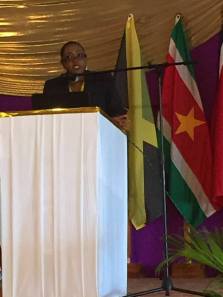
    A few weeks ago I had the honour and pleasure of presenting on the Foreign Trade Impact of De-Risking at the Institute of Chartered Accountants’ (ICAC) 34th Annual Conference in beautiful Belize as part of a panel discussion along with Dr. Trevor Brathwaite, Deputy Governor of the Eastern Caribbean Central Bank (ECCB) and Mr. Filippo Alario, Chief Risk Officer of Belize Bank.

    Alicia Nicholls ICAC 2016 Belize
    Alicia Nicholls  at ICAC 2016 Photo compliments of R Mohammed

    I wish to again express my gratitude to ICAC for the invitation and to all stakeholders and everyone who kindly provided me with information and assisted me in my research.

    Some of the key points from the presentation were as follows:

    • De-risking is a business decision but with serious implications for Caribbean foreign trade.
    • As small open economies, Caribbean countries are highly dependent on foreign trade as evidenced by their high trade to GDP ratios which range between 70-130% of GDP, according to World Bank data.
    • Several Caribbean countries are among the most dependent in the world on remittance-inflows.
    • Bank de-risking threatens the region’s integration into the global trade and financial systems and has implications for economic growth, stability, employment.
    • Disruptions to remittance and FDI flows by de-risking also have poverty alleviation and sustainable development implications.
    • Cross-border payment for goods via wire transfer and remittance sending appear to be the most affected from a trade perspective.

    Several persons  have written me requesting a copy of the full presentation. It is available below:

    ICAC_Presentation_2016_ANicholls(1)

    Alicia Nicholls, B.Sc., M.Sc., LL.B. is a trade and development consultant with a keen interest in sustainable development, international law and trade. You can also read more of her commentaries and follow her on Twitter @LicyLaw.

  • Brexit wins: What possible implications for the Caribbean?

    Brexit wins: What possible implications for the Caribbean?

    Alicia Nicholls

    Last week while I was climbing the Mayan ruins in the beautiful Central American/Caribbean country of Belize, the British people were casting their vote on one of the most important questions regarding the future of their country’s involvement in the global economy. In response to the simple referendum question, “Should the United Kingdom remain a member of the European Union or leave the European Union”, British voters decided that the UK was better off outside of the 28-member bloc. Although I, like many others, expressed doubt that the Leave vote would have been triumphant, the British people by a 52 to 48% margin have decided that leaving the EU is in their best interest.

    In a previous article on this matter, I noted the possible ramifications of this then hypothetical outcome for tourism dependent economies like Barbados which are highly reliant on the British market for tourist arrivals and for real estate investment. The current situation is uncharted territory.

    In the wake of the Brexit vote, financial markets reacted violently while Sterling lost 10% of its value on currency markets within the days following Brexit, the lowest rate since 1985. Bear in mind that most Caribbean countries’ currencies are pegged to the US dollar and any depreciation of Sterling against the dollar makes the region less price competitive to British travellers. The increased volatility in the value of sterling and any slowdown in the British economy could dampen British demand for travel to the region and or reduce their level of spending during trips. It is a situation which tourism officials across the region have been closely monitoring. Moreover, the political uncertainty as Prime Minister Cameron prepares to demit office in October, the possibility of Scottish demands for another independence referendum, as well as the uncertainty over what impact Brexit will have on the UK economy will result in a wait and see approach by investors, which could impact private British investment in the region.

    Against this background of uncertainty and messiness, what we in the Caribbean need to consider is what implication will the UK’s departure from the EU possibly have on our future trade and foreign relations with both the UK and the EU? Of crucial importance will be the possible impact it will have on the CARIFORUM-EU Economic Partnership Agreement, bearing in mind that once the UK officially is no longer a part of the EU CARIFORUM will no longer have preferential access to the UK market.

    The truth is that although the EPA has not yet achieved the potential that it has been hoped to achieve, the EU is second only to the US in terms of its importance as a trading partner for the Caribbean. The main source market in the EU for Caribbean countries is the UK market. Once the UK is no longer part of the EU, Caribbean countries will no longer have preferential access to the UK market for their goods and services. Moreover, market access openings for services trade, particularly under Mode 4 (presence of natural persons) which is currently the most restricted mode, will have to renegotiated as part of any new trading arrangement which the UK decides to establish with Caribbean countries. As the UK sets about negotiating its own trade agreements with major partners, the Caribbean is unlikely to be anywhere near the top of the UK’s list of priorities. All that while, Caribbean exporters will face uncertainty in the UK market.

    Prime Minister Cameron has already decided that it will be up to his successor, whomever he or she maybe, to invoke Article 50 of the Treaty of Lisbon which formally commences the UK’s secession from the EU. Until such time as a withdrawal agreement is negotiated and agreed to, or after the lapse of two years after the invocation of Article 50, the UK remains part of the EU and bound by its regulations and rules. However, during this time there will be great uncertainty as to what kind of relationship the UK will negotiate with the EU and what will be the impact of Brexit on the UK economy. British companies, services providers and traders need certainty of access to the EU single market. For this reason, it is clear that at the very least the UK will want an agreement which allows the same level of access to the EU single market. Whether the eventual withdrawal agreement involves the adoption of a Norwegian-like model, a free trade agreement, customs union or simply trade under WTO rules will not be known for some time. The EU leaders have already indicated their unwillingness to engage in any informal talks and the EU Parliament passed a resolution urging  the UK to invoke Article 50.

    Colonial and historical ties and a shared language have made the UK our main ally in Europe. The UK will no longer be at the EU table once the withdrawal agreement is finalised which means the region will lose a powerful voice and ally in the grouping. This comes at a time when a confluence of important issues with severe development consequences requires the Caribbean to have as many allies in the room as possible. One of these issues is the whole problem of de-risking practices by international banks, a topic on which I spoke in Belize during my stay there last week.

    Although it has been primarily US banks which have ended or restricted correspondent banking relations with local banks, some European banks have also done so. Another, and not entirely unrelated issue, is the whole matter of blacklists. One would recall that last year the EU compiled and released a list of all of its countries’ blacklists which included some Caribbean offshore financial centres, despite the fact that all of our countries have been given a clean bill of health by the OECD. Thirdly, the EU is currently in the process of redefining its relationship with the countries of the Africa, Caribbean and Pacific (ACP) group. Fourthly, there are important issues which need to be sorted out in regards to the EPA. One of these is the issue of the octroi de mer (dock dues) which serve as barriers to trade between the Caribbean and French West Indies.

    An important issue is the whole matter of the European Development Fund (EDF), the main instrument through which the EU provides development aid to ACP countries and an important source of development funding for Caribbean countries. EU members directly contribute to the EDF based on contribution keys. Germany, France and the UK account for almost half of the contributions under the 11th EDF. This could result in the CARIFORUM countries receiving a smaller share of aid under EDF. On the bright side, the UK is one of the largest bilateral aid donors to the Caribbean and may decide to increase its aid in light of its withdrawal from the EU. However, more “well-off” countries like Barbados, the Bahamas and Trinidad & Tobago have often been excluded from some of this bilateral aid because of their relatively high GDP per capita, another issue which Caribbean countries have been fighting.

    Another impact of Brexit is that it is refocusing the microscope on the future of the Caribbean’s own main integration project, the Caribbean Community (CARICOM).  There are already rumblings by some for there to be a similar referendum on CARICOM. Any such referendum now would be a bad idea. Recall the referendum which Jamaica did on September 19, 1961 which led it to leave the West Indies Federation. At a time when Caribbean countries are facing a wide range of global challenges, the region needs solidarity and unity now more than ever.

    As I had concluded in my previous article, Brexit does have serious implications for future Caribbean-EU and UK trade and foreign relations. The depth and scope of the impact will depend on the length of time of uncertainty, the impact on the UK economy and the kind of trading relationship which the UK eventually negotiates with the EU. However, there are two things that must be emphasised. Firstly, the UK and the Caribbean share strong historical ties which the region should continue to strengthen even more so now that the UK is going solo. I have heard suggestions that the UK may decide to deepen its relationship with the Commonwealth. Secondly, this is an opportunity for the Caribbean to strengthen its ties with the rest of Europe now that the UK will no longer be at the table.

    Alicia Nicholls, B.Sc., M.Sc., LL.B. is a trade and development consultant with a keen interest in sustainable development, international law and trade. You can also read more of her commentaries and follow her on Twitter @LicyLaw.