Tag: trump

  • US ‘Liberation Day’ Tariffs: What impact for the Caribbean?

    US ‘Liberation Day’ Tariffs: What impact for the Caribbean?

    Alicia Nicholls

    On April 2, 2025, United States (US) President, Donald J. Trump, announced additional ad valorem tariffs of 10% on goods imports from all countries, including Caribbean Community (CARICOM) countries, under his new ‘Reciprocal Tariff Policy’. In addition, some countries like Guyana, which have a merchandise trade surplus with the US, will face even steeper additional tariffs. This article discusses these ‘Liberation Day’ developments and what they might mean for CARICOM countries.

    The Reciprocal Tariff Policy

    Earlier this year, on January 20, 2025, President Trump signed a presidential memorandum outlining the broad contours of his America First Trade Policy 2.0, initiating an investigation into the root causes of the country’s “large and persistent” merchandise trade deficit. This was followed by a second executive order, the Presidential Memorandum on Reciprocal Trade and Tariffs issued on February 13, 2025, which ordered a review of non-reciprocal trade practices and their contribution to the U.S. trade imbalance. On April 1, 2025, the President received the results of these investigations.

    The executive order of April 2, 2025 entitled “Regulating Imports with a Reciprocal Tariff to Rectify Trade Practices that contribute to large and persistent annual US goods trade deficits” introduces the so-called Reciprocal Tariff Policy as a response to the national emergency supposedly caused by foreign trade and economic practices.

    Using presidential authority pursuant to the International Emergency Economic Powers Act of 1977 (IEEPA), this policy applies an additional ad valorem duty starting at 10% on imports from all of the US’ trading partners, effective April 5, 2025 at 12:01 am (EDT). For countries in Annex I, these tariffs will increase to the country-specific rates outlined in that annex effective April 9, 2025 (EDT). For Guyana, the only Caribbean Community (CARICOM) country on Annex I, its goods exports to the US will be hit with additional ad valorem tariffs of 38%.

    These tariffs are to remain in place indefinitely, until the President determines that the conditions warranting them have been “satisfied, resolved, or mitigated”. Additionally, the President has the authority to increase the tariffs if the countries retaliate. A narrow range of goods listed in Annex II of the Memorandum is exempt from the ad valorem tariffs.

    These new ‘reciprocal’ tariffs aim to address what the Trump Administration perceives as chronic non-reciprocity in the US’ trade relationships, hampering U.S. manufacturers’ ability to compete in foreign markets and thereby threatening American jobs, manufacturing capacity, and competitiveness. However, the methodology used to determine these tariffs has faced criticism. If it is to be a so-called ‘reciprocal’ tariff, the initial thinking by many of us in the trade policy community was that the US would match the tariffs charged by these countries on US imports. Rather, according to financial journalist James Surowiecki in a post on X and later confirmed by economists and the administration, the formula for calculating the additional tariffs appears to involve simply dividing a country’s trade balance with the U.S. by the value of its exports to the US multiplied by ½ to arrive at the tariff rate. This has led to some of the poorest countries in the world being hit with disproportionately high tariffs based on this dubious formula. Moreover, tariffs have even been imposed on small uninhabited territories like the Heard and McDonald Islands, reiterating doubts about the logic behind the policy and on the more humorous side, giving rise to a raft of penguin memes on social media.

    Possible implications for Caribbean economies and firms

    However, this is no laughing matter as all goods exported from CARICOM countries to the U.S. will now face the additional 10% tariff, except for Guyana which faces a country-specific 38% tariff. This makes the costs of Caribbean products more expensive in the US, although there is the argument that they will also be competing with goods from other countries which might be subjected to even higher country-specific rates.

    The US has a large trade surplus with the region on a whole, and with most Caribbean countries, with the exceptions of the commodity-exporting countries of Guyana and Trinidad & Tobago. Indeed, the US remains a key market for several important Caribbean exports, including energy products like oil, ammonia and methanol, as well as rum, textiles and other manufactured and agricultural products. Since the 1980s most CARICOM countries’ goods exports to the US are eligible to enter duty-free due to the Caribbean Basin Initiative and its constituent Acts. This is not a negotiated trade agreement, but a unilateral preferences programme which has enjoyed bipartisan US support because it benefits US manufacturing as the biennial US International Trade Commission (USITC) reports on the operation of the CBERA have consistently shown.

    In her latest article, noted Caribbean economist Dr. Kari Grenade outlined a variety of ways in which these developments could impact Caribbean economies, including inflation as since the Caribbean imports a significant volume of US goods, including essential foodstuffs, this could lead to rising prices on our supermarket shelves. Analysis by Tax Foundation shows that the Trump tariffs amount to an average tax increase of more than $2,100 US per US household in 2025. What does this mean for the Caribbean diaspora in the US? What does this mean for Americans’ travel to the region if US consumers will be paying more for everyday goods and will have less disposable income ? What does this mean for those countries in the Caribbean which depend on the US as a major tourism source market?

    What next? Firm and regional responses

    The tariffs have not yet come into effect, and it is likely that they could be halted at the last minute given the backlash and stock market volatility the announcement has caused. Nonetheless, it is imperative for firms and Caribbean countries to plan for them. For Caribbean exporters which rely on the CBI concessions, this may necessitate rethinking export strategies, possibly by shifting to non-trade market entry strategies to maintain access to the U.S. market, or by diversifying into new export destinations. For those Caribbean companies which rely on inputs imported from the US, they could face higher costs as US manufacturers pass on their increased costs to intermediate and end consumers. This means they will have to continue to diversify their sourcing. Some firms are already doing this.

    Retaliation is not a feasible option for CARICOM countries as we import much of what we consume from the US and already have high tariffs on imported goods. Where feasible, Caribbean countries could lower their applied rates on imported goods to help offset some of the pain consumers would feel.  Our other main options are diplomatic, preferably as a grouping. Caribbean governments have been engaging in diplomatic outreach to urge the US to reconsider the policy or at least provide carve-outs for small countries. In a recent article, Antigua & Barbuda’s highly respected Ambassador to the US, Sir Ronald Sanders, has called on the US to revisit these tariffs as they are against the spirit of the CBI and US-Caribbean relations, have human and economic costs and also imperil US strategic interests. Indeed, this policy will make the price of US goods more expensive and further incentivise importers in the region to source more regionally or internationally. Moreover, many Caribbean nationals have customarily gone to the US, especially cities like Miami and New York, to vacation and shop, contributing to the economies of those cities. Caribbean nationals will increasingly go to cheaper destinations like Panama.

    The ‘America First Trade Policy 2.0’ reinforces the need for us in CARICOM to accelerate efforts to expand our intra-regional trade and continue our trade diversification efforts. This is nothing novel and it is something we have long recognised. I listened to the speech of EU Commission President, Ursula von der Leyen earlier this week and found it noteworthy that the EU, a market of some 450 million people and with the economic heft to implement meaningful retaliatory measures also saw the salience of deeper integration and economic diversification to helping build its resilience and navigate this period of uncertainty. If deeper integration and diversification are important for the EU, they are doubly vital for us in CARICOM. After all, it is not just these tariffs we must contend with, but also the mooted fees to be placed on vessels which are Chinese made or are part of fleets which have a large number of Chinese-made vessels, which could impact many Caribbean countries.

    A broader concern is the pall this beggar thy neighbour trade policy by US as the world’s largest economy casts over the rules-based multilateral trading system and the World Trade Organisation (WTO) which it was critical in establishing. While the multilateral trading rules are far from perfect, they have provided a predictable and rules-based framework where, inter alia, countries agreed to bind their tariffs for tariff lines at specific levels, which ensures some predictability for exporters. However, what the Trump administration is doing is contrary to the spirit of the multilateral trading system and will set off a global trade war as major economic powers react with their own retaliatory measures. As history shows, this will possibly have deleterious implications for the global economy, and just a mere five years after the world was hit by the worst pandemic in 100 years.  This latest move heralds a more unpredictable, uncertain, unstable and unilateral era in global trade relations, one in which strategic diplomacy, regional cooperation and diversification will be key for CARICOM countries to navigate.

    Alicia Nicholls, B.Sc., M.Sc., LL.B. is an international trade specialist and the founder of the Caribbean Trade Law and Development Blog: www.caribbeantradelaw.com.
  • US Tariff Wars: What possible impact for the Caribbean?

    US Tariff Wars: What possible impact for the Caribbean?

    Alicia Nicholls

    What a time to be an international trade analyst! That was my first thought after reading the latest memorandum dated February 1, 2025, announcing sweeping tariffs on America’s three biggest trading partners—Canada, Mexico, and China. Well-known for using tariffs as a tool for geopolitical ends, President Donald J. Trump is justifying these latest measures as part of a national emergency he declared against illegal immigration and drug trafficking under the International Emergency Economic Powers Act (IEEPA). This Act, signed in 1977, allows the President broad powers to regulate commerce after declaring a national emergency.

    These aggressive trade moves, the latest in Trump’s America First Trade Policy 2.0, are in fulfillment of promises he made on the campaign trail and expand on his first-term tariffs on China (which President Biden largely maintained). In his first term he had also announced 25% tariffs on steel imports and 10% on aluminum imports from the European Union (EU), Canada and Mexico. Canada and Mexico are not just the US’ largest trading partners, but are its treaty partners under the U.S.-Mexico-Canada Agreement (USMCA), the agreement that replaced the North America Free Trade Agreement (NAFTA) during Trump’s first term and which is due for review in July 2026 under its review clause.

    What do these new tariffs involve?

    Yesterday, President Trump announced a 25% additional tariff on imports from Canada and Mexico and a 10% additional tariff on imports from China, and has also vowed to increase these tariffs should these countries retaliate.

    This move will of course hurt those countries, affecting manufacturers and also jobs. But Trade 101 is that tariffs also mainly hurt consumers in the country imposing them – the US in this case! Billions of dollars in trade occurs among USMCA countries each year, with tightly interwoven supply chains, especially in the automobile, agriculture, textiles and other industries. Indeed, U.S. goods and services trade with USMCA totaled an estimated $1.8 trillion in 2022, according to the Office of the US Trade Representative (USTR). This means that many of the goods on American shelves come from these countries or were made with inputs sourced from these countries. Therefore, American manufacturers will pay higher costs for raw materials and intermediate goods sourced from these countries and higher business costs which they will likely pass on to consumers. The end result is that American shoppers and businesses will pay higher prices for everyday goods, an ironic state of affairs given that reducing these costs was said to be one of the reasons the American public voted for President Trump.

    For their part, both Canada and Mexico have announced retaliatory measures of their own yesterday. Outgoing Canadian Prime Minister, Justin Trudeau, announced in a press conference last evening a 25% tariff on 155 billion (Canadian dollars) of US goods, while Mexican President Claudia Sheinbaum indicated that Mexico will be implementing retaliatory measures as well.

    Trump has also again threatened to hit the EU with tariffs, and Colombia following a row over Colombia’s insistence that its deportees be returned with dignity. Trade wars among the world’s major powers threaten global economic stability, as the International Monetary Fund (IMF) warned in October last year, even before Donald Trump was re-elected but in the amidst of tariff threats he made on the campaign trail.

    They’ll Hit Caribbean Consumers too

    Caribbean manufacturers, which depend on US inputs, will likely face higher prices and business costs, while we end consumers might spend more for American-made food, cars, electronics and the like. However, there are ways in which we could seek to combat this to the best that we can. Caribbean manufacturers should, to the extent possible, continue to explore alternative suppliers to mitigate against these possible price hikes. This state of affairs also makes the case for more intra-Caribbean sourcing. After all, instead of sourcing so much of our fresh fruit from Florida, we could be sourcing these from within the region more.

    Final Thoughts

    Trump’s tariffs may be aimed at Canada, Mexico, and China, but the ripple effects will be felt far beyond in the possible form of higher prices and business costs, supply chain disruptions and economic uncertainty. Our jobs as trade analysts have never been more important as we help the Caribbean businesses and governments we advise to stay informed, and ready to adapt in an increasingly unpredictable global trade landscape.

    Alicia Nicholls, B.Sc., M.Sc., LL.B. is an international trade specialist and the founder of the Caribbean Trade Law Blog. Learn more about her work at http://www.caribbeantradelaw.com.

  • Trade Takeaways from Trump’s Second State of the Union Address

    Trade Takeaways from Trump’s Second State of the Union Address

    Photo source: Pixabay

    Alicia Nicholls

    Last night (February 5, 2019), United States (US) President, Donald J. Trump, delivered his second State of the Union (SOTU) address before a joint session of the US Congress. The President highlighted his administration’s progress on his campaign promises, including on immigration, trade, tax policy, infrastructure and national security. This article takes a brief look at the trade takeaways from the SOTU.

    The Context

    President Trump came to office with the promise, inter alia, of effecting a seismic shift in US trade policy. America, Trump argued, was being taken advantage of by other countries, while “unfair” trade deals were leading to the outsourcing of American jobs to the detriment of American workers and the American economy.

    An underlying theme of President Trump’s SOTU address last night was that of “promises made, promises kept”. The President reminded viewers of his campaign promise “to defend American jobs and demand fair trade for American workers”, while highlighting the achievements made thus far.

    Much of President Trump’s trade policy actions have been done through executive actions utilising legislation like the Trade Act which empower the President to take certain trade-related action, such as raising tariffs. Indeed, in just two years, the Trump presidency has heralded a decidedly mercantilist turn in US trade policy, marked by increased unilateral action (even against traditional US allies, such as Canada and the EU), the US’ withdrawal from the Trans-Pacific Partnership Agreement, the renegotiation of the tripartite North American Free Trade Agreement (NAFTA), more aggressive action against China, coupled with threats of withdrawal from the WTO and blockage of appointments/re-appointments of WTO Appellate Body members.

    Main Trade Takeaways from SOTU

    However, in his address, President Trump focused exclusively on trade policy achievements regarding increased enforcement of US trade laws and the renegotiation of NAFTA. Below are the takeaways:

    US-China Trading Relations

    China has been the principal target of President Trump’s trade policy actions, leading to an escalation in trade tensions between Washington and Beijing which, according to the major multilateral institutions, are already negatively impacting global trade flows and dampening the outlook for the global economy.

    In 2018, the Trump administration imposed tariffs on $250 billion worth of Chinese goods, to which Beijing retaliated with tariffs on $110 billion worth of US goods. Although those parties threatened to impose further tariffs, they made a truce on the sidelines of the G20 Summit in December 2018 not to impose any further tariffs for a 90-day period while trade talks resumed between them. Since the start of the truce, two sets of face-to-face trade talks have been held between the two economic behemoths.

    While President Trump proudly boasted that America is “now making it clear to China that after years of targeting our industries, and stealing our intellectual property, the theft of American jobs and wealth has come to an end”, he further noted that he and Chinese President Xi were working on a new trade deal. The President, however, reiterated that any US-China trade deal “must include real, structural change to end unfair trade practices, reduce our chronic trade deficit, and protect American jobs”.

    From NAFTA to USMCA

    In his SOTU address, President Trump noted that “to build on our incredible economic success, one priority is paramount – reversing decades of calamitous trade policies”. To this effect, one of the President’s major trade policy campaign promises was the renegotiation of NAFTA, an agreement which he derided as a “historic blunder” in his SOTU address.

    This renegotiation was accomplished last year with the signing of a replacement agreement called the US-Mexico-Canada (USMCA) Agreement. Some of the major changes include the requirement that 75 percent (up from 62.5 percent under NAFTA) of an automobile’s contents needs to be made in North America for it to qualify for duty-free treatment, greater access to the Canadian dairy market for US farmers, an extension of the terms of copyright protection, stronger labour provisions, a sunset clause and provision for review of the Agreement every six years.

    The USMCA was signed in November 2018, but is awaiting ratification by the three parties. However, some Democrats have raised issues with the Agreement. President Trump encouraged Congress to ratify the USMCA, in order to “bring back our manufacturing jobs in even greater numbers, expand American agriculture, protect intellectual property, and ensure that more cars are proudly stamped with our four beautiful words: “Made in the USA.”

    United States Reciprocal Trade Bill

    President Trump also made a strong appeal to Congress to pass the United States Reciprocal Trade Bill (HR 764), “so that if another country places an unfair tariff on an American product, we can charge them the exact same tariff on the same product that they sell to us”.

    The US Reciprocal Trade Bill, was introduced in the House on January 24, 2019, by Republican representative from Wisconsin’s 7th District, Sean Duffy (R-WI), who is currently the ranking Member of the Financial Services Subcommittee on Housing & Insurance.

    Inter alia, the Bill provides that if the President determines that the rate of duty or non-tariff barriers imposed by a foreign country on a particular US good is “significantly higher ” than the rate of duty or non-tariff barriers imposed by the US on that same good imported from that country, the President is empowered to take several actions, including imposing a rate of duty on imports of that good that is equal to that imposed by that country.

    The Bill currently has 19 co-sponsors. According to Representative Duffy’s press release, the proposed legislation would give the President “more flexibility in responding to foreign tariffs on U.S. products” and “the tools necessary to pressure other nations to lower their tariffs and stop taking advantage of America”.

    If passed, the Bill will, however, likely be challenged by affected countries through the WTO’s dispute settlement system. However, it should be noted that its successful passage by Congress is not guaranteed. Firstly, the Democrats are the majority in the House of Representatives since January 2019, some of whom have openly criticised Trump’s protectionist trade policies. Secondly, and more importantly, some members of Congress, including some Republicans, are already proposing bi-partisan legislation to limit the President’s authority to unilaterally impose trade restrictions for national security purposes.

    In the House, for example, Representative Mike Gallagher (R-Wi-8) introduced H.R.940 to amend the Trade Expansion Act of 1962 to impose limitations on the authority of the President to adjust imports that are determined to threaten to impair national security, and for other purposes. Meanwhile, in the Senate, for example, Senator Mike Lee (R-UT)  introduced the Global Trade Accountability Act (S 177), which would amend the Trade Act of 1974 to require congressional approval of unilateral trade action. The House version (HR 723) was introduced by Representative Warren Davidson (R-OH-8).

    However, the passage of any of these proposed bills limiting the President’s trade policy powers are not a sure bet either. Even if passed by both Congressional chambers, the bill would almost certainly be vetoed by the President, and would require a two-thirds majority in each house to override a presidential veto, which is not an easy feat.

    The big takeaway

    The big takeaway is that President Trump is convinced that his mercantilist trade policy is delivering for the American people, a fact he evidences by the increase in jobs and economic growth. Indeed, a fact sheet  was released by the White House on the same day highlighting the President’s trade policy achievements.

    However, his trade policies have come at the cost of increased trade tensions, alienating traditional US allies and creating an impending crisis in the WTO’s Appellate Body whose membership is now down to three – the minimum number of members required to hear an appeal.

    Several WTO members have already initiated complaints against certain of President Trump’s trade measures, and/or have raised issues during the US’ most recent Trade Policy Review (TPR).

    However, barring some Congressional limit on Presidential trade policy powers, the current trade policy approach is likely to continue for the remainder of the Trump Presidency.

    The full transcript of the President’s SOTU Address may be viewed here.

    Alicia Nicholls, B.Sc., M.Sc., LL.B., is an international trade and development consultant with a keen interest in sustainable development, international law and trade. You can also read more of her commentaries and follow her on Twitter @LicyLaw.

  • The Sino-American Challenge to Multilateralism

    Rasheed J. Griffith, Guest Contributor

    Nations don’t trade. Metaphors can both clarify and deceive. Trade is no exception. The current commentary on trade relationships between nations has elevated the commercial profit-loss mechanisms of international trade to an abstract state level apparatus. When we say states trade what we really mean is the firms in different states have commercial relationships. Firms have a singular motive: to make profit. Similarly to making the individual-firm distinction, we must always remember to make the state-firm distinction. This distinction is further amplified when we are discussing large economy states. They too have a singular motive: geopolitical dominance.

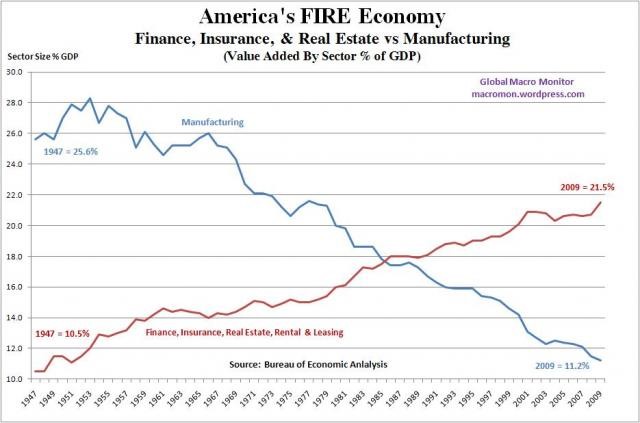
    The persistent US trade deficit with China implies that US consumers are able to buy cheaper goods from China. But it is also a signal of the erosion of the US global geopolitical dominance caused by economic decline. In the US economy financial goods are replacing physical goods. The chart below shows the increase in the financial component of US GDP relative to manufacturing.

    Americasfireeconomy

    (c) Rasheed Griffith

    Stock market capitalization of the US relative to GDP is 153%. For China it is 65% and Germany 54%. I am familiar with arguments that claim this is not problematic because countries trust the US markets most.

    The 2008 financial crisis gave a glimpse of what could happen to the US economy if the financial sector collapsed.

    The US government was barely able to patch up the financial markets by using excessive money creation and debt redistribution (i.e quantitative easing) in 2008. This was a necessary move but it means the Federal Reserve System balance sheet is now bloated. In another crisis, quantitative easing will likely not be effective. At that point, the money and capital markets of the US will no longer be as attractive in the long term, resulting in the dollar losing its global reserve currency status. At this point, the geopolitical dominance of US will weaken. And the main adversary (which is now China) will strive to make sure the US remains in a weakened position.

    Very few people seem to understand this. But the Communist Party of China (CCP) understands. In 1999, two colonels of the People’s Liberation Army published Unrestricted Warfare[1]. The book gave strategies for defeating the USA without direct conventional military engagement. One of the core strategies was the use economic policies to eat away at the US economy. Having China being the core manufacturing hub of the world was one such strategy. This was made explicit with the ‘Made in China 2025’ policy recently launched by the CCP[2].

    China did not achieve its spectacular growth through free trade. All of China’s trade is managed by the CCP. When discussing the USA-China trade relationship we must always acknowledge that China has an authoritarian government that will create and implement policies that they believe will benefit China irrespective of what the Chinese citizens think or what multilateral organizations demand. When China ascended to the WTO in 2001 it was naively expected that China would conform to the rules of that organization. Authoritarian governments, however, do not follow neoliberal rules.

    Starting around 1978 under Deng Xiaoping, the CCP began their reforms from Soviet style system wide planning to state capitalism directed by large and powerful state owned enterprises (SOEs)[3]. Although China ascended to the WTO in 2001, this model never changed. On the Fortune 500 list of largest global companies, China comes in a close second (120) behind the US (126). Japan (52) is quite far behind. But what is shocking is that 93% of the Chinese firms on the list are SOEs. The CCP heavily subsidies their SOEs, and creates rules specifically favorable to them; to the detriment of foreign entities.

    The USTR Section 301 report identified several instances where China has violated the WTO rules to which it signed in 2001. These concern trading rights, import regulations, export regulations, intellectual property rights, technology transfer, foreign investment, and so on[4]. The US has complained to the WTO about China on 22 occasions and China has still persisted in violating the rules. The White House Office of Trade and Manufacturing report goes on the dissect the persistent economic aggressions of China[5].

    What choice does the US have if it is not able to deal with China through WTO processes? Multilateral processes only work if everyone agrees to adhere to the same rules. Of course , though, these rules were largely set by the US. In dealing with China, the WTO is absolutely ineffective. There is no democratic fallout if China refuses to acknowledge multilateral rules (as seen explicitly in China’s absolute refusal to acknowledge the Philippine’s win in the Hague in matter of the West Philippines Sea/South China Sea). It is likely that any strong ruling in the WTO against China will similarly fall on deaf ears. (Similarly the US has substantially disregarded a WTO ruling after losing a case to Antigua).

    In any case, it has gotten to a point where countries cannot simply halt or significantly decrease trade with China in the form of sanctions. The US, then, is forced to use geoeconomics – the use of economic instruments to further geopolitical goals.

    As the President of the United States, Trump is right to engage China directly. His strategy is clever: robe a geostrategic containment engagement in bland terms of trade rhetoric. And this is by no means outside the modus operandi of the US. During the Cold War period the US actively practised a strategy of containment against the Soviet Union. In fact, China has accused the US of trying to economically contain China[6]. But of course, China has been engaging in geoeconomics as well recently.

    For example, in 2012 China allowed farmers from the Phillipines to export their bananas to China but when the bananas arrived they were left to rot on the dock. This left the Philippines banana planters with neither stock nor payment (30% of Philippines banana exports go to China). This was used as a tactic to weaken the Philippines position when the tensions over the South China Sea were rising[7]. Another example is when China blocked rare earth metals to Japan almost crippling Japanese tech manufacturing, until Japan finally conceded, over another maritime dispute[8]. In both cases, the WTO was impotent.

    What Trump gets wrong is that tariffs are not sufficient. And he failed to properly define a long term strategy to deal with China. Without such a strategy the US will continue ad hoc aggressions.

    China has been shown to disregard all multilateral rules if it wants to. But even so, it is difficult being upset with China. China has succeeded in the most comprehensive and rapid poverty alleviation program in all of human history. China was able to lift over 600 million people out of poverty in less than 30 years[9]. Following along this path, it should be expected that the CCP is mounting a restoration of China to compensate for its decline after the late 1850s: the “century of humiliation[10]”. Few commentators remember that for 18 of the last 20 centuries China commanded a greater share of world GDP that any other country. Henry Kissinger reminds us that as recent as 1820 China “produced over 30% of world GDP – an amount exceeding the GDP of Western Europe, Eastern Europe, and the United States combines.”[11]

    Wang Yi, however, recently attempted to assure the UN that China has no ambition of hegemonic dominance[12]. I believe that is an empty statement given Xi Jinping’s expansive Belt and Road Initiative (BRI) which has been added to the Party constitution of the CCP[13]. From the perspective of CCP, as Lee Kuan Yew frames it, China is not looking to become dominant; rather, it is looking to restore dominance. It is a different geopolitical mindset.

    This to me is the crux of the Sino-American challenge. The US is right that China is not properly following WTO rules because it has disregarded many of those rules to accelerate its economic growth. And it has been exceedingly effective. But if China were to conform to the WTO rules, it would not match the model that has been so successful.

    Multilateral trade rules were not designed by China to fit China’s model (authoritarian government, state capitalism). They were primarily designed by liberal democracies – the US in particular. Both of these nations have fundamentally different economic models and justifiable geopolitical reasons for disregarding WTO rules to protect (or increase) their geopolitical dominance.

    We are living in a time of multilateralism. But this time is anomalous. Dani Rodrik has explained in detail why “free trade agreements” have little to do with free trade[14]. Those agreements are primarily political documents. In fact, “76 percent of existing preferential trade agreements covered at least some aspect of investment (such as free capital mobility) by 2011; 61 percent covered intellectual property rights protection; and 46 percent covered environmental regulations”[15]. These are political documents that attempt to alter a nation’s domestic policies with the preferences of international actors.

    This is not possible with a powerful authoritarian government. It is a grave error to treat China as just another Western country; like how you would treat Japan. China is an ideological adversary to the US that has now become an economic adversary. When at odds with geopolitical motives multilateralism always fails. Geoeconomic escalation is not only justified but it is inevitable.

    Rasheed Griffith’s professional interests include Southeast Asian Monetary Policy and AML Compliance. He may be contacted at rasheed.j.griffith AT gmail.com. You can also follow him on Twitter at @RasheedGriffith

    The views and opinions expressed herein are solely those of the guest author and are not necessarily representative of those of the Caribbean Trade Law & Development Blog.

    [1] http://www.c4i.org/unrestricted.pdf

    [2] https://supchina.com/2018/06/28/made-in-china-2025/

    [3] https://orca.cf.ac.uk/99467/1/Publication_2016_IJEMSc.pdf

    [4] https://ustr.gov/sites/default/files/Section%20301%20FINAL.PDF

    [5] https://www.whitehouse.gov/wp-content/uploads/2018/06/FINAL-China-Technology-Report-6.18.18-PDF.pdf

    [6] http://www.atimes.com/article/us-tariffs-are-containment-beijings-message-fed-by-the-white-house/

    [7] https://www.asiasentinel.com/society/the-china-philippine-banana-war/

    [8] https://www.nytimes.com/2010/09/23/business/global/23rare.html

    [9] https://en.wikipedia.org/wiki/Poverty_in_China#Poverty_reduction

    [10] https://www.theatlantic.com/china/archive/2013/10/how-humiliation-drove-modern-chinese-history/280878/

    [11] https://www.amazon.com/China-Henry-Kissinger/dp/0143121316

    [12] http://usa.chinadaily.com.cn/a/201809/30/WS5bafb647a310eff303280520.html

    [13] https://idsa.in/idsacomments/what-the-inclusion-of-bri-in-the-chinese-constitution-implies_jpanda_071117

    [14]https://drodrik.scholar.harvard.edu/files/dani-rodrik/files/what_do_trade_agreements_really_do.pdf

    [15] Limão, Nuno. 2016. “Preferential Trade Agreements.” NBER Working Paper 22138, March