Alicia D. Nicholls
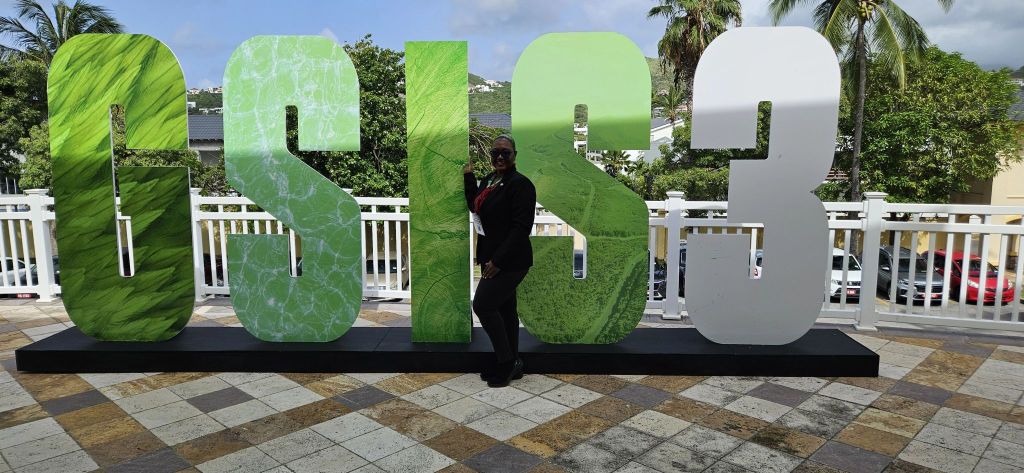
From May 27-29, 2025, I had the honour of participating in the Main Summit of the Global Sustainable Islands Summit (GSIS) in my capacity as an academic. Organised by Island Innovation, this third edition of the GSIS was co-hosted with the Government of the Federation of St. Kitts & Nevis. The event welcomed over 200 delegates, mainly from island states and territories from across the Caribbean and world, some coming as far away as the Marshall Islands and Tuvalu!
In this article, I expand on some of the key points I raised as a speaker on the Day 2 panel “Identifying Opportunities to strengthen relationships between global island states”. I focussed on the critical role of education not just as a social good, but an economic asset indispensable for boosting trade both from and between island economies. To this end, I offer at least three interconnected ways in which education can contribute to boosting island economies’ trade: building human resource capacity generally, enhancing trade capacity and serving as a tradeable service.
Building Human Resource Capacity
For many small island economies, their most valuable resource is their human resource endowment. Poor in natural resources, countries like Barbados and Mauritius for example have since their political independence in the 1960s invested significantly in providing universal access to education, a key component of the development success these two countries have enjoyed.
Investments in education not onlyfoment well-being, but also cultivate a well-educated population capable of advancing national development and adapting to global shifts. A well-skilled and educated workforce is vital not just for the local private sector which relies on a robust domestic talent pool, but also as a draw for foreign investors interested in finding the talent they need locally.
As trade becomes increasingly digitised and technology-driven, the education systems of island economies and territories must evolve to nurture citizens who are not just literate and numerate in the traditional sense, but are technologically literate. An educational system responsive to these trends can drive the high-value growth that Caribbean island economies aim to pursue.
Enhancing trade capacity
Education not only contributes to trade competitiveness by building a country’s human resource generally, but also by building its capacity to trade and engage in trade policy making, more specifically.
The University of the West Indies’ Shridath Ramphal Centre’s Masters in International Trade Policy (MITP) programme, now approaching its 23rd cohort, has played a significant and often understated role in developing a cadre of highly skilled trade professionals across the Caribbean region and even beyond these shores. Many of the MITP alumni sit in the highest echelons of governments (including within the cabinet of Barbados), international organisations, donor agencies, business support organisations and private sector firms. Indeed, on the panel on which I spoke at the GSIS 2025, three of the panelists (myself including) were MITP alumnae, and all women.
Understanding trade rules and standards and conducting market intelligence are fundamental for Caribbean businesses to convert the market access they have on paper through the trade agreements and other trading arrangements Caribbean countries have into market presence. Expanding education in areas like sustainability standards, logistics and compliance will ensure the region can fully harness the benefits of trade and regional integration as it seeks to consolidate the CARICOM Single Market and Economy (CSME).
Education as a tradeable service
Education is itself a tradeable service, and one in which Caribbean island economies already participate across the four modes of supply of service defined by the World Trade Organisation (WTO)’s General Agreement on Trade in Servicess (GATS).
Under Mode 1 (Cross-border supply), Caribbean educational institutions increasingly offer online courses, some of which are taken by students abroad, effectively exporting education services. Under Mode 2 (consumption abroad), students from across the Caribbean travel between islands for tertiary education, while foreign students also come to attend offshore medical universities. Under Mode 3 (commercial presence), foreign universities, especially medical schools like Ross University and St. Georges University, have established physical campuses, resulting in a commercial presence/foreign direct investment. Under Mode 4 (temporary movement of natural persons), Caribbean professionals deliver lectures or courses physically on other campuses or other countries, thereby providing educational services physically in another country on a temporary basis.
With certain countries tightening access to their universities for international students, this presents an opportunity for Caribbean universities to strengthen their value proposition not only to serve local students who might have intended to go overseas, but to attract more international students from the Global South and the Global North.
Despite the allure of Global North universities because of their prestigious names and globally recognised faculty, Caribbean universities like The University of the West Indies, already have several advantages: a history of contributing to Caribbean development and well-recognised faculty in many areas, programmes which are tailored to small states’ and developing realities and promoting solutions grounded in our realities, cognisant of our regional history and development concerns, and a well-established track record of research in many areas like climate change, regional integration, development economics and cultural studies. Let us not forget that we are the region which has produced many thought leaders, including one of the world’s foremost development economists – Sir W. Arthur Lewis!
In other words, Caribbean students’ options are not limited to Global North universities and we need a paradigm shift in the thinking that only Global North universities provide good quality education. Many universities here in the Caribbean have educated persons who are excelling at the highest levels in their field, including current and former statesmen, while there are many global South countries which offer scholarships yearly to our nationals to study at their universities. By supporting each others’ universities we would also be contributing to boosting south-south trade in educational services!
Toward Knowledge Economies
To maximise the role of education in trade, it must be embedded within a broader knowledge economy ecosystem. During the summit, I was particularly intrigued by the research shared by colleagues from ODI Resilient and Sustainable Islands Initiative (RESI) on how SIDS can build robust knowledge economies. Their findings underscore the importance of prioritising innovation and the role of education in this. Building these ecosystems requires stronger linkages between universities, governments and industry, greater investment in research, intellectual property rights protection and support for entrepreneurship and start-ups.
Ultimately, the role of education is not merely to promote trade per se. It is to ensure that the trade in which we engage is inclusive and sustainable and redounds to the benefit of our societies. Although it was not identified as one of the 7 pillars of St Kitts & Nevis’ Sustainable Island State Agenda (SISA), education will be key to achieving this road map set out by that government in its commendable quest to become the world’s first sustainable island state.
Final thoughts
If island economies are to boost their trade and promote a future grounded in sustainable growth, inclusion and transformation, education must be a strategic pillar and not an after thought. I am grateful to Island Innovation and the Government of St. Kitts & Nevis for hosting a very engaging and forward-looking summit and for the opportunity afforded to me to contribute to these conversations.
Alicia D. Nicholls, B.Sc., M.Sc., LL.B. is an international trade specialist and the founder of the Caribbean Trade Law and Development Blog.
 Caribbean Trade Law and Development
Leave a Reply